How Much Do Local Dog Groomers Cost? (2026 Price Guide)
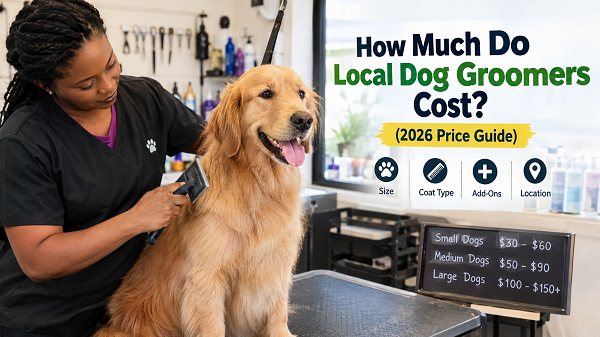
A trip to a local dog groomer runs $30 to $150+ per session in the US, depending mostly on your dog’s size and coat. Small dogs with easy coats sit at the low end ($30–$60), medium dogs land in the middle ($50–$90), and large or double-coated breeds push past $100. Add $10–$20 for teeth brushing, nail buffing, or a flea treatment, and expect a 30–50% markup for a matted coat, an aggressive dog, or mobile grooming that comes to your driveway.
Dog grooming costs are set by four things, in order of impact: size, coat type, add-on services, and location. A short-haired Beagle in a small Midwest town might pay $35 for a full groom. A matted Goldendoodle in San Francisco could pay $150 for the same basic service, plus a de-matting surcharge. Knowing where your dog falls on that scale and what a groomer is actually doing for the money, is how you tell a fair price from a rip-off.
Table of Contents
- Quick Answer: What Dog Grooming Actually Costs
- Cost by Dog Size and Coat Type
- Cost by Service: What’s Included at Each Price Point
- Salon vs. Mobile vs. Self-Service vs. Big-Box Stores
- Regional Price Differences
- Hidden Fees That Catch Owners Off Guard
- Should You Tip Your Dog Groomer?
- How to Vet a Groomer Before You Book
- How to Cut Your Grooming Bill Without Cutting Corners
- A Working-Dog Handler’s Take on Grooming Costs
- Conclusion
- FAQs
Cost by Dog Size and Coat Type
Size is the single biggest price driver, because it’s a direct proxy for time. A groomer spends 30–45 minutes on a Chihuahua and 90+ minutes on a Bernese Mountain Dog, and they’re pricing their hour, not your dog.
| Dog Size | Example Breeds | Bath & Brush Only | Full Groom (Bath + Cut) |
|---|---|---|---|
| Toy (under 10 lb) | Chihuahua, Yorkie | $25–$35 | $35–$65 |
| Small (10–25 lb) | Shih Tzu, Poodle (Toy/Mini) | $25–$45 | $40–$80 |
| Medium (25–50 lb) | Cocker Spaniel, Beagle | $35–$55 | $65–$100 |
| Large (50–80 lb) | Golden Retriever, Lab | $45–$65 | $85–$130 |
| Extra-large (80+ lb) | Great Dane, Bernese Mountain Dog | $55–$80 | $100–$180+ |
Coat type shifts a dog up or down within its size band, sometimes by a full category:
- Short, smooth coats (Labs, Boxers, Beagles) sit at the bottom of their weight class, there’s no scissor work, just a bath, blow-out, and shed control.
- Double coats (Huskies, Malamutes, Corgis, Collies) run 20–40% higher even at the “bath only” tier, because de-shedding a dense undercoat properly takes real time and a dog-specific high-velocity dryer.
- Curly and continuously-growing coats (Poodles, Doodles, Bichons) are the most expensive per pound. A 15 lb Toy Poodle can cost as much as a 40 lb short-haired dog because every inch of coat has to be scissored to shape, not just clipped down.
- Long silky coats (Afghan Hound, Yorkie, Shih Tzu at show length) top the chart entirely, $100–$200 is normal when the coat is kept long, because it’s hand-brushed section by section to avoid breaking hair.
Cost by Service: What’s Included at Each Price Point
“Grooming” isn’t one service, it’s a menu, and most owners overpay because they book the wrong tier for what their dog actually needs.
Bath-only / “spa bath” ($25–$65): Shampoo, conditioner, blow-dry, brush-out, and usually nail trim + ear cleaning. No haircut or scissor work. This is the right call between full grooms on a dog that isn’t due for a trim yet.
Full-service groom ($40–$180+): Everything above, plus a haircut to breed standard or your preferred style, plus a finishing spray. This is what most people mean by “taking the dog to the groomer.”
À la carte add-ons, priced separately at most salons:
- Nail trim alone: $10–$20
- Teeth brushing: $10–$15
- Anal gland expression: $10–$20
- De-shedding treatment (on top of a bath): $15–$40
- Flea and tick treatment/bath: $15–$30
- Specialty shampoo (medicated, whitening, oatmeal): $5–$20
- Creative grooming or breed-standard show cut: $20–$80 on top of the base price
Self-service / DIY wash stations ($12–$25): You bring the dog in and do the bathing yourself with the salon’s tub, shampoo, and dryer. No haircut, no groomer labor, just facility rental. This is the cheapest legitimate option if your dog only needs to be clean, not styled.
Salon vs. Mobile vs. Self-Service vs. Big-Box Stores
Where you book matters almost as much as what you book:
- Independent local salon: The baseline prices above. Usually the best value once you find a groomer who knows your breed, because pricing reflects actual skill level rather than corporate overhead.
- Mobile groomer: Adds a 20–40% premium over an in-shop price for the same service, because the groomer is driving a fully-equipped van to your curb and seeing fewer dogs per day. Worth it for anxious dogs, senior dogs, multi-dog households, or anyone without reliable transport, the one-on-one, no-waiting-room environment genuinely reduces stress for a dog that shuts down in a busy shop.
- National chains (PetSmart, Petco): Often price close to or slightly under independent salons for basic packages, but add-ons and “furry VIP” tiers can push the final bill higher than expected. Consistency varies more by individual groomer than by brand.
- Boutique/urban salons: Same services, but priced for their real estate. In a major coastal city, expect 20–30% above the national average for an identical groom you’d get for less two towns over.
Regional Price Differences
The same dog, the same haircut, costs meaningfully different amounts depending on your zip code:
| Region | Typical Full Groom (Medium Dog) |
|---|---|
| Northeast (NYC, Boston) | $80–$150+ |
| West Coast (LA, SF, Seattle) | $75–$140 |
| Southeast (Atlanta, Miami, Dallas) | $50–$95 |
| Midwest (Chicago, Detroit) | $45–$85 |
| Mountain West (Denver, Phoenix) | $50–$95 |
| Rural / small towns nationwide | $35–$75 |
As a rule of thumb, urban cost-of-living correlates almost one-to-one with grooming prices, because rent and staff wages are a groomer’s two biggest overhead costs.
Hidden Fees That Catch Owners Off Guard
This is the part most price guides skip, and it’s where the real sticker shock happens.
- Matting fee (often the biggest surprise): If your dog’s coat is matted enough that it can’t be brushed out safely, most groomers charge a de-matting fee of $1–$2 per minute on top of the base price, or a flat $20–$60 surcharge. Severe matting sometimes leaves no option but a full shave-down for the dog’s comfort and safety, this isn’t the groomer upselling you, it’s a welfare call once mats are pulling on the skin.
- Behavioral/handling fee: A dog that bites, snaps, or needs to be muzzled adds $10–$50, and some salons decline repeat-aggressive dogs outright rather than charge more. This isn’t punitive; a groomer restraining a fear-aggressive 60 lb dog with sharp tools in hand is a real safety cost.
- Senior dog surcharge: Dogs over roughly 8–10 years, especially with arthritis or reduced stamina, often need more breaks and gentler handling, adding $5–$20.
- First-time client fee: Some salons charge a bit more for a dog’s first visit because the groomer doesn’t yet know its temperament or coat condition.
- Flea/tick discovery fee: If fleas are found during the bath, expect a mandatory treatment charge, often $15–$30, added on the spot for the safety of other dogs in the shop.
Ask for all of this upfront. A trustworthy groomer will walk you through likely add-ons during a phone consultation or intake form rather than surprising you at pickup.
Should You Tip Your Dog Groomer?
Yes, tipping a groomer follows the same logic as tipping a hairdresser, and the industry standard is 15–20% of the service cost, more for a hard job.
- $60 groom → $9–$12 tip. $150 groom → $22–$30 tip.
- Tip toward the higher end (20–25%, sometimes more) when your dog was matted, aggressive, extremely dirty, or took noticeably longer than a routine groom. Groomers are handling an animal that can bite, wiggle, or panic near clippers, the physical and safety demands are real, and most groomers earn a commission on the service price rather than keeping the full fee.
- Cash or an added tip line on the card reader both work. If you’re a repeat client at a busy shop, a groomer who’s well tipped is also the one most likely to fit you in for a same-week emergency appointment.
How to Vet a Groomer Before You Book
No US state currently licenses dog groomers, legally, anyone with clippers and a table can call themselves a professional. That makes your own vetting the only real quality control.
- Ask about certification. The National Dog Groomers Association of America (NDGAA) and the International Society of Canine Cosmetologists (ISCC) both certify groomers through written exams and hands-on assessments. Certification isn’t mandatory, and plenty of excellent groomers are self-taught over years of hands-on work but it’s a solid tiebreaker between two unknown options.
- Ask breed-specific experience questions. “How many Poodles/Huskies/Doodles do you groom in a typical week?” tells you more than years-in-business alone.
- Tour the facility. Look for clean tables and tools, calm crated dogs (some nervous barking is normal), no exposed cords, and staff actively watching dogs in-process rather than leaving them unattended in dryers.
- Watch for red flags: high staff turnover, a groomer who won’t let you see the grooming area, vague pricing that changes at pickup, or multiple recent reviews describing the same specific problem (nicks, late pickups, unexplained behavior changes in the dog afterward).
- Request references from your vet, a trusted trainer, or other owners of your breed, word of mouth still outperforms star ratings for finding someone who handles your specific dog well.
If your dog gets nervous around strangers or new environments, building calm, confident handling at home makes every grooming visit shorter and cheaper, since a relaxed dog needs fewer breaks and less restraint time. Our guide to grooming a puppy from an early age covers exactly how to build that comfort before it becomes a $50 “behavioral fee” problem.
How to Cut Your Grooming Bill Without Cutting Corners
You don’t have to choose between a well-groomed dog and a reasonable budget. A few real levers:
- Brush between visits. The single biggest cost driver after size is matting and coat condition. A dog that’s brushed 2–3 times a week almost never needs a de-matting surcharge, which alone can save $20–$60 per visit. A quality FURminator deShedding Tool pays for itself within one or two avoided surcharges, and it cuts down the loose undercoat that turns into house-wide fur if you skip it, our full shedding-control guide covers the brushing schedule that works best by coat type.
- Stretch the interval, not the neglect. Every 6–8 weeks is standard for most coats; stretching much past that usually costs more in the end because the coat mats and the groom takes longer.
- Learn basic maintenance at home. Nail trims and a sanitary trim around the paws and rear are easy to DIY with a decent clipper kit, and skipping just those two add-ons at every visit saves $20–$35 a year, per visit.
- Ask about loyalty punch cards or bundled packages. Many independent salons offer a discount for prepaying 4–6 visits, which also locks in your current rate before a price increase.
- Pick the right breed for your bandwidth up front. If grooming cost is a real budget concern before you even get a dog, some breeds are simply cheaper for life. Our breakdown of low-maintenance breeds with basic grooming needs is worth reading before you commit to a high-coat breed on a tight budget.
A Working-Dog Handler’s Take on Grooming Costs
I’ve spent 14+ years handling and training working and military dogs, and one thing pet owners don’t always hear from a typical grooming price list: grooming cost is a health investment, not a vanity expense. Working K9s are groomed on a strict schedule not because anyone cares how they look, but because matted coats trap moisture against skin and cause hot spots, overgrown nails throw off a dog’s gait and posture over months, and impacted anal glands cause real pain that owners frequently mistake for “scooting is just a quirky habit.”
The dogs I’ve handled that skipped grooming longest weren’t the ones who “didn’t need it”, they were the ones whose owners saw it purely as a cosmetic cost. By the time we caught the coat condition, the fix was a full shave-down and a vet visit for a skin infection that cost far more than eight weeks of routine grooming would have. If your budget is genuinely tight, cut the add-ons (creative styling, specialty shampoo) before you cut the base service interval.
Conclusion
Local dog grooming runs $30 to $150+ per session, and the number that actually applies to your dog comes down to four things: size, coat type, the service tier you book, and where you live. A short-haired small dog in a low-cost region can groom for $35; a large double-coated dog in a major city, groomed at full service, can reasonably run $150 or more. Add tipping (15–20%) and factor in that matting, aggression, and flea treatment can all add real money on top of the quoted base price.
The smartest way to control the cost long-term isn’t finding the cheapest groomer, it’s keeping the coat brushed between visits, staying on a consistent 6–8 week schedule so mats never build up, and vetting your groomer for real experience with your breed rather than just picking whoever answers the phone first. Do that, and grooming stops being a surprise bill and becomes a predictable, worthwhile line item in your dog’s care.
Want more cost-saving, handler-tested guides like this one delivered weekly? Subscribe to our newsletter for practical K9 care tips, or grab a copy of Beyond the Bark for a deeper, handler’s-eye guide to raising a healthier, easier-to-maintain dog.
FAQs
1. How much does it cost to get a dog groomed on average?
Most dog owners pay $40 to $75 for a standard full groom on a small-to-medium dog, and $85 to $150+ for large or heavily-coated breeds. Bath-only services without a haircut run $25–$65.
2. Why did my groomer charge more than the quoted price?
The most common reasons are undisclosed matting (which triggers a de-matting fee), a dog that needed extra handling time due to anxiety or aggression, or add-ons like flea treatment that became necessary once the groomer actually examined the coat. Always ask for a worst-case estimate before booking.
3. Is mobile dog grooming worth the extra cost?
For anxious, senior, or reactive dogs, yes, the 20–40% premium buys one-on-one attention with no waiting room stress, which often means a calmer groom and fewer handling fees. For a confident, easygoing dog, an in-shop appointment usually delivers the same result for less.
4. How often should I get my dog professionally groomed?
Every 6–8 weeks is the standard interval for most coats. Double-coated and continuously-growing coats (Poodles, Doodles) may need it every 4–6 weeks to avoid matting; short, smooth coats can often stretch to 8–12 weeks with regular home brushing in between.
5. Do I have to tip my dog groomer?
Tipping is optional but strongly customary, similar to tipping a hairdresser — 15–20% of the service cost is standard, and 25% or more is appropriate for a difficult, matted, or anxious dog that took extra time and care to handle safely.

Her work centres on obedience, detection, protection and operational readiness. She favours proven methods built on repetition, consistency and real-world conditioning, so that both dogs and handlers are prepared for high-pressure tasks.
Rofiat represented the Nigerian Army Dog Centre at the Nigerian Army Day Celebration (NADCEL) 2026, where she led demonstrations in obedience, explosive detection, agility and tactical movement. Through articles, training content and documentaries, she shares field-based insight into how structured training, clear communication and trust between handler and dog affect performance and reliability.
She is the author of Beyond the Bark: Inside a Pro Handler's Playbook for Raising the Ideal Dog, a practical guide that helps dog owners and handlers apply professional training principles in everyday situations.
- How to Safely Approach Stray Dogs: 5 Field Rules - November 22, 2026
- Food Aggression Dog Training: Pro K9 Guide - November 21, 2026
- DIY Dog Scent Training: Easy 4-Week Home Guide - November 20, 2026