Essential K9 Training Equipment Every Working Dog Handler Needs

Military working dog handlers need reliable, mission-ready equipment to train safely, maintain control, and maximize canine performance. Essential K9 training equipment includes a durable tactical harness, heavy-duty leash, training collar, long line, bite sleeves, reward toys, muzzles, protective boots, first aid kits, and tracking accessories. Choosing high-quality gear reduces injury risk, improves communication between handler and dog, and ensures consistent performance during obedience, patrol, detection, protection, and search-and-rescue training.
Table of Contents
- Introduction to Military Working Dog Equipment
- Why Proper K9 Training Equipment Is Critical
- Types of K9 Training Equipment and Their Uses
- 3.1 Collars
- 3.2 Harness
- 3.3 Leash
- 3.4 Muzzle
- 3.5 Paw Shoes (Protective Dog Boots)
- 3.6 Bite Suit & Bite Sleeves
- 3.7 Detection Aids
- 3.8 Prey Items & Agitation Whip
- 3.9 Tracking Line
- 3.10 Grooming Kit
- 3.11 First Aid Kit
- 3.12 K9 Stretcher & Rescue Sling
- 3.13 Timing Bridge
- 3.14 Cooling Vest
- Why K9 Training Equipment Matters
- Conclusion
- Frequently Asked Questions (FAQs)
Introduction
Military Working Dogs (MWDs) are among the most highly trained canine professionals in the world, but even the best dogs cannot perform at their full potential without the right equipment. Every successful training session depends on gear that enhances control, safety, communication, and confidence for both the handler and the dog. Whether you’re preparing a K9 for patrol, detection, tracking, protection, or advanced obedience, investing in professional-grade training equipment is just as important as the training methods you use. In this guide, you’ll discover the essential K9 training equipment every military working dog handler needs, what each tool is designed for, and how choosing the right gear can improve performance while keeping your canine partner safe throughout demanding training and operational environments.
Why Proper K9 Training Equipment Is Critical for Military Working Dogs
Unlike civilian pet dogs, Military Working Dogs are trained for precision, reliability, and endurance. Their training must account for distractions such as loud noises, hostile environments, unfamiliar terrain, and real-world threats. The right equipment helps bridge the gap between training and real-world deployment by:
Enhancing communication between handler and dog
Ensuring safety during high-intensity exercises
Supporting physical performance and endurance
Reinforcing discipline, obedience, and focus
Preventing injuries during missions and training
Without proper equipment, even the most talented dog can struggle to perform consistently or safely.
To fully understand how tools like collars, leashes, and timing markers improve performance, it’s important to look at how military working dogs are trained from foundation to deployment, as explained in this detailed guide.
Types of K9 Training Equipment and Their Uses
1. Collars
 A K9 collar is one of the most basic yet indispensable tools in any Military Working Dog program. It serves as the primary point of control, communication, and identification.
Types of Collars
Flat Collar: Commonly used for everyday handling and basic obedience training
Martingale Collar: Designed to prevent the dog from slipping out without choking
Prong or Pinch Collar: Used for corrective training under professional supervision
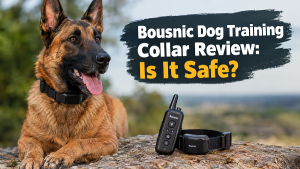
E-Collar (Electronic Collar): Allows remote reinforcement or correction during off-leash training
Importance of Collars
Collars help handlers maintain control in both training and operational environments. They also provide a place for identification tags, unit patches, and tracking devices. In military contexts, durability and secure fastening are critical.
Recommendation: This tactical metal buckle dog collar for medium and large dogs with D-ring & control handle, it’s convenient for you to attached your dog leash and walking your dogs. Identification to keep your pet safe after attach name patch/ ID tag in case Check the price and details.
2. Harness
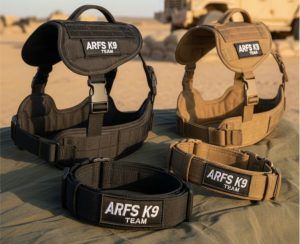
A K9 harness distributes force evenly across the dog’s body, reducing strain on the neck and spine while improving control.
Types of Harnesses
Tracking Harness: Designed to allow free movement while following scent trails
Patrol Harness: Provides better grip and control during active patrols
Tactical Harness: Features MOLLE webbing for attaching gear, ID panels, or medical pouches
Importance of Harnesses
Harnesses are essential for physically demanding tasks such as tracking, suspect apprehension, and long patrols. A heavy-duty tactical dog harness with MOLLE attachment points is ideal for mission scenarios, allowing handlers to carry essential tools while maintaining full control of the dog.
For more advanced fieldwork or mission scenarios, a Heavy-Duty Tactical Dog Harness with MOLLE attachment areas is recommended. It offers durability, control points, and customization options perfect for carrying gear like first-aid pouches. Shop this tactical harness on Amazon Click Here
3. Leash
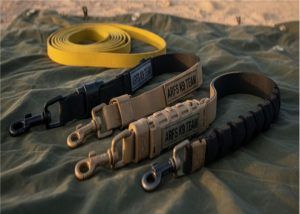 A leash is the physical connection between handler and dog, making it one of the most important safety tools.
Types of Leashes
Standard Leash: Used for obedience training and close control
Long Line: Essential for tracking and detection training
Tactical Leash: Built with reinforced materials for strength and reliability
Importance of Leashes
In operational environments, leashes must withstand sudden force, harsh terrain, and unpredictable movements. For strong or highly driven dogs, a heavy-duty bungee tactical leash helps absorb shock while maintaining control.
If you have an active, large or strong dog, you need a heavy duty bungee leash guaranteed to never rip or break, we recommend this product Check price and details here
4. Muzzle
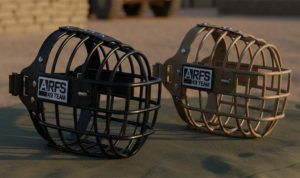
A K9 muzzle is a safety tool used during transport, veterinary care, grooming, or specific training scenarios.
Types of Muzzles
Basket Muzzle: Allows panting, drinking, and breathing while preventing bites
Nylon Muzzle: Suitable for short-term restraint
Importance of Muzzles
Even highly trained MWDs can react unpredictably under stress or pain. A well-fitted muzzle protects handlers, veterinarians, and support personnel without causing distress to the dog.
We recommend this quality product Check price & details here
5. Paw Shoes (Protective Dog Boots)
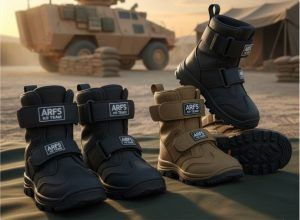
Military Working Dogs often operate on hot pavement, sharp debris, rocky terrain, or hazardous environments.
Importance of Paw Shoes
Protective boots prevent cuts, burns, and abrasions while improving endurance during long missions. They are especially important for urban patrols, disaster zones, and extreme weather conditions.
Check price & details on Amazon Click here
6. Bite Suit & Bite Sleeves
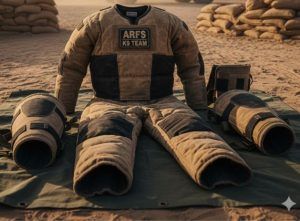
Bite training equipment is essential for patrol and apprehension dogs.
Types of Bite Equipment
Bite Suit: Full-body protection for decoys during controlled training
Bite Sleeves and Leg Sleeves: Used to teach grip strength, accuracy, and controlled biting
Importance of Bite Training Gear
These tools allow realistic training scenarios while ensuring the safety of decoys and handlers. Proper bite equipment helps dogs learn when and how to engage without encouraging uncontrolled aggression.
Check price & details on Amazon Click here
7. Detection Aids
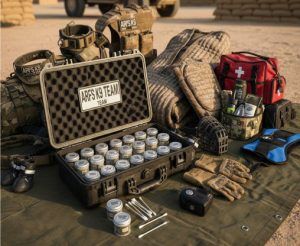
Detection aids are training tools infused with target scents such as explosives, narcotics, or contraband.
Importance of Detection Aids
They help MWDs develop scent discrimination, consistency, and accuracy skills that are critical for explosives detection, border security, and counterterrorism operations.
Check price & details on Amazon Click here
8. Prey Items & Agitation Whip
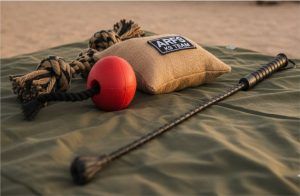 Prey items (like tugs, balls, or ropes) are motivational tools used to reward good performance.
The agitation whip helps simulate threat situations during aggression and control training.
Importance: Prey items build drive, focus, and enthusiasm, while agitation tools help dogs learn controlled responses to perceived threats.
Check price & details on Amazon Click here
9. Tracking Line
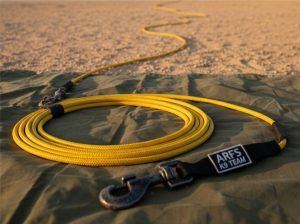
A tracking line gives dogs freedom to follow scent trails while remaining under handler supervision.
Importance
Tracking lines encourage independence and confidence without sacrificing safety. They are essential for search, tracking, and detection exercises.
Check price & details on Amazon Click here
10. Grooming Kit
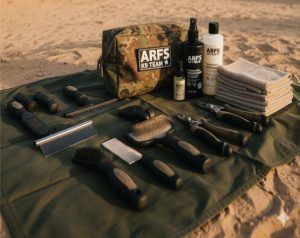
Regular grooming is vital for the health and performance of Military Working Dogs.
Importance
Grooming helps prevent skin infections, removes debris, and allows handlers to detect injuries, parasites, or abnormalities early. A complete grooming kit supports hygiene and long-term health.
Check price & details on Amazon Click here
11. First Aid Kit
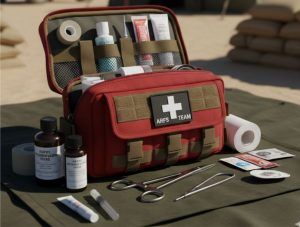
In operational environments, immediate veterinary care may not be available.
Importance
A dedicated K9 first aid kit allows handlers to treat wounds, control bleeding, and stabilize injuries until professional care can be reached. This equipment can save lives during missions.
Check price & details on Amazon Click here
12. K9 Stretcher & Rescue Sling
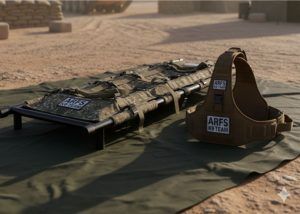
Injured or exhausted dogs may need evacuation from operational zones.
Importance
A K9 stretcher or rescue sling allows handlers to safely carry dogs without worsening injuries. This equipment is critical for humane and efficient rescue operations.
Check price & details on Amazon Click here
13. Timing Bridge
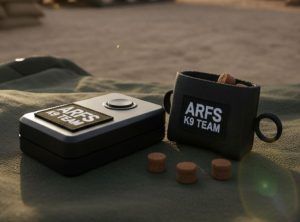
A timing bridge, such as a clicker or verbal marker, links the dog’s action to a reward.
Importance
Precise timing improves learning speed and clarity, making training more efficient and consistent.
14. Cooling Vest
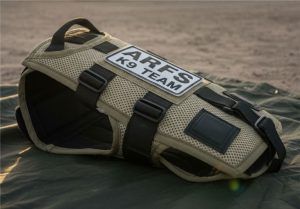
Heat stress is a serious risk for working dogs, especially in tropical or desert environments.
Importance
A K9 cooling vest helps regulate body temperature, prevent heat exhaustion, and maintain performance during extended operations in hot conditions.
A cooling vest is a critical asset in hot environments, helping prevent heat exhaustion during long patrols or detection work. You can link to cooling vest options here. (Link: Amazon dog cooling vest)
Why Dog Training Equipment For Military Matters
Every piece of K9 equipment contributes to discipline, confidence, and operational readiness. Safety tools like muzzles, first aid kits, and cooling vests protect the dog’s well-being, while training tools like collars, leashes, and detection aids enhance performance.
Handlers who understand not just what equipment to use, but how and when to use it, can unlock the full potential of their K9 partners.
Military dogs operate on strict routines that combine training, conditioning, and recovery, as seen in this real-world breakdown of a working K9’s daily life.
Conclusion
K9 training equipment is more than gear, it is the foundation of success in every Military Working Dog program. From obedience and patrol work to detection and rescue missions, the right tools ensure safer training, stronger communication, and mission-ready performance.
By investing in high-quality, purpose-built K9 equipment and using it correctly, handlers build trust, reliability, and excellence in their canine partners. In military operations where every second and every decision matters, the right K9 training equipment can make all the difference.
Frequently Asked Questions (FAQs)
1. What equipment is most important for a Military Working Dog handler?
The most essential equipment includes a durable collar, tactical harness, strong leash, and detection aids. These form the foundation for control, communication, and operational readiness.
2. Are prong collars and e-collars safe for Military Working Dogs?
Yes, but only when used by trained professionals. These tools are designed for precise communication and correction, not punishment. Improper use can harm the dog or reduce training effectiveness.
3. Why do Military Working Dogs need protective boots?
Military dogs often work on rough terrain, hot surfaces, or hazardous environments. Protective boots prevent injuries like cuts, burns, and abrasions, helping maintain performance and endurance.
4. How often should K9 equipment be replaced?
K9 equipment should be inspected regularly and replaced when signs of wear appear. In high-intensity environments, gear like leashes, harnesses, and collars may need frequent replacement to ensure safety.
5. Can civilian dog trainers use Military K9 equipment?
Yes, many tools such as harnesses, leashes, and grooming kits are suitable for civilian use. However, specialized equipment like bite suits and detection aids should only be used with proper training and experience.
You may like these articles:
- Dog Cooling Vests guide
- Best K9 Harness for Maximum Control
- Top 10 Tactical K9 Gear Every Working Dog Should Have in 2026

Her work centres on obedience, detection, protection and operational readiness. She favours proven methods built on repetition, consistency and real-world conditioning, so that both dogs and handlers are prepared for high-pressure tasks.
Rofiat represented the Nigerian Army Dog Centre at the Nigerian Army Day Celebration (NADCEL) 2026, where she led demonstrations in obedience, explosive detection, agility and tactical movement. Through articles, training content and documentaries, she shares field-based insight into how structured training, clear communication and trust between handler and dog affect performance and reliability.
She is the author of Beyond the Bark: Inside a Pro Handler's Playbook for Raising the Ideal Dog, a practical guide that helps dog owners and handlers apply professional training principles in everyday situations.
- Local Dog Breeds: Temperament, Health & Training Guide - October 6, 2026
- How Long Do Military Working Dogs Serve? Full Guide - October 5, 2026
- National Puppy Day 2026: Date, Best Deals & Freebies - October 4, 2026