Vizsla Dog Health Guide: Common Issues & Prevention

What are the most common Vizsla health issues? The most common Vizsla health issues are cancer (especially hemangiosarcoma, lymphoma and mast cell tumors), hip dysplasia, epilepsy, hypothyroidism, eye disease, skin and ear problems, dental disease, and bloat. Vizslas usually live 12 to 14 years, though some breed club surveys report a lower average. You can lower the risks by buying from a health-tested breeder, keeping your dog lean, scheduling regular vet checks, and doing a monthly lump-and-bump check at home.
Table of Contents
- Introduction
- How Long Do Vizslas Really Live?
- Cancer in Vizslas: The Biggest Health Concern
- Hip Dysplasia and Joint Problems
- Epilepsy and Neurological Issues
- Hypothyroidism and Hormone Problems
- Eye Problems in Vizslas
- Skin, Coat, Ear and Claw Problems
- Bloat (GDV): The Emergency You Must Know
- Dental Disease, Obesity and Separation Anxiety
- Parasites, Heat and Working Injuries
- Vizsla Health Prevention Plan by Age
- How to Choose a Healthy Vizsla Puppy
- Why You Can Trust This Guide
- FAQs
- Conclusion
Introduction
Ever look at a Vizsla and think, “That dog is built like an athlete, so it must be bulletproof”? I get why. Vizslas are lean, fast, and full of energy. But a great-looking dog isn’t always a trouble-free one.
Most articles on Vizsla health issues give you a quick list of conditions and stop there. That doesn’t help much when your dog has a lump on her chest at 2 a.m., or when you’re trying to decide which health tests to demand from a breeder.
In this guide, you’ll learn:
- What the real numbers say about Vizsla lifespan, and why the figures disagree
- The health problems that matter most, in order of seriousness
- Warning signs you should never ignore
- A simple prevention plan for each life stage
- Which health tests to ask your breeder for
Whether you own a pet Vizsla, work one in the field, or you’re still deciding on a puppy, this guide will help.
How Long Do Vizslas Really Live?
Here’s something most competing articles skip. You’ll often read that Vizslas live 12 to 14 years. The American Kennel Club gives that same 12 to 14 year range, but a 2008 Vizsla Club of America survey put the average lifespan at 9.15 years.
So which is right? Both, in a way. The AKC figure is a typical range for a healthy dog. The survey numbers include dogs that died young from accidents and disease.
Other data backs up the lower figure:
- A US breed club survey of 400 Vizslas found an average age at death of 9.15 years, and an Australian survey of 50 dogs found 9.3 years, with a median of 10.
- Once you remove accidents, the Australian average age at death rose to 9.8 years.
- Accidents matter more than you’d expect. In the Australian data, car accidents and snake bites were the most common accidental causes of death.
My take: Treat 12 to 14 years as a goal you work toward, not a guarantee. Two things help you get there: catching cancer early and keeping your Vizsla safe from traffic and wildlife. Vizslas are bred to chase, and a Vizsla that bolts toward a road doesn’t care how healthy it is.
Cancer in Vizslas: The Biggest Health Concern
Cancer is the topic every Vizsla owner should read twice. It’s the breed’s biggest health challenge, and many Vizsla health issues articles bury it in the middle of a list.
How Common Is Cancer in Vizslas?
The numbers are worth knowing:
- The 2025 UK breed health survey found that 12.5% of Vizslas were affected by cancer at some point in their lives, with hemangiosarcoma standing out.
- The Vizsla Club of America’s 2023 survey found that 35% of all cancers in Vizslas were hemangiosarcoma.
- One literature review found that 46.7% of the Vizslas studied died of cancer, with a median age at death of 9.83 years. That study only covered 15 dogs, so treat it as a warning sign, not a precise figure.
- UK breed groups report that cancer seems to be getting more common and showing up at younger ages.
The Four Cancers to Know
1. Hemangiosarcoma (HSA). This is a cancer of blood vessel cells. It often grows on the spleen, heart or liver. It’s almost always malignant and can spread fast, and if a tumor ruptures, the dog can collapse and go into shock. The scary part is that many dogs look fine until the sudden crash.
Red flags: sudden weakness, pale gums, a swollen belly, collapse, fast breathing. This is an emergency. Go to a vet immediately.
2. Lymphoma. This cancer affects the lymphatic system. The most common sign owners notice is swollen lymph nodes, like a lump under the jaw or on the neck. The good news is that lymphoma is treatable, with a good success rate for dogs given chemotherapy, although treatment can be costly and long-term.
3. Mast cell tumors. These are skin cancers that can look like almost anything, from a small wart to a soft, squishy lump. Vizslas have an elevated risk, and these tumors need early removal.
4. Osteosarcoma (bone cancer). UK breed groups also flag mast cell tumors and osteosarcoma as causes for concern. Persistent lameness that doesn’t improve with rest deserves an X-ray.
What You Can Do About It
You can’t prevent most cancers, but you can catch them sooner:
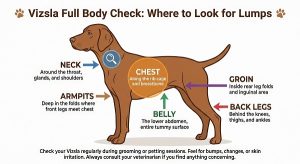
- Do a monthly lump check. Run your hands over your dog from nose to tail. Write down where each lump is and how big it is. A phone photo with a coin beside the lump works well.
- Test any new lump. A quick needle sample (called a fine needle aspirate) is cheap compared with surgery later. Don’t “wait and see” for months.
- Start extra screening around age 6 or 7. Ask your vet about yearly bloodwork and, for at-risk dogs, an occasional abdominal ultrasound.
- Keep your dog lean. Extra weight is linked to more health problems across the board.
- Talk to your vet about neutering timing. A Vizsla health survey reported that neutered dogs had higher odds of several cancers than intact dogs. The research isn’t settled, and the right decision depends on your dog, your home, and local rules. Make it a real conversation with your vet and don’t rush it.
Hip Dysplasia and Joint Problems
Hip dysplasia happens when the hip joint doesn’t fit together properly. Over time, that causes pain, a stiff walk, and arthritis.
Here’s where sources disagree. Wikipedia says hip dysplasia is very rare in Vizslas but possible, yet many vet and insurance sites list it as a common concern. Both can be partly true. Breeders who screen carefully have likely reduced the problem, while dogs from untested litters still carry the risk.
Signs to watch for:
- “Bunny hopping” when running
- Trouble getting up after naps
- Reluctance to jump into the car
- Stiffness after hard exercise
- Wobbling or swaying hind end
What it costs: One pet insurer estimates hip dysplasia treatment at roughly $1,500 to $6,000. Costs vary a lot by country and by clinic, so use that as a ballpark.
Prevention:
- Buy from parents who have hip scores. The Vizsla Club of America asks for hip evaluations through OFA or PennHIP at 24 months or older, and says preliminary evaluations before age 2 don’t count.
- Keep your puppy lean. Slower growth is easier on young joints.
- Skip forced running, long jumps and stair-heavy routines for puppies under about 12 months. Their growth plates are still closing.
- Give joint-friendly exercise like swimming and steady walks as dogs age.
If you’re building a fitness plan for an active dog, our guide on how often to exercise a working dog shows how to balance workload and recovery.
Epilepsy and Neurological Issues
Epilepsy causes repeated seizures. In Vizslas, it’s usually “idiopathic,” which means there’s no clear cause. It often starts somewhere between ages 1 and 5.
What a seizure looks like: collapsing, paddling legs, drooling, stiff body, loss of awareness. It’s frightening, but most seizures last one to three minutes.
What to do during a seizure:
- Stay calm and keep your hands away from the mouth.
- Move furniture and hard objects away.
- Note the time. Film it if you can.
- Call your vet if the seizure lasts more than five minutes, or if your dog has several in a row. Those are emergencies.
Prevention reality check: There’s no screening test for idiopathic epilepsy, so you can’t fully prevent it. What helps is asking breeders whether epilepsy has shown up anywhere in the pedigree, and being honest with yourself if it has.
There’s also a rarer Vizsla-linked muscle disease. Vizsla inflammatory polymyopathy can cause trouble swallowing, repeated regurgitation, heavy drooling, and wasting of the head muscles. If your Vizsla struggles to swallow or regurgitates often, see your vet early.
Hypothyroidism and Hormone Problems
Hypothyroidism means the thyroid gland makes too little hormone. Typical signs include weight gain, lethargy and skin problems.
If your once-bouncy Vizsla gets slow, gains weight on the same food, and has a dull coat, don’t write it off as “getting older.” A simple blood test can find it, and daily tablets usually manage it well. PetMD notes that untreated hypothyroidism can shorten a Vizsla’s lifespan.
Prevention tip: The Vizsla Club of America recommends autoimmune thyroiditis testing through OFA, repeated every other year in breeding dogs. Ask the breeder to show you these results.
Eye Problems in Vizslas
Vizslas can inherit several eye conditions:
- Entropion: the eyelid rolls inward and the lashes rub the eye. It’s common in breeds with slightly saggy skin.
- Progressive retinal atrophy (PRA): slow loss of vision, often starting with poor night sight.
- Cataracts: cloudy lenses.
- Primary glaucoma: there’s a recognized risk linked to an abnormality in the eye’s drainage structure. Glaucoma is painful and can cause blindness fast.
Warning signs: squinting, red or cloudy eyes, rubbing the face, bumping into things at dusk, or one eye looking larger than the other.
Prevention: Choose a breeder who does yearly eye exams on breeding dogs, and book regular eye checks with your vet. Glaucoma needs same-day attention.
Skin, Coat, Ear and Claw Problems
Vizslas have a short, smooth coat and no undercoat. That means little shedding, but it also means less protection from sun, cold, burrs and insects.
Allergies and Itchy Skin
Environmental allergies cause chewing, licking, rubbing, red belly skin and recurring ear infections. Your vet may suggest a diet trial, allergy medication, or medicated baths.
Ear Infections
Floppy ears trap moisture, especially after swimming. Check ears weekly. Smelly, red or waxy ears need a vet visit. Dry them gently after water play, and use only vet-approved cleaners.
Sebaceous Adenitis
This is an inherited skin disease where the oil glands become inflamed, leading to scaly skin and patchy hair loss. Skin evaluation for sebaceous adenitis is listed among the optional but desirable clearances.
Claw Problems
Sore, brittle or lost claws sometimes point to an immune-related claw disease. If your dog limps and licks the feet, check the nails before assuming a joint problem.
Bloat (GDV): The Emergency You Must Know
Gastric dilatation-volvulus, or bloat, happens when the stomach fills with gas and may twist. It’s life-threatening within hours. Deep-chested dogs like Vizslas are at higher risk.
Warning signs:
- Retching with nothing coming up
- Swollen, tight belly
- Heavy drooling and restlessness
- Pacing, looking uncomfortable, trying to vomit
- Pale gums and weakness
What to do: Go to an emergency vet immediately. Don’t wait until morning.
Practical prevention:
- Feed two or three smaller meals instead of one big one.
- Use a slow-feeder bowl if your dog gulps food.
- Avoid hard exercise for about an hour before and after meals.
- Don’t let your dog gulp huge amounts of water right after running.
- Ask your vet whether a preventive stomach-tacking surgery (gastropexy) makes sense. Many owners choose it during another planned surgery.
Dental Disease, Obesity and Separation Anxiety
These three aren’t glamorous, but they affect more Vizslas than the rare genetic conditions do.
Dental Disease
Dental disease affects over 80% of dogs older than 3, and one vet source says Vizslas may be more prone than most breeds. One clinic even warns that poor dental health can cut a dog’s life short by one to three years. Treat that as a clinic claim, not a proven rule, but the point stands: bad teeth hurt, and infection can spread.
What to do: Brush several times a week, give vet-approved dental chews, and schedule professional cleanings when your vet recommends them.
Obesity
Vizslas should look lean, with ribs you can feel easily and a visible waist. Obesity can lead to diabetes, digestive trouble, heart disease and back pain. Measure meals, count treats, and weigh your dog monthly.
Separation Anxiety
Vizslas are famous “velcro dogs.” They’re affectionate, energetic, sensitive and strongly bonded to their people. That closeness is lovely, but it can tip into panic when you leave.
Signs: destroyed doors, nonstop barking, drooling, toileting indoors, escape attempts. These can injure your dog, from broken teeth to torn nails.
Prevention: Practice short absences from puppyhood, build crate comfort, and give hard exercise before you leave. If you’re starting with a puppy, our ebook Beyond the Bark covers the early habits that make later training easier.
Parasites, Heat and Working Injuries
If you hunt, run, or hike with your Vizsla, add these to your checklist.
Ticks and Fleas
Ticks carry serious diseases in many parts of the world, including Lyme disease in the US and Europe and several blood parasites in warmer climates. Use year-round parasite control suited to your region, and check your dog after every field trip. For a detailed look at tick prevention, read our K9 Advantix II tick care guide.
Heat Stress
Thin coat or not, a hard-running Vizsla overheats fast. Signs include heavy panting, thick drool, bright red gums, stumbling and vomiting. Run early or late in the day, bring water, and cool your dog right away if needed. Our review of dog cooling vests shows which products help.
Cold Weather
With no undercoat and little body fat, Vizslas get cold quickly. A well-fitted coat helps in winter, and wet-and-windy days need extra care.
Common Field Injuries
- Cut paw pads from glass or thorns
- Torn nails
- Cruciate ligament injuries from hard twists
- Foxtail grass or burrs in ears and nose
- Snake bites in some regions. Remember snake bites were among the more common accidental causes of death in Australian Vizslas.
Handler tip: Carry a small first-aid kit with gauze, vet wrap, saline, tweezers, and your vet’s emergency number. Do a full paw-and-body check after every hard session.
Vizsla Health Prevention Plan by Age
Here’s a simple schedule you can adapt with your vet.
| Life Stage | Key Health Focus | What to Do |
|---|---|---|
| Puppy (8 weeks to 12 months) | Vaccines, parasites, growth | Vet visits every 3–4 weeks until about 16–20 weeks, microchip, lean growth, no forced hard exercise |
| Young adult (1–3 years) | Joints, behavior, epilepsy onset | Hip evaluation at 24 months, steady exercise, yearly exam, watch for first seizures |
| Adult (3–6 years) | Weight, teeth, thyroid, skin | Yearly bloodwork, dental care, monthly lump checks, thyroid test if symptoms appear |
| Midlife (6–9 years) | Cancer surveillance | Check-ups twice a year, bloodwork, lump mapping, ask about abdominal ultrasound |
| Senior (9+ years) | Arthritis, cancer, organs | Twice-yearly exams, joint support, softer exercise, fast action on any new lump or weakness |
Note: Veterinary scheduling guides suggest puppy visits every 3 to 4 weeks through about 16 to 20 weeks. Your vet may adjust this.
The 5-Minute Monthly Home Health Check
- Eyes: clear, bright, no squinting or discharge
- Ears: clean, no smell or redness
- Mouth: pink gums, no heavy tartar, no bad breath
- Skin and coat: no patches, scabs or new lumps
- Paws and nails: no cracks, cuts or broken claws
- Belly: soft, not tight
- Weight and body condition: ribs easy to feel, waist visible
Write results in a notebook or phone app. A pattern is easier to spot on paper than in memory.
How to Choose a Healthy Vizsla Puppy
The best prevention starts before you ever bring a puppy home.
Health Tests to Ask For
For the US, the Vizsla Club of America’s health statement lists hip dysplasia evaluation, autoimmune thyroiditis testing, and annual eye exams as core screens. It recommends elbow, cardiac and dwarfism (SD3) DNA testing too. Results should be on paper and public through OFA. In the UK, breed clubs also stress hip scoring, elbow scoring and eye checks, with glaucoma on the radar.
Questions to Ask the Breeder
- Can I see OFA or equivalent results for both parents?
- How old were the parents when tested?
- Has epilepsy, cancer, or sudden death appeared in the pedigree?
- What was the average lifespan of past dogs in this line?
- Do you offer a health guarantee, and what does it cover?
- Will you take the dog back if I can’t keep it?
Red Flags
- No health tests, or “my vet says they’re fine”
- Always has puppies available
- Won’t let you meet the mother
- Pushes you to pay a deposit fast
Tip: Consider pet insurance early. Many policies exclude conditions that show up before you enroll, and cancer care adds up fast.
Why You Can Trust This Guide
I wrote this guide from a working-dog handler’s point of view. Every medical claim comes from breed club health surveys, veterinary sources and recognized health programs, and I’ve named them as I went. Here’s how I approach health content:
- Experience: Handlers see what happens when working dogs overheat, get injured or lose weight under heavy workloads. That daily experience shapes the practical tips here.
- Expertise: The numbers come from sources like the Vizsla Club of America, UK breed health groups, OFA screening guidelines and published surveys.
- Authoritativeness: Where sources disagree, like the lifespan figures and the hip dysplasia rate, I show you both sides.
- Trustworthiness: I’m not a veterinarian, and this guide doesn’t replace one. Your vet knows your dog’s history and can run the right tests.
FAQs
1. How long do Vizslas live?
Most sources say 12 to 14 years. However, some breed club surveys report an average age at death closer to 9 to 10 years, partly because of cancer and accidents. Healthy weight, regular vet care and early lump checks give your dog the best chance of reaching the upper range.
2. What is the most common cause of death in Vizslas?
Cancer is the leading concern in breed health surveys, especially hemangiosarcoma and lymphoma. Accidents like car strikes and snake bites also take many Vizslas, particularly active dogs that roam or chase.
3. Are Vizslas prone to hip dysplasia?
They can be, although sources disagree on how common it is. Breed clubs recommend hip evaluations at 24 months or older for breeding dogs, so ask for both parents’ results before you buy a puppy.
4. What health tests should a Vizsla breeder do?
At minimum, hip evaluation, thyroid testing and eye exams. Elbow, cardiac and DNA tests are also recommended. Ask to see the results, and check them on the OFA database if you’re in the US.
5. How can I tell if my Vizsla has bloat?
Look for retching without vomiting, a swollen tight belly, drooling, restlessness and pale gums. Bloat is an emergency, so go to a vet immediately instead of waiting to see if it passes.
Conclusion
Vizslas are loving, athletic and sensitive dogs, and most of them live happy lives. But the breed has real health risks, and cancer is the one to take most seriously. The good news is that you have more control than you think.
Your action list:
- Buy from a breeder who shares real health test results.
- Keep your Vizsla lean for life.
- Do a monthly nose-to-tail check and map every lump.
- Test new lumps early instead of waiting.
- Learn the signs of bloat, heat stroke and seizures now, before you need them.
- Protect your dog from roads, wildlife, ticks and burnout.
- Book twice-yearly vet visits from midlife onward.
Do these things consistently, and you’ll catch most problems while they’re still easy to treat.
Want more handler-tested dog health and training tips? Subscribe to our weekly articles roundup newsletter and get new guides in your inbox every week.
Disclaimer: This article is for general education and isn’t veterinary advice. Always talk to a licensed vet about your dog’s health.

Her work centres on obedience, detection, protection and operational readiness. She favours proven methods built on repetition, consistency and real-world conditioning, so that both dogs and handlers are prepared for high-pressure tasks.
Rofiat represented the Nigerian Army Dog Centre at the Nigerian Army Day Celebration (NADCEL) 2026, where she led demonstrations in obedience, explosive detection, agility and tactical movement. Through articles, training content and documentaries, she shares field-based insight into how structured training, clear communication and trust between handler and dog affect performance and reliability.
She is the author of Beyond the Bark: Inside a Pro Handler's Playbook for Raising the Ideal Dog, a practical guide that helps dog owners and handlers apply professional training principles in everyday situations.
- Food Aggression Dog Training: Pro K9 Guide - November 21, 2026
- DIY Dog Scent Training: Easy 4-Week Home Guide - November 20, 2026
- Buckeye Puppies Review: 5 Red Flags to Check - November 19, 2026