Hairless Dog Breeds: 9 Types, Care Guide & Costs
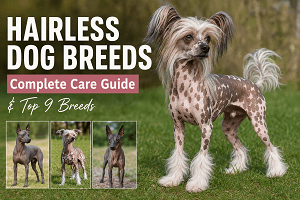
Hairless dog breeds are dogs born with little or no body hair. The best-known are the Chinese Crested, Xoloitzcuintli, Peruvian Inca Orchid and American Hairless Terrier. The AKC recognizes these four hairless breeds. Several rarer types exist, but most aren’t officially recognized.
They aren’t “low maintenance.” They need sun protection, warm clothing in cool weather, and a steady skin routine. They also aren’t allergen-free. Dog allergies can come from dander and saliva, not just hair, and studies have found similar allergen levels in homes with “hypoallergenic” dogs and other breeds.
Table of Contents
- What Are Hairless Dog Breeds?
- Why Are Some Dogs Hairless? The Genetics Most Guides Skip
- The 9 Hairless Dog Breeds
- Are Hairless Dogs Hypoallergenic?
- Hairless Dog Care: Skin, Sun, Cold and Teeth
- Training and Temperament
- What a Hairless Dog Really Costs (and How to Find an Honest Breeder)
- Is a Hairless Dog Right for You?
- Why You Can Trust This Guide
- FAQs
- Conclusion
Introduction
Ever seen a Chinese Crested prance past and wondered whether it’s a dog or a fashion accessory? Hairless dogs turn heads everywhere. Many people also assume they’re the easy answer for allergies and messy floors.
Here’s the problem. Most articles on hairless dog breeds copy each other. They repeat the same “hypoallergenic” promise, list a few breeds, and skip the hard parts. Those parts are sunburn, skin cancer risk, missing teeth, chilly mornings and puppies sold by people who don’t know the genetics.
In this guide you’ll learn:
- Which hairless dog breeds are real, and which are rare or not real breeds at all
- Why hairlessness comes with missing teeth (it’s one gene)
- What science says about allergies
- How to protect the skin, including which sunscreen ingredients can poison a dog
- What costs, training and daily routines look like
What Are Hairless Dog Breeds?
A hairless dog carries a genetic trait that removes most or all of its coat. Some are fully bald. Others keep tufts on the head, tail and feet.
How many hairless dog breeds are there? Only a handful are officially recognized. The AKC currently recognizes four: the American Hairless Terrier, Peruvian Inca Orchid, Xoloitzcuintli and Chinese Crested. A few more types exist in South America and Africa, but they lack broad kennel club recognition. Some are debated as true breeds.
One thing surprises new owners. Most hairless breeds also come in a coated form. The coated Chinese Crested is called a Powderpuff. Hairless and coated puppies can be born in the same litter, and the next section explains why.
Why Are Some Dogs Hairless? The Genetics Most Guides Skip
This is where I’d send any serious buyer first, because it explains the teeth, the litter sizes and the breeder red flags.
In the Chinese Crested, Xolo and Peruvian Inca Orchid, hairlessness comes from a mutation in the FOXI3 gene. It’s a 7-base-pair duplication that causes canine ectodermal dysplasia, marked by hairlessness plus missing or oddly shaped teeth. Hair and teeth are both ectoderm-based tissues, so one gene affects both.
Researchers led by Tosso Leeb at the University of Bern found the mutation. It probably arose in Mexican hairless dogs about 4,000 years ago and then spread into the Peruvian and Chinese Crested lines.
The key facts for owners:
- The trait is dominant. A dog needs only one copy to be hairless.
- Two copies are lethal. Embryos carrying two mutant copies die before birth. Every living hairless dog carries exactly one copy.
- Breeding hairless to hairless has a cost. It produces about two-thirds hairless and one-third coated puppies on average. In Chinese Cresteds, litters run smaller than expected, and no double-copy puppies are ever seen.
- Hairless puppies can be more fragile early on. Neonatal deaths are more common in hairless pups than in coated littermates.
The exception: The American Hairless Terrier’s hairlessness comes from a different mutation, in the SGK3 gene. That’s why it doesn’t carry the same tooth issues as the other three.
Practical takeaway: Ask any breeder how they pair their dogs and how many pups survived in past litters. A good breeder answers openly.
The 9 Hairless Dog Breeds
Here’s the quick comparison. Data is thin for the rarer types, and I’ve marked those gaps honestly rather than guessing.
| Breed | Origin | Size | Lifespan | Recognition |
|---|---|---|---|---|
| Chinese Crested | Uncertain (Americas link likely) | 11–13 in, ~8–12 lb | 13–18 yrs | AKC recognized |
| Xoloitzcuintli | Mexico | 10–23 in, 3 sizes | 13–18 yrs | AKC 2011 |
| Peruvian Inca Orchid | Peru | Small, medium, large | Sources vary | AKC recognized |
| American Hairless Terrier | USA (Louisiana) | 12–16 in | 14–16 yrs | AKC 2016 |
| Argentine Pila | Argentina | Under 45 cm | Not well documented | National standard only |
| Hairless Khala | Bolivia | Small | Not well documented | Not recognized |
| Ecuadorian Hairless Dog | Ecuador | Small | Not well documented | Not recognized |
| Abyssinian Sand Terrier | Africa (disputed) | Medium-small | Unknown | Not recognized |
| Hairless Chihuahua | Mexico-linked | Toy | Chihuahua norm | Not a separate breed |
1. Chinese Crested
The most recognized hairless dog breed. The hairless type has silky tufts on the head (the crest), feet (socks) and tail (plume).
- Size and lifespan: About 11–13 inches, 8–12 pounds, and 13–18 years.
- Surprising origin: The modern breed probably didn’t start in China. Spanish explorers reportedly found these dogs in Central and South America as early as the 1500s.
- Health watch-outs: The breed has a higher rate of primary lens luxation (PLL), an eye problem, than most breeds. Hairless Cresteds also often lack a full set of premolars.
- Skin watch-out: Some Cresteds are allergic to lanolin. Check moisturizer labels.
2. Xoloitzcuintli (Mexican Hairless Dog)
Say it “show-low-eats-QUEENT-lee,” or just call it the Xolo. It’s Mexico’s national dog and one of the world’s oldest breeds. Xolos come in three sizes.
- Sizes: Toy is 10–14 inches, miniature 14–18 inches, and standard 18–23 inches. That means adult weights from about 10 to 55 pounds.
- AKC history: A Xolo named “Mee Too” was the first AKC-registered Xolo in 1887. The AKC dropped the breed in 1959, then brought it back in the Non-Sporting group in 2011. Any article that says the Xolo is the “only” AKC hairless breed is wrong.
- Personality: Calm, watchful and very bonded to family. Many are reserved with strangers.
- Bonus: Xolos come in a coated form too. The coated variety, with its short, flat coat, is considered the original form of the dog, from before the hairless mutation.
3. Peruvian Inca Orchid
An elegant sighthound. It comes hairless or coated, in small, medium and large sizes, and does well in lure coursing, rally and agility.
Its gene pool is tiny in the West. All AKC-recognized Peruvian Inca Orchids descend from 13 dogs brought from Peru in the early 20th century. So ask about inbreeding and health testing, and expect a waiting list.
4. American Hairless Terrier (AHT)
The only hairless breed native to the USA, and a great story. In 1972, a hairless female pup was born in a litter of purebred Rat Terriers and was adopted by Willie and Edwin Scott. All AHTs descend from that one dog, Josephine. The AKC formally recognized the breed in 2016.
- Temperament: Playful, alert and active, with real terrier energy.
- Health: Its hairlessness is recessive and comes from a different gene, so it lacks the missing-teeth link of FOXI3 breeds.
- Note: Some AHTs are born with coats and still count as the breed.
5. Argentine Pila
A rare, mostly hairless dog from Argentina. Argentina’s kennel club has a breed standard for it, and roughly 1,700 dogs are estimated to live there. Outside Argentina, they’re close to impossible to find.
6. Hairless Khala (Bolivian Hairless Dog)
It has a scruffier look than other hairless breeds. It may descend from the Peruvian Inca Orchid or the Xolo. Very few exist outside Bolivia.
7. Ecuadorian Hairless Dog
Not officially recognized as its own breed, and often described as a Xolo × Peruvian Inca Orchid cross known for catching rats. Nearly all live in Ecuador.
8. Abyssinian Sand Terrier (African Hairless Dog)
Its history is murky. Some sources say the breed existed in the past, and the claims need more evidence. If someone sells you one, ask hard questions.
9. Hairless Chihuahua
Cute, but not a separate breed. It’s more of a genetic accident than a true breed. Know what you’re buying.
A note on the Jonangi: This Indian breed occasionally produces hairless individuals. Hairlessness isn’t what the breed is known for. It’s a rare occurrence within it. That’s why it isn’t on the main list.
Are Hairless Dogs Hypoallergenic?
Short answer: No dog is 100% hypoallergenic, and hairless dogs are no exception. Some allergic people do react less to some individual dogs, but the label isn’t reliable.
The science:
- Allergens aren’t just in hair. Even hairless dogs produce Can f proteins through saliva, urine and dead skin cells.
- Big study #1. In 2011, Nicholas and colleagues checked allergen levels in 173 homes and found no meaningful difference between “hypoallergenic” breeds and regular dogs.
- Big study #2. A Dutch study (Vredegoor, 2012) found “hypoallergenic” breeds carried higher levels of the main dog allergen (Can f 1) in their coats, and home air levels were the same across breeds.
Fair warning: those studies looked at Poodles, Labradoodles and similar breeds, not hairless dogs. I couldn’t find a large study of hairless breeds specifically. Treat “less dander flying around” as a plausible bonus, not a promise.
What actually helps allergic households:
- Spend real time with the breed first. Visit a breeder or owner, sit with the dog for an hour or two, and see how your body reacts. Do this before you pay a deposit.
- Bathe on a schedule. One study found grooming cut Can f 1 by 84% in hair clippings and 86% in dander samples over eight days. But don’t over-bathe (see the next section).
- Wash fabrics and use HEPA filtration. Allergens settle in carpets and bedding.
- Talk to an allergist, especially if you have asthma.
Hairless Dog Care: Skin, Sun, Cold and Teeth
A coat does a lot of jobs: sun shield, insulation, and a buffer against scrapes. When it’s missing, you take over those jobs.
Hairless Dog Skin Care: How Often to Bathe
Here’s where many guides mislead you. They say “bathe twice a week” for every hairless breed. Sources disagree, and the right answer depends on the breed and the individual dog.
| Situation | Typical bathing approach |
|---|---|
| Acne-prone Chinese Crested | Often about once a week to keep pores clear. |
| Xolo with normal skin | About once a month. Too many baths strip natural oils and cause dryness, blackheads and acne. |
| Any hairless dog after rolling or sweating | Rinse or wipe as needed |
My advice: start every two weeks with a mild, dog-formulated shampoo. If you see new blackheads or flaky skin, ask your vet before changing the routine. Weekly baths suit some acne-prone dogs, and monthly suits others.
A simple routine:
- After each walk: Wipe the body with a damp cloth. Check under the collar and between the toes.
- Weekly: Look over the whole body for new bumps, scabs or dark spots. Check the ears, nails and teeth.
- After bathing: Moisturize dry areas with a dog-safe product. Skip lanolin, since some Cresteds are allergic to it. Patch test anything new on a small area.
- Ears: Big upright Xolo and Crested ears collect dust and wax. Follow our step-by-step guide on how to clean dog ears to prevent infection.
- Bedding: Use soft cotton or fleece. Wool feels scratchy on bare skin, and Cresteds can be allergic to it.
Blackheads: Most hairless dogs get them, especially in adolescence. One veterinary answer notes that few Chinese Cresteds are entirely free of blackheads. Don’t squeeze them. Ask your vet about salicylic-acid wipes or a follicle-flushing shampoo.
Sun Protection for Hairless Dogs
Do hairless dogs need sunscreen? Yes, or protective clothing. Hairless dogs burn like fair-skinned people, and repeated sun damage raises cancer risk. Sunburn can lead to serious problems including squamous cell carcinoma, malignant melanoma and hemangioma.
Never use regular human sunscreen. This is the bit most articles gloss over:
- Dog sunscreens shouldn’t contain zinc oxide or PABA, because both are toxic if swallowed, and dogs lick their skin.
- A dog that ingests zinc regularly risks a serious anemia, with jaundice, weakness and collapse.
- Avoid fragrances too, and test any new product on a small patch.
- Research is still catching up. A recent review says titanium dioxide may be an alternative to zinc oxide, but more research is needed. So check with your vet about your local product options.
What works best:
- Clothing first. A veterinary dermatologist says full-body sun-protection clothing is often the best option for hairless breeds, with pet sunscreen on skin the clothing leaves exposed.
- Pet-formulated, broad-spectrum sunscreen (look for SPF 30 or higher) on the nose, ear tips, belly and armpits. These are the sparse areas that burn.
- Reapply. Every two hours if the dog stays outdoors.
- Avoid peak sun, roughly 10 AM to 4 PM.
- Watch window sunbathing. A dog that lies in direct sun through a window for hours daily, in the same spot, can gradually suffer UV damage.
- Check for changes. A new dark patch, crusty spot or sore that won’t heal needs a vet visit. Early skin checks save lives.
Temperature: Cold and Heat
Hairless dogs feel cold quickly. They also overheat when dark skin bakes in strong sun. Both problems are common.
There’s no official temperature chart for hairless dogs. Here’s my handler’s rule of thumb. Adjust it for your individual dog, who will tell you when they’re uncomfortable.
| What you feel | What to do |
|---|---|
| Warm, no wind | Usually fine. Add sun protection. |
| Light-sweater weather for you | Light shirt or jacket on |
| Cold and breezy, or wet | Coat, and boots if needed |
| Freezing or heavy rain | Short potty trips only, fully dressed |
Signs your dog is too cold: shivering, hunched posture, lifting paws, burrowing into blankets, and refusing to walk.
In hot climates: Choose shaded walks, carry water, and avoid hot pavement. A cooling vest can help, and we tested which designs actually work in our guide to dog cooling vests. Just make sure any vest fits without rubbing bare skin.
Teeth, Eyes and Other Health Checks
- Teeth: Remember the FOXI3 story? Hairless Cresteds often lack a full set of premolars. Xolos also often have fewer teeth than other dogs. Brush with a soft brush and ask your vet about dental checks. Remaining teeth work harder and may need more care.
- Eyes: For Cresteds, ask breeders about PLL and PRA testing.
- Vet visits: Ask your vet for a full skin check at least once a year, and sooner if anything changes. That’s my recommendation, and it isn’t a formal rule.
Training and Temperament
Hairless breeds aren’t the same on the inside. A Chinese Crested is a velcro companion. A Xolo tends to be calmer and choosy about people. An AHT is a busy little terrier. A Peruvian Inca Orchid is a sighthound with chase instincts.
What I’d stress from years of working with dogs:
- Socialize early. Xolos and Peruvian Inca Orchids can be reserved with strangers. Safe, positive exposure to people, sounds and surfaces from 8 to 16 weeks matters a lot.
- Use positive reinforcement. These are sensitive dogs. Harsh methods create fear and shut them down.
- Expect potty-training drama. Hairless dogs hate cold rain and wet grass. Build a solid routine, use crate training, and consider a covered outdoor spot. Xolos like a clean living space, and crate training helps.
- Keep sessions short. Ten minutes, several times a day, works better than one long session.
- Mind the comfort. A sweater that rubs or a harness that pinches will make training harder.
If you want a proven framework for raising a well-behaved dog, my book Beyond the Bark: Inside a Pro Handler’s Playbook for Raising the Ideal Dog breaks down professional training principles for everyday owners.
What a Hairless Dog Really Costs (and How to Find an Honest Breeder)
Purchase Price
Prices vary a lot by country, size and breeder. Here’s what I found:
- Xolo: Around $2,500–$4,000 from an ethical breeder, with red Xolos commanding a premium. That same source estimates lifetime costs at $20,000–$25,000. Adoption through a breed rescue can cost far less, around $300.
- Chinese Crested: Roughly $1,000 to over $3,000 in New Zealand, with the higher end for show pedigrees.
- Peruvian hairless dogs: Around $2,000–$4,000 where they’re available.
- UK listings: Ads I checked ranged from about £650 for a mini Xolo to £2,000 for another, with AHT puppies at £1,500.
Remember, very cheap “rare” puppies are where scams and unhealthy breeding live.
Ongoing Extras (My Estimates)
Beyond normal food, vaccines and vet care, budget for the hairless-specific extras. These are rough estimates and vary by country:
| Extra | Estimated yearly cost |
|---|---|
| Pet-safe sunscreen | $50–$100 |
| Moisturizers and skin wipes | $80–$150 |
| Coats, sun shirts, boots | $100–$300 |
| Dental care and extra skin checks | $100–$300+ |
How to Spot an Honest Breeder
Rare breeds attract scammers, so this matters more here than for common breeds. Look for:
- Health testing: For Cresteds, ask about PLL and PRA. Ask about dental history in the lines.
- Open genetics talk: They should explain hairless-to-coated pairings and litter loss without dodging.
- Papers you can verify: Confirm registration with the actual registry. Our guide on how to spot fake AKC-registered dogs covers the warning signs.
- Meeting the parents: You should see the mother and, ideally, other adult dogs from the line.
- No pressure: Walk away from “pay a deposit today or lose the puppy” tactics.
Is a Hairless Dog Right for You?
A hairless dog may suit you if:
- You can commit 10–15 minutes of daily skin and coat-clothing routines
- You want a smaller, indoor-focused companion
- You’re prepared for possible dental care costs
- You’ll research allergies with real exposure first
Think twice if:
- You want a dog who lives outdoors, or who needs zero grooming
- You have severe allergies and haven’t tested your reaction
- You live somewhere very cold or very sunny and can’t adapt the routine
- Your budget can’t cover extras and vet checks
Not sure about breed choice at all? Rescue groups and breed clubs are a great starting point. They’ll tell you the honest downsides.
Why You Can Trust This Guide
Written by: Cpl. Rofiat Muritala, a Nigerian Army military working dog instructor and handler with 14+ years at the Nigerian Army Dog Centre. Her work covers dog selection, foundation training, behavior shaping and performance evaluation, and she led demonstrations at NADCEL 2026. She’s also the author of Beyond the Bark.
Full transparency: Hairless breeds aren’t typical working dogs. The handler lens here means daily heat, skin, hydration and handling discipline, which apply to any dog. Breed facts, genetics and allergy data come from the sources below.
Sources used: American Kennel Club (breed pages and hypoallergenic/sunscreen articles), Journal of Allergy and Clinical Immunology (Vredegoor et al., 2012), Nicholas et al. (2011), University of Bern FOXI3 research (Leeb et al.), Genomia and CombiBreed genetic testing pages, a peer-reviewed review on UV and pet sunscreen, and veterinary dermatology sources.
Medical note: This article is educational, not veterinary advice. Talk to your vet about any skin changes.
FAQs
1. Are hairless dogs hypoallergenic?
No dog is fully hypoallergenic. Allergies can be triggered by dander and saliva, and studies found similar allergen levels in homes with “hypoallergenic” dogs and other breeds. Hairless dogs may spread less hair around, but you should test your own reaction before buying.
2. Do hairless dogs need sunscreen?
Yes. Use pet-formulated, broad-spectrum sunscreen (SPF 30 or higher) or UV-protective clothing. Avoid products with zinc oxide or PABA, which are toxic if licked and swallowed. Reapply every two hours during outdoor time, and avoid the midday sun.
3. Do hairless dogs get cold easily?
Yes. Without a coat they lose heat fast, so dress them in a jacket or sweater in cool weather and add a raincoat when it’s wet. Shivering, hunching and refusing to walk are the signs to act on.
4. How many hairless dog breeds are there, and which is most popular?
There are four AKC-recognized hairless breeds: the Chinese Crested, Xoloitzcuintli, Peruvian Inca Orchid and American Hairless Terrier. A few rarer types exist but lack broad recognition. The Chinese Crested is the most widely known.
5. How often should I bathe a hairless dog?
It depends on the breed and skin. Acne-prone Chinese Cresteds often do well with roughly weekly baths. Xolos often need only about monthly baths, since over-bathing dries the skin. Start with every two weeks and adjust with your vet’s advice.
Conclusion
Hairless dog breeds are affectionate, striking companions, but they’re not shortcuts. They trade a coat for a longer to-do list: sun protection, warm clothing, gentle skin care and dental awareness.
Your action plan:
- Choose by temperament, not looks. Meet adult dogs of the breed first.
- Test your allergies with real exposure before buying.
- Ask breeders about genetics, litter loss and health tests.
- Buy a pet-safe sunscreen and sun shirt before the puppy comes home. Skip zinc oxide and PABA.
- Build a skin routine and adjust it with your vet.
- Verify registration so you don’t fund a scam.
If you’re ready for the routine, a hairless dog can be a wonderful lifelong friend. If not, there’s no shame in picking a coated breed.
Want more practical dog guides every week? Subscribe to our weekly roundup newsletter.

Her work centres on obedience, detection, protection and operational readiness. She favours proven methods built on repetition, consistency and real-world conditioning, so that both dogs and handlers are prepared for high-pressure tasks.
Rofiat represented the Nigerian Army Dog Centre at the Nigerian Army Day Celebration (NADCEL) 2026, where she led demonstrations in obedience, explosive detection, agility and tactical movement. Through articles, training content and documentaries, she shares field-based insight into how structured training, clear communication and trust between handler and dog affect performance and reliability.
She is the author of Beyond the Bark: Inside a Pro Handler's Playbook for Raising the Ideal Dog, a practical guide that helps dog owners and handlers apply professional training principles in everyday situations.
- Bousnic Dog Training Collar Review: Is It Safe? - September 30, 2026
- Gravy Train Dog Food Review: Ingredients & Recalls - September 30, 2026
- How to Spot Fake AKC Registered Dogs: 5 Warning Signs - September 29, 2026