Borzoi Dog Breed: Complete Guide to the Elegant Russian Giant
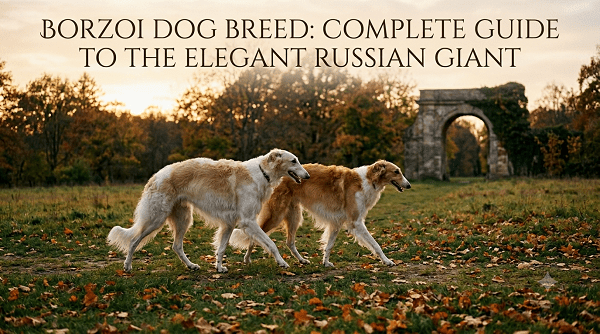
If you’ve ever walked past a dog show and spotted a silky-coated, impossibly elegant giant strutting down the aisle, you might have seen a Borzoi and probably didn’t even know its name. Most people have never heard of this breed, yet the Borzoi is one of the most fascinating dogs on the planet: a Russian sighthound that can reach speeds up to 35–36 mph, was bred to hunt wolves for Russian nobility, and remains one of the quietest, most dignified giant breeds you’ll ever meet.
The problem? Despite their incredible history, remarkable speed, and gentle temperament, Borzois are severely underrepresented in modern dog culture. They rank around #105 in popularity globally, making them much rarer than Greyhounds, Afghan Hounds, or even Salukis. If you’re considering a unique, elegant, and affectionate giant dog or you’re just curious about this mysterious sighthound, this article will give you everything you need to know.
You’ll learn:
The Borzoi’s complete breed profile (size, coat, temperament)
Their fascinating history as Russian wolf hunters
Exact care requirements (exercise, grooming, nutrition)
Training strategies for independent sighthounds
Real cost data and health concerns
Whether a Borzoi is the right pet for your lifestyle
Let’s dive into the world of the Borzoi, the elegant giant most people have never heard of.
Table of Contents
Introduction
What Is a Borzoi? Breed Overview
Borzoi History: From Russian Nobility to Modern Homes
Borzoi Physical Characteristics & Breed Standards
Borzoi Temperament: The Gentle, Dignified Giant
Borzoi Care Guide: Exercise, Grooming & Nutrition
Borzoi Training: Working with an Independent Sighthound
Health Concerns & Lifespan
Borzoi vs. Other Sighthounds
Is a Borzoi Right for You?
FAQs About Borzois
Conclusion
What Is a Borzoi? Breed Overview
The Borzoi (pronounced “BOR-zoy”), also known as the Russian Wolfhound, is a giant sighthound breed originating from Russia. As a member of the hound group, it belongs to the category of dogs that hunt primarily through sight rather than scent. If you’re unfamiliar with canine breed classifications, our guide on the 7 Types of Dogs and How They Are Classified explains where sighthounds like the Borzoi fit within the broader canine world.
Quick Breed Facts
Source: [pets4homes.co]
Despite their towering height, Borzois are not bulky, they have a lean, streamlined build designed for explosive speed. Their long, slender legs, deep chest, arched loin, and narrow head make them one of the most aerodynamically impressive dogs, even with their long coat.
When you’re choosing a guard dog for your family or looking for a unique sighthound, the Borzoi stands out as a breed that combines gentle affection with athletic power.
Borzoi History: From Russian Nobility to Modern Homes
The Borzoi’s story begins in 17th-century Russia, where they were bred exclusively by Russian nobility for one daring purpose: wolf hunting. Unlike most sighthounds that hunt smaller prey, Borzois were specifically developed to chase, catch, and kill wolves in the frozen Russian wilderness.
Key Historical Facts
Original Name: “Borzoi” comes from the Russian word borzý, meaning “fast” or “swift”.
Royal Connection: Only nobles could own Borzois; they were considered status symbols among Russian aristocracy.
Wolf Hunting Talent: Borzois were trained to work in pairs or groups, using speed to corner wolves and powerful jaws to subdue them.
Export to West: In 1842, Tsar Nicholas I gifted a pair of Borzois to Queen Victoria, introducing the breed to Western Europe.
AKC Recognition: The American Kennel Club recognized the Borzoi in 1884, making it one of the earliest Russian breeds recognized in the U.S.
The breed’s name changed over time. During the Soviet era, the name “Russian Wolfhound” was mistranslated and simplified to “Borzoi.” Today, both names are used, but Borzoi is the official AKC name.
What makes this history remarkable? The Borzoi was bred for extreme cold and predatory power, two traits that shaped their modern coat and prey drive. Their long, silky coat wasn’t just for elegance; it was a functional adaptation to survive Russian winters while hunting.
Today, Borzois are no longer used for wolf hunting (obviously), but their strong prey drive remains. If you’ve ever worked with a Malinois or any high-drive working dog, you’ll understand how breeding purpose shapes behavior, even centuries later.
Borzoi Physical Characteristics & Breed Standards
The Borzoi is the epitome of grace, a strong, athletic dog with a long, silky coat and full tail. Their appearance is unmistakable: elegant, streamlined, and powerfully built for speed.
Distinctive Features
Unlike other sighthounds (like Greyhounds or Whippets) that have short coats for maximum aerodynamics, the Borzoi’s long coat is unique. This coat adapted them for cold Russian winters while still allowing speed.
The Borzoi’s build follows a specific sighthound biomechanics:
Deep chest for oxygen capacity
Arched loin for flexibility
Long legs for stride length
Streamlined body for minimal air resistance
This combination allows them to reach speeds of 35–36 mph, making them one of the fastest dog breeds in the world.
Borzoi Temperament: The Gentle, Dignified Giant
If you’re wondering whether a Borzoi is a good pet, temperament is where this breed shines. Borzois are known for their gentle, calm, and dignified temperament.
Core Temperament Traits
Affectionate with family: They form deep bonds with their owners and are loyal companions.
Reserved with strangers: They can be aloof around newcomers but not aggressive
Quiet: Borzois are typically quieter dogs, rarely barking excessively.
Sensitive: They respond best to kind, gentle training and may become upset if handled harshly.
Independent: Their sighthound nature makes them somewhat aloof and independent.
Cat-like cleanliness: They exhibit cat-like habits, grooming themselves regularly.
This independence is a classic example of instinctive intelligence. Unlike highly obedient working breeds that constantly seek handler direction, Borzois often make decisions based on centuries of hunting instincts. Understanding the difference between obedience and instinct can help owners set realistic training expectations.
When you’re choosing a guard dog for your family, it’s important to note that Borzois are not aggressive by nature. However, they do possess a strong prey drive outdoors due to their hunting heritage. This means they will eagerly chase small animals if given the chance, so responsible ownership involving careful supervision is essential.
Indoors, they’re content to lounge quietly but need opportunities to run in secure areas outside. This calm-at-home, fast-outside energy pattern is classic sighthound behavior.
Borzoi Care Guide: Exercise, Grooming & Nutrition
Owning a Borzoi requires understanding their unique needs as a giant sighthound. Let me break down the essentials.
Exercise Requirements
Despite their calm indoor nature, Borzois need regular, vigorous exercise:
Daily walks: 30–60 minutes, twice daily
Running sessions: At least 2–3 times per week in a secure, fenced area (6-foot minimum fence recommended)
Sprint opportunities: Sighthounds need to run at full speed, this is non-negotiable for their mental health
No leash running: Never let a Borzoi run off-leash; their prey drive will override recall
If you’ve ever worked with a Malinois, you’ll know that high-drive working dogs need purpose. For Borzois, running is their purpose. Without it, they can become depressed or develop behavioral issues.
Grooming Needs
The Borzoi’s coat is one of its most notable features. Here’s what you need to know:
Their coat can be straight, wavy, or slightly curly, and feathering on the neck, hindquarters, and tail requires extra attention. During shedding seasons (spring and fall), daily brushing is essential to prevent matting.
Nutrition for a Giant Breed
Borzois are giant breeds, so their nutrition needs differ from smaller dogs:
High-quality protein: 25–30% protein for muscle maintenance
Balanced fats: 12–15% fat for energy
Calcium & phosphorus: Critical for bone development in growing puppies
Meal frequency: 2–3 meals per day for adults; 3–4 for puppies
Avoid overfeeding: Giant breeds can develop joint issues if they grow too quickly
A typical adult Borzoi eats 3–4 cups of high-quality dog food daily, split into two meals. Puppies need more frequent feeding (up to 4 times daily) with specialized giant-breed puppy formulas.
Borzoi Training: Working with an Independent Sighthound
Training a Borzoi is different from training a working dog like a German Shepherd or Malinois. Working breeds are typically selected for extreme trainability, responsiveness, and task-focused behavior, whereas Borzois were bred to make independent decisions while pursuing prey.
Training Principles for Borzois
Positive reinforcement only: Borzois are sensitive and respond best to kind, gentle training
Short sessions: 10–15 minutes maximum; they lose interest in long drills
Early socialization: Start at 8 weeks to ensure they’re comfortable with strangers, other dogs, and environments
No harsh corrections: Harsh handling can upset them and damage trust
Focus on recall: Their prey drive means they’ll chase, recall training is critical
Many owners mistakenly believe stubborn breeds require dominance-based handling. In reality, Borzois respond far better to consistency, structure, and positive reinforcement than force or intimidation.
Key Training Goals
Leash manners: Teach loose-leash walking early
House training: Borzois are cat-like and clean; they’re generally easy to house-train
Boundary training: Teach them where not to go (e.g., off furniture)
Recall: Essential for safety due to high prey drive
Gentle handling: Practice having their ears, legs, and coat touched
When you’re choosing a guard dog for your family, remember that Borzois are not guard dogs. They’re companions and sighthounds. Their training should focus on companionship, not protection work.
Health Concerns & Lifespan
The Borzoi has a lifespan of 10–12 years, which is typical for giant breeds. However, like all large dogs, they face specific health risks.
Common Health Issues
Health Screening Recommendations
Puppy exam: Full vet check at 8, 12, and 16 weeks
Hip evaluation: X-rays at 12–18 months
Eye exam: Annual screening
Heart exam: Annual screening starting at 2 years
Dental care: Professional cleaning every 1–2 years
Reputable breeders will provide health clearances for both parents. Always ask for OFA (Orthopedic Foundation for Animals) or PennHIP certifications before purchasing.
Borzoi vs. Other Sighthounds
Borzois are often confused with other sighthounds, but they have distinct differences. Here’s how they compare:
Source: [thepetlabco]
The Greyhound is the fastest dog breed at 45 mph, but the Borzoi is still one of the top 5 fastest at 35–36 mph. The Borzoi’s long coat is unique among major sighthounds, and their wolf-hunting heritage gives them a higher prey drive than most.
Is a Borzoi Right for You?
Before you commit to a Borzoi, ask yourself these questions:
✅ Good Fits for Borzois
You have a large, secure yard (6-foot fence minimum)
You enjoy running or jogging and can provide sprint opportunities
You want a quiet, gentle companion (not a barker)
You’re experienced with independent breeds
You live in a cold or moderate climate (their coat suits cooler temperatures)
You want a unique, rare breed
❌ Poor Fits for Borzois
You live in a small apartment without yard access
You want a guard or protection dog (Borzois are not aggressive)
You have small pets (cats, rabbits, chickens, prey drive is too high)
You’re looking for a low-maintenance grooming dog
You want a highly obedient, biddable breed like a Golden Retriever
You’re on a tight budget (Borzois cost $1,000–$3,000+)
If you’ve ever worked with a Malinois, you’ll know that high-drive working dogs need structure. Borzois are different: they’re independent sighthounds who need freedom to run but also gentle guidance.
Whether you’re raising a Borzoi, a working-line shepherd, or any other breed, understanding how genetics, instincts, and training influence behavior is one of the most important aspects of successful dog ownership. For a deeper look into building the ideal canine companion from puppyhood to adulthood, explore Beyond the Bark: Inside a Pro Handler’s Playbook for Raising the Ideal Dog.
FAQs About Borzois
1. Is a Borzoi a good pet?
Yes, a Borzoi is a great pet for the right household. They are gentle, calm, and affectionate with family members. However, they’re reserved with strangers and have a strong prey drive, so they’re not ideal for homes with small pets like cats or rabbits. Indoors, they’re quiet and content to lounge, but they need secure outdoor areas to run.
2. How fast can a Borzoi run?
A Borzoi can run up to 35–36 mph (56–58 km/h), making them one of the fastest dog breeds. While the Greyhound is the fastest at 45 mph, the Borzoi still ranks among the top 5 fastest dogs globally. Their speed comes from their deep chest, long legs, and streamlined build designed for hunting wolves.
3. Are Borzois good with other dogs?
Yes, Borzois are generally good with other dogs if properly socialized from a young age. They’re not aggressive and can get along well with canine companions. However, their strong prey drive means they may chase small animals, so supervision around smaller dogs or pets is essential.
4. Do Borzois bark a lot?
No, Borzois do not bark a lot. They are known as quiet dogs, rarely barking excessively. This makes them excellent for owners who want a calm, non-noisy companion. They’re not prone to barking or guarding, which is unusual for a giant breed.
5. How much does a Borzoi cost?
A Borzoi puppy typically costs between $1,000 and $3,000 USD, depending on the breeder’s reputation, pedigree, and location. A puppy with 90%+ breed purity can cost around $3,000, while compromise on purity might bring the price down to $1,500. Their high price reflects their exclusive breeding history in Russia and Belarus.
Conclusion
The Borzoi is one of the most elegant, fascinating, and misunderstood dogs on the planet. This Russian sighthound combines explosive speed (35–36 mph), a gentle temperament, and a regal history as a wolf hunter for Russian nobility. Yet despite their incredible traits, they remain rare, ranking #105 in global popularity.
If you’re considering a Borzoi, here’s what you need to remember:
They’re gentle giants: Calm indoors, fast outdoors, and affectionate with family
They need space: A secure, 6-foot fenced yard is non-negotiable
They’re quiet: Rarely bark, making them excellent for noise-sensitive households
They’re independent: Training requires patience and positive reinforcement
They’re expensive: $1,000–$3,000+ for a puppy, reflecting their rare breeding history
They have high prey drive: Not suitable for homes with small pets
If you’ve ever worked with a Malinois or any high-drive working dog, you’ll understand that breeding purpose shapes behavior. The Borzoi was built for wolf hunting in frozen Russia and that history lives in their speed, coat, and prey drive today.
For the right owner, someone with space, patience, and appreciation for a unique breed, the Borzoi is an unforgettable companion. They’re the elegant giant most people have never heard of, but once you meet one, you’ll never forget them.
Ready to learn more? Connect with reputable Borzoi breeders in your region, join sighthound clubs, and attend dog shows to see this majestic breed in person. The Borzoi world is small, but it’s filled with passionate owners who love sharing this incredible breed with newcomers.

Her work centres on obedience, detection, protection and operational readiness. She favours proven methods built on repetition, consistency and real-world conditioning, so that both dogs and handlers are prepared for high-pressure tasks.
Rofiat represented the Nigerian Army Dog Centre at the Nigerian Army Day Celebration (NADCEL) 2026, where she led demonstrations in obedience, explosive detection, agility and tactical movement. Through articles, training content and documentaries, she shares field-based insight into how structured training, clear communication and trust between handler and dog affect performance and reliability.
She is the author of Beyond the Bark: Inside a Pro Handler's Playbook for Raising the Ideal Dog, a practical guide that helps dog owners and handlers apply professional training principles in everyday situations.
- Is K9 Advantix Safe for Dogs? A Handler’s Honest Review - October 2, 2026
- Australian Cattle Dog vs Blue Heeler: Any Difference? - October 1, 2026
- Bousnic Dog Training Collar Review: Is It Safe? - September 30, 2026