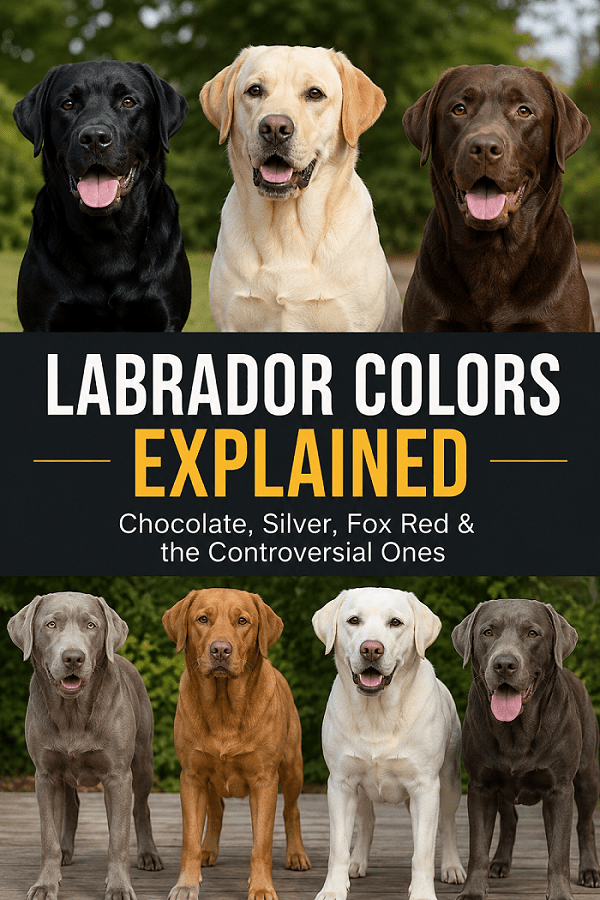
Labrador Colors Explained: Chocolate, Silver, Fox Red & the Controversial Ones
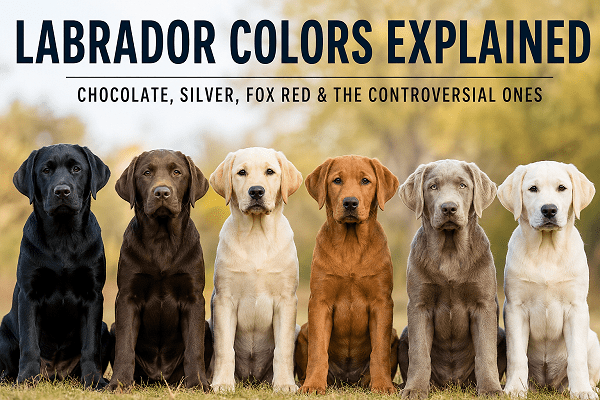
If you’ve ever walked into a dog park and seen a Labrador, you probably noticed most of them are black, yellow, or chocolate. But what about that striking silver Lab you saw on Instagram? Or the deep fox red Lab that looks like it belongs in a hunting documentary? You’re not alone in wondering about these colors.
The problem: Many dog owners, breeders, and even potential buyers are confused about Labrador colors. Some colors are officially recognized, while others are controversial. Some come with serious health risks, while others are just beautiful variations of standard colors. And worse, some people are selling crossbred dogs as “rare purebred Labradors” at premium prices.
What you’ll learn: In this comprehensive guide, I’ll explain everything about Labrador colors, including chocolate, silver, fox red, white, and the controversial dilutes. You’ll understand the genetics behind each color, which ones are AKC-recognized, health implications (with real statistics), rarity rankings, and whether color affects working ability. Whether you’re choosing a family pet, a hunting companion, or just curious about your Lab’s coat, this article gives you the facts you need.
Table of Contents
The 3 AKC-Recognized Labrador Colors
Chocolate Labrador: The Rarest Major Color
Yellow Labrador: From Pale Cream to Fox Red
Black Labrador: The Most Common Color
Fox Red Labrador: Same Genetics, Different Shade
Silver Labrador: The Controversial Color
White Labrador: The Light Extreme of Yellow
Color Genetics: How Lab Colors Are Determined
Health Risks Linked to Labrador Colors
Do Labrador Colors affect Working Ability?
Rarity Rankings: Which Color Is Actually Rarest?
Choosing Your Labrador: What Matters More Than Color
FAQs About Labrador Colors
The 3 AKC-Recognized Labrador Colors
Before we dive into the controversial colors, let’s start with what’s officially accepted. The American Kennet Club (AKC) recognizes only three Labrador colors:
Black
Yellow (which includes fox red and cream)
Chocolate (also called brown or liver)
According to the AKC Parent Club for the Labrador Retriever, “any color or combination of colors other than yellow, black, or chocolate is a disqualification”. This means if you’re buying a “purebred” Labrador for breeding, show, or registration purposes, only these three colors are legitimate.
But here’s where it gets interesting: even though only three colors are officially recognized, Labradors actually come in six recognized color variations in the broader dog community: black, chocolate, yellow, silver, red (fox red), and white. The extra three aren’t AKC-standard, but they exist and they’re popular.
When I train working dogs, I see all these colors. And I’ll tell you straight: color doesn’t determine ability. But it does matter for health, registration, and price. Let’s break down each one.
Chocolate Labrador: The Rarest Major Color
What Makes a Chocolate Lab Different?
Chocolate Labs have a deep brown coat that can range from light brown to nearly black-brown. Even puppies from the same litter can have different chocolate shades. The color comes from the TYRP1 gene (Tyrosinase-related protein 1), where chocolate (b) is recessive to black (B).
How Rare Are Chocolate Labs?
Chocolate is the rarest of the three major AKC colors. Here’s why:
Source: [articles.hepper]
Statistically, black Labs make up nearly half of all Labradors because four of the nine possible gene combinations produce black coats. Chocolate only has two combinations, making it significantly less common.
In field trials, chocolate Labs represent only 5% of competitors. They’re rarely used for hunting or working but are “champions in the show ring” where their color “stuns judges and earns high marks”.
Temperament Myth: Are Chocolate Labs More Energetic?
Many people believe chocolate Labs are more energetic and harder to train. Some say they’re the only Labs not used as service dogs by major training organizations. However, there’s no research-based evidence supporting this claim.
What’s real is their health profile, which is concerning.
Yellow Labrador: From Pale Cream to Fox Red
The Yellow Spectrum
Yellow Labs aren’t just one color. They range from:
Pale cream/white (the light extreme)
Light golden/yellow (the most common)
Deep golden (rich yellow)
Fox red (the dark extreme)
All of these are genetically identical, they’re all yellow Labs with the same genetics. The difference is just how much pigment their coat produces.
Fox Red Is Not a Separate Color
Fox red is not a distinct Labrador color, it’s just a particular shade of yellow. In the early development of the breed, fox red (or dark yellow) was the original yellow color of Labrador Retrievers. The first yellow Labradors were actually called “golden”.
Today, fox red Labs are becoming increasingly popular, especially in the sporting world. One owner of five fox-reds says their popularity for shooting is “mostly down to their excellent working ability”.
Black Labrador: The Most Common Color
Why Black Dominates
Black Labs have a dark, pure black coat that’s sleek and shiny. They’re the most common of all Labrador color variations, making up nearly 50% of all Labradors.
The reason is simple genetics: black is the dominant gene, while yellow and chocolate are recessive. Four of the nine possible gene combinations result in black coats.
Working Preference
Some people believe Black Labs are the “calmest and most affectionate” of the breed, but there isn’t research to back this up. What’s true is that they’re often chosen for hunting and make wonderful non-working pets.
In the working dog world, black Labs are frequently seen in K9 units, search-and-rescue, and hunting because their dark coat provides better camouflage in many environments.
Labrador Retrievers continue to be one of the most trusted breeds for detection work worldwide because of their exceptional scenting ability, trainability, and stable temperament.
Fox Red Labrador: Same Genetics, Different Shade
Fox Red vs. Golden: Are They the Same?
Yes, fox red Labradors are the same as golden Labradors genetically. Fox red Labs have the same genetics as a yellow Lab but present a deeper yellow or brown hue that appears rusty red.
Some people argue that fox reds aren’t purebred and are mixed with Golden Retrievers. This is not true. These beautiful golden-red colored Labs are still purebred, it’s “all the beauty of a golden retriever without the high maintenance and long coat that goldens are known for”.
Why Fox Red Is Popular Now
Once shunned in favor of ubiquitous black, the fox-red Labrador is now becoming increasingly popular. A trainer who works with red Labs confirms that “colour has no bearing upon performance, although you do have to concentrate when working reds”.
The popularity for shooting is linked to their excellent working ability. One shooter says, “There’s nothing better than watching a fox-red Labrador using all its natural hunting ability to find and pick a runner on a shoot day”.
Silver Labrador: The Controversial Color
What Is a Silver Lab?
Silver Labs are stunning, with a light grey coat that shines beautifully in the sun. They look like Blue Labs but are actually diluted chocolate Labs. Their coat is light or diluted, creating a silvery appearance.
Is a Silver Labrador Purebred or Crossbred?
This is one of the most controversial questions in the Labrador world. Here’s what the facts say:
The official position: The AKC Parent Club for the Labrador Retriever states that “a silver Labrador is not a purebred Labrador retriever”.
The scientific evidence:
The Labrador breed does not carry the dilute gene (dd) that appears universally in Weimaraners
The D locus is the primary locus associated with diluted pigment, resulting in gray/blue coats
Most Labradors possess a “DD” allele, and any dominant “D” gene results in solid, non-dilute coat
Silver Labs have “dd” allele (both recessive genes), creating dilute coloration
The Weimaraner is the only known breed where the universality of dd is a characteristic
The consensus among breed clubs:
AKC Parent Club: “Silver Labrador is not purebred”
National Labrador Breed Council of Australia: “These silver Labradors are cross-bred dogs – the result of crossing a Labrador Retriever with a Weimaraner”
UKC: “Does not recognize any form of silver coloration as a variation of chocolate” and “does not knowingly accept registrations for Labradors with silver coat coloring”
Dutch Kennel Club: Breeding of dilute Labradors banned since April 1, 2016[brookhavenlabs]
The Kennel Club (Great Britain): Officially states dilute colors are “not recognized”
However, there’s disagreement: Some sources say parentage testing cannot conclusively prove that silver Labs are crossbred. One source argues silver Labs can be purebred with just a color variation.
Why Is the Silver Labrador Color Controversial?
The controversy stems from several factors:
No historical record: In meticulous breeding records, whelping logs, and stud books from the Earl of Malmesbury and Duke of Buccleuch, there was never any mention of dilutes appearing in retriever breeds.
First silver registration: The AKC registered the first “Silver” only in 1985, decades after the breed was established.
Crossbreeding suspicion: The overwhelming consensus among legitimate Labrador Clubs is that dilutes result from crossbreeding with Weimaraner.
Registration fraud: Some silver dogs are falsely registered as chocolates, and registrations will be revoked if discovered.
Premium pricing deception: The pet-owning public is “being duped into believing that animals with this dilute coat color are desirable, purebred and rare and, therefore, warrant special notoriety or a premium purchase price”.
Bans in multiple countries: Netherlands, Australia, New Zealand, and Great Britain prohibit registration and breeding of dilutes.
Health Risks for Silver Labs
Unfortunately, silver Labs inherit health issues similar to their chocolate siblings:
Color Dilution Alopecia (CDA): Affects 10–15% of dogs with diluted coats, causing patchy hair loss and skin inflammation.
Shorter lifespan: They tend to live shorter lives than black and yellow Labradors.
Skin problems: CDA leads to patchy fur and skin issues.
White Labrador: The Light Extreme of Yellow
What Is a White Lab?
White Labradors are genetically identical to Yellow Labs, just like red Labs. Their coat is the lighter extreme on the Yellow Lab spectrum. They have very pale brown fur that can appear purely white, especially in sunlight.
Are White Labs Purebred?
Yes, white Labs can be purebred, they’re just a color variation. However, if the white coloration comes from albinism, that’s different. Albino Labs have a genetic mutation limiting coat color production and carry additional health problems:
Deafness
Blindness
Eye issues
Rarity
White, red, and silver are the rarest Labrador coat colors. White Labs are rarer than yellow Labs because light brown or yellowish coats are more common than pale white coloration.
Color Genetics: How Lab Colors Are Determined
The Two Main Genes
Labrador coat color is determined by two primary genes:
B gene (Black/Brown): Determines whether a dog is black or chocolate
Black (B) is dominant
Chocolate (b) is recessive
E gene (Extension/Yellow): Controls whether the B gene is expressed or blocked
If “E” is present, B gene shows (black or chocolate)
If “e” is present, yellow coat results regardless of B gene
Understanding coat color genetics is only one part of understanding the Labrador Retriever. Labradors belong to the Sporting Group, a category originally developed for retrieving game and working closely with hunters.
Nine Possible Combinations
There are nine possible gene combinations for Labrador coat color:
4 combinations → Black (most common)
3 combinations → Yellow
2 combinations → Chocolate (rarest major color)
The Dilute Gene (D Locus)
For silver/dilute colors, the D locus matters:
“D” (dominant): Full strength color
“d” (recessive): Dilute color
Silver Labs have “dd” allele (both recessive), creating dilute coloration. Chocolate Labs can have:
DD = Chocolate
Dd = Chocolate
dd = Silver
Health Risks Linked to Labrador Colors
Chocolate Labs: The Data Is Concerning
A major University of Sydney study of 33,000+ UK-based Labradors revealed serious health differences:[sydney.edu]
Key findings:
Chocolate Labs live about 2 years less than non-chocolate Labs (10.7 vs 12.1 years)
Ear inflammation is twice as high in chocolate Labs
Chocolate Labs are 4 times more likely to have hot spots
Chocolate Labs are more prone to obesity, ear infections, and joint conditions
Silver/Dilute Labs: Additional Risks
Color Dilution Alopecia: Affects 10–15% of dogs with diluted coats
Shorter lifespan: Similar to chocolate Labs
Skin problems: Patchy fur and inflammation
Yellow and Black Labs: Safest Choice
Yellow and black Labs have:
Longer lifespans (12.1 years average)
Lower disease rates for ear and skin conditions
No additional health issues from color genetics (unless albino)
Do Labrador Colors affect Working Ability?
The Short Answer: No
Labrador Retrievers are among the world’s most successful working dogs, serving in detection, assistance, search-and-rescue, and security roles. Their success comes from genetics, training, and temperament rather than coat color.
When I train working dogs, I work with black Labs, fox reds, chocolates, and yellows. Here’s what I’ve learned: color has nothing to do with ability.
A trainer who works with fox-red Labs confirms: “There’s no difference in their working ability to black Labradors or fox Labradors”. For competition dogs, “there’s no difference at all”.
Evidence from Hunting and Field Trials
Fox red Labs are popular for shooting because of their excellent working ability
One shooter says watching a fox-red Lab “using all its natural hunting ability to find and pick a runner” is unmatched
A trainer confirms you “do have to concentrate when working reds” but performance is identical
Fox red Labs are used for duck hunting by many hunters
The Chocolate Lab Exception?
Some believe chocolate Labs are more energetic and harder to train. They’re reportedly the only Labs not used as service dogs by leading training organizations. However:
No research-based evidence supports this claim
This may be due to higher energy levels
Or it may be due to their health problems rather than ability
Bottom Line for Working Dog Owners
If you’re choosing a Labrador for:
K9 work: Color doesn’t matter
Hunting: Color doesn’t matter (but black provides better camouflage)
Search and rescue: Color doesn’t matter
Service work: Yellow and black are preferred (possibly due to health, not ability)
Family pet: Color doesn’t matter for temperament
The only color that might affect working ability is chocolate, but that’s likely due to health issues, not inherent capability.
Rarity Rankings: Which Color Is Actually Rarest?
Official Rarity (Based on Statistics)
Important Distinction
Silver is the rarest Lab color overall. However, since it’s not AKC-recognized and likely crossbred, many serious breeders don’t count it.
Among AKC-recognized colors, chocolate is the rarest, representing only about 17% of all Labradors.
White, red, and silver are the rarest Labrador coat colors overall.
Choosing Your Labrador: What Matters More Than Color
If You Want an AKC-Registered Purebred
Choose from the three recognized colors:
Black
Yellow (including fox red)
Chocolate
Avoid silver, charcoal, or other dilutes unless you’re buying as a pet only (not for breeding/show).
If You’re Concerned About Health
Best choices: Black or yellow Labs
Longer lifespan (12.1 years)
Lower ear infection rates
Lower skin disease rates
Avoid if possible: Chocolate or silver
Chocolate: 10% shorter lifespan, 2x ear infections, 4x hot spots
Silver: Color dilution alopecia (10-15% risk)
If You Want a Hunting Companion
All colors work equally well. However:
Black provides better camouflage in many environments
Fox red is increasingly popular for shooting
If You Want a Family Pet
Color doesn’t matter for temperament. Claims that certain colors are calmer, friendlier, or more affectionate have no research backing.
Focus on:
Breeder reputation
Parent health testing
Puppy temperament
Your lifestyle needs
If you’re still deciding whether a Labrador is the right breed for your home, read our detailed guide on the Labrador Retriever’s temperament, history, energy levels, and family suitability before making your final decision.
If You’re Bewitched by “Rare” Colors
Be careful. The pet-owning public is “being duped” into paying premium prices for dogs marketed as “rare, desirable, purebred” when they may be crossbred.
Red flags:
Breeder claims silver is “purebred and rare”
Premium price for “rare color”
No AKC registration or chocolate registration for silver dog
Breeder won’t provide health testing results
FAQs About Labrador Colors
1. Is a silver Labrador purebred or crossbred?
The official position is that silver Labradors are NOT purebred. The AKC Parent Club for the Labrador Retriever states: “a silver Labrador is not a purebred Labrador retriever”.
The science: Labradors don’t naturally carry the dilute gene (dd) that creates silver color. This gene is universal in Weimaraners, suggesting crossbreeding. The overwhelming consensus among legitimate Labrador Clubs is that dilutes result from crossbreeding with Weimaraner.
However: Parentage testing cannot conclusively prove crossbreeding occurred. Some sources argue silver Labs can be purebred with just a color variation.
Bottom line: Major kennel clubs (AKC, UKC, FCI, Australian, Dutch, New Zealand) do not recognize silver as purebred and prohibit its registration.
2. Why is the silver Labrador color controversial?
The controversy stems from:
No historical records: Meticulous breeding logs from the breed’s founders never mentioned dilutes
Late appearance: First silver AKC registration was only in 1985, decades after breed establishment
Crossbreeding evidence: Silver likely resulted from Labrador-Weimaraner cross
Registration bans: Netherlands, Australia, New Zealand, and Great Britain prohibit dilute registration
Fraud concerns: Some silver dogs are falsely registered as chocolates, with registrations revoked if discovered
Price deception: People pay premium prices for “rare purebred” dogs that may be crossbred
Health risks: Silver Labs have Color Dilution Alopecia (10-15% risk) and shorter lifespans.
3. What’s the rarest Labrador color?
Silver is the rarest Lab color overall.
However, among AKC-recognized colors, chocolate is the rarest major color, representing only ~17% of all Labradors.
White, red (fox red), and silver are the rarest Labrador coat colors overall.
Rarity ranking:
Silver (rarest, but controversial)
White (rarest AKC-recognized extreme)
Fox red (rarest AKC-recognized extreme)
Chocolate (rarest major AKC color)
Yellow (common, ~33%)
Black (most common, ~50%)
4. Are fox red Labradors the same as golden Labradors?
Yes, fox red Labradors are genetically the same as golden Labradors. Fox red is not a distinct color, it’s just a particular shade of yellow.
Fox red Labs have the same genetics as yellow Labs but present a deeper yellow or brown hue that appears rusty red.
In the breed’s early development, fox red was the original yellow color. The first yellow Labradors were actually called “golden”.
Some people claim fox reds are mixed with Golden Retrievers. This is not true, they’re still purebred Labradors.
5. Do Labrador colors affect working ability?
No, color does not affect working ability.
A trainer who works with multiple colors confirms: “There’s no difference in their working ability to black Labradors or fox Labradors”. For competition dogs, “there’s no difference at all”.
Evidence:
Fox red Labs are popular for shooting due to excellent working ability
Hunters use fox reds for duck hunting successfully
Color has “no bearing upon performance” though you may need to concentrate more when working reds in certain environments
The chocolate exception: Chocolate Labs are reportedly the only Labs not used as service dogs by major organizations. However:
No research evidence supports temperament differences
This may be due to health problems (shorter lifespan, more ear/skin infections) rather than ability
Bottom line: Choose based on health and breeder reputation, not color. All colors work equally well when properly trained.
Conclusion: What You Should Remember
Choosing a Labrador color is about more than just aesthetics. Here’s what matters:
✅ Recognized colors: Black, yellow (including fox red), and chocolate are the only AKC-recognized colors. If you want a purebred for breeding or show, stick with these.
⚠️ Health concerns: Chocolate Labs have a 10% shorter lifespan (10.7 vs 12.1 years), 2x higher ear infection rates (23.4% vs 12.8%), and 4x higher hot spot rates (4.0% vs 1.1%). Silver Labs carry a 10-15% risk of Color Dilution Alopecia.
🚫 Silver controversy: The AKC Parent Club, UKC, and major international kennel clubs do not recognize silver as purebred. Evidence suggests crossbreeding with Weimaraner. Multiple countries have banned dilute breeding.
🎯 Working ability: Color does not affect ability. Black, fox red, yellow, and chocolate Labs all perform equally well in hunting, K9 work, and competition.
🏆 Rarity: Silver is technically the rarest, but among recognized colors, chocolate is the rarest major color at only ~17% of Labs.
💡 My advice: If you’re buying a Labrador, prioritize breeder reputation, health testing, and temperament over color. Avoid “rare color” premium pricing, especially for silver. For best health outcomes, choose black or yellow. And remember, when you’re working with a Lab, their coat color won’t make them a better or worse dog. Their training, genetics, and care matter far more.
Whether you end up with a sleek black Lab, a fox red hunting companion, a creamy yellow family pet, or even a controversial silver (if you’re buying as a pet only), you’ll have one of the most loyal, friendly, and versatile dogs on earth. That’s what makes the Labrador the world’s most popular breed and that’s true for every color.

Her work centres on obedience, detection, protection and operational readiness. She favours proven methods built on repetition, consistency and real-world conditioning, so that both dogs and handlers are prepared for high-pressure tasks.
Rofiat represented the Nigerian Army Dog Centre at the Nigerian Army Day Celebration (NADCEL) 2026, where she led demonstrations in obedience, explosive detection, agility and tactical movement. Through articles, training content and documentaries, she shares field-based insight into how structured training, clear communication and trust between handler and dog affect performance and reliability.
She is the author of Beyond the Bark: Inside a Pro Handler's Playbook for Raising the Ideal Dog, a practical guide that helps dog owners and handlers apply professional training principles in everyday situations.
- Bousnic Dog Training Collar Review: Is It Safe? - September 30, 2026
- Gravy Train Dog Food Review: Ingredients & Recalls - September 30, 2026
- How to Spot Fake AKC Registered Dogs: 5 Warning Signs - September 29, 2026