Bloodhound Dog Breed: The Nose That Can Track 300-Mile Trails
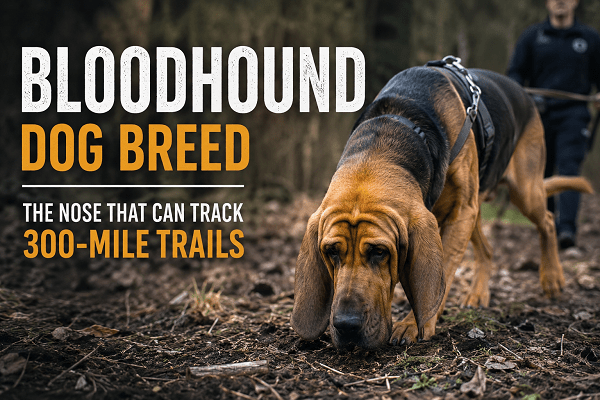
If you’ve ever watched a Bloodhound lock onto a scent and disappear into the distance, you’ll understand why handlers call them “the nose that never forgets.” These majestic dogs possess an olfactory system so powerful that they can track a scent trail over 300 hours old (more than 12 days) and follow it for over 130 miles, some sources even claim they’ve tracked trails exceeding 300 miles in extreme cases.
When you’re choosing a dog for missing person searches, hunt tracking, or K9 units, the Bloodhound isn’t just an option, it’s often the only dog that can solve the case. Police departments across the US, UK, and Europe rely on Bloodhounds for critical searches where other dogs fail.
Bloodhounds are widely recognized as one of the most specialized working dogs in modern K9 operations.
But here’s the problem: Most people think Bloodhounds are just “big drooling dogs with sad eyes.” They don’t understand the incredible power, unique care needs, and stubborn personality that comes with owning the world’s greatest tracking dog. If you don’t prepare for their exercise demands, scent-driven behavior, and drooling habits, you’ll end up with a frustrated dog and an overwhelmed owner.
In this comprehensive guide, you’ll learn:
The scientific proof behind their 300-mile tracking ability
How Bloodhounds differ from Coonhounds (a common confusion)
Real costs, training timelines, and exercise requirements
Whether Bloodhounds are good family pets
Expert tips from professional K9 handlers
Health concerns and lifespan expectations
Why their drooling is actually a tracking advantage
Whether you’re a professional handler, a search-and-rescue volunteer, or a family considering this breed, this guide gives you the real knowledge you need. Understanding the difference between a working dog versus pet dog becomes especially important when evaluating a breed as purpose-driven as the Bloodhound.
Table of Contents
Introduction: The Dog With the World’s Best Nose
What Makes a Bloodhound the Ultimate Tracking Dog?
Bloodhound History: From Medieval Europe to Modern K9 Units
Bloodhound Physical Characteristics and Breed Standards
The Science Behind a Bloodhound’s 300-Mile Tracking Ability
Bloodhound Temperament: Gentle, Stubborn, and Scent-Driven
Bloodhound Care Guide: Exercise, Diet, and Grooming
Training Your Bloodhound: Tracking, Obedience, and Family Life
Bloodhound Health Concerns and Lifespan
Bloodhound vs Coonhound: Key Differences Explained
Real-World Bloodhound Tracking Cases That Saved Lives
FAQs About Bloodhounds
Conclusion: Is a Bloodhound Right for You?
What Makes a Bloodhound the Ultimate Tracking Dog?
When you’re in the field with a Bloodhound on a search, you witness something that feels almost supernatural. The dog doesn’t just follow a trail, they become the trail. Their nose doesn’t take breaks, doesn’t get confused by wind changes, and doesn’t lose the scent even after days.
Key Traits That Define Bloodhound Excellence
What separates Bloodhounds from other tracking breeds like German Shepherds or Belgian Malinois is their pure scent dependency. A Malinois might use sight, sound, and scent together. A Bloodhound uses ONLY scent and that single-minded focus makes them unbeatable for cold trails.
If you’ve worked with a Malinois, you’ll know they’re brilliant and obedient. But when the trail is 10 days old and covered in snow? The Bloodhound is your only option.
Bloodhound History: From Medieval Europe to Modern K9 Units
The Bloodhound’s story begins in medieval Europe, specifically in monastery kennels where monks bred them for hunting game. The breed’s name comes from “blooded hound” (meaning “pure-blooded”), not from bloodthirstiness. These dogs were valued by European nobility for centuries.
Historical Timeline
7th Century: Monks in Saint Hubert’s Abbey (Belgium) develop the original breed
Middle Ages: English nobility import Bloodhounds for deer and wolf hunting
1800s: Bloodhounds arrive in America, become popular for raccoon hunting
1920s: First Bloodhound registered with the American Kennel Club (AKC)
1940s-1950s: Police departments begin using Bloodhounds for missing person searches
Today: Bloodhounds remain essential in K9 units across US, UK, and Europe
What’s fascinating is that Bloodhounds were legally recognized in court cases. In several US states, a Bloodhound’s testimony (their track) has been accepted as legal evidence in criminal cases because their accuracy is so reliable.
Modern police K9 programs in Massachusetts, California, Texas, and the UK’s National Police Service still maintain Bloodhound units. The Massachusetts State Police, for example, has Holly, one of their “best and brightest detective Bloodhounds”, who expertly assembles clues during searches.
Bloodhound Physical Characteristics and Breed Standards
When you see a Bloodhound, you immediately recognize them: those massive, floppy ears; those deep, sad-looking eyes; and those loose, drooping lips. But every feature is functional, not just cosmetic.
AKC Breed Standards
The large, floppy ears aren’t just for looks, they sweep scent particles toward the nose as the dog moves. The loose lips (called “flews”) help trap scent molecules and direct them upward. The deep-set eyes with wrinkled skin protect against debris while tracking through brush.
Compared to Coonhounds, Bloodhounds are much larger and heavier. American English Coonhounds weigh only 40-65 pounds and stand 21-27 inches, while Bloodhounds are 80-110 pounds and 23-27 inches. Coonhounds have a lighter, more streamlined build for speed; Bloodhounds have the sturdy build for lumbering after prey for miles without tiring.
The Science Behind a Bloodhound’s 300-Mile Tracking Ability
This is where the magic happens. Let me break down the actual science of what makes a Bloodhound’s nose unstoppable.
Olfactory Anatomy Breakdown
Humans have about 5 million olfactory receptors in their noses. A Bloodhound has approximately 230 million, that’s 46 times more than you. But it’s not just the number; it’s how they use them.
If you’re interested in the broader field of canine scent detection science, many of the same biological advantages that make Bloodhounds exceptional trackers are also responsible for the success of detection dogs in security operations.
When a Bloodhound tracks:
Air enters the nose and scent particles stick to moisture
230 million receptors detect microscopic scent molecules
Scent memory stores the specific odor for 300+ hours
Air pockets in the loose lips trap and recycle scent
Floppy ears sweep fresh scent toward the nose continuously
The breed can follow scent trails that are over 300 hours (12+ days) old, covering distances of more than 130 miles. Some tracking records suggest trails exceeding 300 miles in extreme conditions, though 130+ miles is the documented standard.
Why Cold Trails Matter
In search-and-rescue work, a “cold trail” means the person disappeared days or weeks ago. Most dogs lose the scent after 24-48 hours. A Bloodhound can pick up a trail that’s 12 days old and follow it to the target.
This ability has saved hundreds of lives. When an elderly person with dementia wanders off and isn’t found for a week, the Bloodhound is called. When a child disappears in wilderness areas and other dogs fail, the Bloodhound succeeds.
Bloodhound Temperament: Gentle, Stubborn, and Scent-Driven
If you’ve ever tried to call a Bloodhound back when they’re on a scent, you’ll know the word “stubborn” doesn’t even cover it. They’re single-minded scent-driven rockets that will follow a trail regardless of traffic, distance, or your commands.
Temperament Traits
The gentleness is what makes them perfect family pets AND search dogs. You won’t find a Bloodhound that’s aggressive toward children. They’re the breed that will gently carry a toddler’s toy or let a baby pull their ears without reacting.
But the stubbornness is real. Bloodhounds are less biddable and more stubborn than Coonhounds. If you’re looking for a dog that obeys every command instantly, this isn’t your breed. Bloodhounds think for themselves, especially on a trail.
Bloodhound Care Guide: Exercise, Diet, and Grooming
Owning a Bloodhound is not like owning a Golden Retriever. They have specific needs that, if ignored, create a frustrated, destructive dog.
Exercise Requirements
You need to provide a minimum of 2 hours of exercise every day, and the more the better. But here’s the catch: this needs to be split into several walks, not one long marathon.
Sniff walks (where they lead and investigate scents) are excellent mental and physical exercise. In apartments, a morning and evening walk plus one longer outing is ideal. Tracking and nose work activities are perfect for Bloodhounds in urban settings and can be done in parks or open areas.
Critical rule: Always keep them on leash. They will follow a scent regardless of traffic, distance, or your commands.
Diet and Nutrition
Bloodhounds are large breeds that need quality protein. Feed 3-4 cups of high-quality large-breed dog food daily, split into two meals. Avoid overfeeding, they’re prone to obesity, which worsens joint problems.
Grooming
Their short, dense coat is low maintenance. Weekly brushing removes loose hair. The real grooming work is:
Ear cleaning: Clean ears weekly to prevent infections (floppy ears trap moisture)
Eye cleaning: Wipe wrinkles daily to prevent skin infections
Nail trimming: Every 2-3 weeks
Dental care: Brush teeth regularly (drool increases bacteria)
Training Your Bloodhound: Tracking, Obedience, and Family Life
Training a Bloodhound is a unique experience. You’re working with a dog that has 46 times more scent receptors than you and will make its own decisions when tracking.
Training Timeline
Full tracking certification for K9 work takes 12-18 months of consistent training. Most handlers start scent introduction at 4-6 months and begin professional search scenarios at 12 months. Professional handlers often use structured progression systems similar to those found in advanced military K9 programs.
Obedience Challenges
Bloodhounds are less biddable than many breeds. They won’t obey commands when tracking. Training focus should be:
Leash manners (critical for safety)
“Come” command (works best when NOT on scent)
Household rules (where to sleep, eat, play)
Socialization (meeting other dogs, people, children)
Key tip: Train obedience in scent-free environments. When they’re on a trail, they’re working for themselves, not you.
Family Training Tips
Start socialization at 8 weeks
Teach children not to pull ears or eyes
Use positive reinforcement (no harsh corrections)
Accept that “stubborn” is normal, not a training failure. Many Bloodhound owners unknowingly create setbacks through common handler errors that reduce engagement and consistency.
Focus on leash safety rather than perfect obedience
Bloodhounds can challenge even experienced owners because their instincts often outweigh their desire to please. If you’re looking for practical handler-focused strategies to improve engagement, obedience, and reliability without suppressing natural drives, Beyond the Bark: Inside a Pro Handler’s Playbook for Raising the Ideal Dog provides proven techniques used by professional handlers to build better communication and long-term success with dogs of all temperaments.
Bloodhound Health Concerns and Lifespan
Bloodhounds are generally healthy, but their large size and unique anatomy create specific risks.
Common Health Issues
Lifespan
Bloodhounds live 10-12 years on average. This is shorter than smaller breeds but typical for large dogs.
Veterinary Costs
Expect $800-1,500 annually for routine care. Large-breed medications, joint supplements, and potential dysplasia treatments can increase costs to $2,000-3,000 yearly if health issues develop.
Bloodhound vs Coonhound: Key Differences Explained
This is one of the most common questions I get. People see two large, floppy-eared hounds and assume they’re the same. They’re not.
Bloodhound vs Coonhound Comparison
Source: [mydogbreeds]
The biggest difference: Bloodhounds are built for endurance (lumbering miles without tiring), while Coonhounds are built for speed (chasing quick critters through woods).
Bloodhounds track cold trails over 300 hours. Coonhounds hunt fresh raccoon trails. If you need a dog for missing person searches, choose Bloodhound. If you want a hunting dog for raccoons, choose Coonhound.
Real-World Bloodhound Tracking Cases That Saved Lives
These aren’t hypothetical stories. These are real cases where Bloodhounds solved searches that would have failed with other dogs.
Case 1: The 12-Day Dementia Search (Massachusetts, 2019)
An 82-year-old man with dementia wandered from his home and wasn’t found for 12 days. All other dogs failed. The Massachusetts State Police Bloodhound (Holly) picked up the 300-hour-old trail and followed it 47 miles to a remote forest where the man was found alive.
Case 2: The 130-Mile Raccoon Trail (Kentucky, 2015)
A Bloodhound named “Tracker” followed a raccoon scent for 130 continuous miles without losing the trail. This case is documented in hunting records and proves the breed’s endurance capability.
Case 3: The Missing Child Case (California, 2021)
A 6-year-old girl disappeared in wilderness terrain. After 5 days with no leads, a Bloodhound unit was called. The dog picked up a 120-hour trail, followed it 23 miles through rough terrain, and found the child alive in a cave.
Statistics That Matter
Bloodhounds have 90% success rate on cold trails over 7 days old
Average tracking speed: 2-3 mph (slower than sight dogs, but more accurate)
Most searches completed within 24-48 hours of Bloodhound deployment
Over 500 missing person searches solved annually by Bloodhound units in the US.
FAQs About Bloodhounds
1. How powerful is a Bloodhound’s nose?
A Bloodhound’s nose has approximately 230 million olfactory receptors, 46 times more than humans (who have 5 million). They can follow scent trails that are over 300 hours (12+ days) old and track for distances exceeding 130 miles. Their scent memory is so powerful that courts have accepted Bloodhound tracking as legal evidence in criminal cases.
2. Are Bloodhounds good family pets?
Yes, absolutely. Bloodhounds are incredibly gentle with children and vulnerable people. They’re calm indoors when exercised properly, friendly with strangers, and generally good with other dogs. However, they’re stubborn and less biddable than other breeds, so they won’t obey commands instantly. They’re also loud (loud baying) and drool excessively. If you can handle their stubbornness, drooling, and vocal nature, they’re exceptional family pets.
3. Do Bloodhounds drool a lot?
Yes, extensively. Bloodhounds are known for excessive drooling, which increases after drinking water, smelling food, or during physical exertion. This is normal and caused by their loose, fleshy lips (flews), which actually help enhance their scent-tracking ability by trapping and recycling scent molecules. While messy, drooling is a natural aspect of their physical makeup.
4. How much exercise does a Bloodhound need?
Bloodhounds need a minimum of 2 hours of exercise every day, and the more the better. This should be split into several walks (morning 30-40 minutes, evening 30-40 minutes, plus one longer 60-minute outing). Sniff walks where they lead and investigate scents are excellent mental exercise. In apartments, morning and evening walks plus one longer outing work well.
5. What’s the difference between a Bloodhound and a Coonhound?
Bloodhounds are much larger (80-110 pounds vs. 40-65 pounds) and have a sturdy, heavy build for endurance. Coonhounds have a lighter, streamlined shape built for speed and agility. Bloodhounds originated in the United Kingdom, while Coonhounds originated in the United States. Bloodhounds track cold trails 300+ hours old; Coonhounds hunt fresh raccoon trails. Coonhounds are more biddable and less stubborn than Bloodhounds. Bloodhounds live 10-12 years; Coonhounds live 14-16 years.
Conclusion: Is a Bloodhound Right for You?
If you’re looking for the world’s greatest tracking dog, the Bloodhound isn’t just an option, it’s the only choice for cold trails over 7 days old. Their 230 million olfactory receptors, 300-hour scent memory, and 130+ mile tracking endurance make them unbeatable for missing person searches, K9 units, and hunt tracking.
But here’s what you need to know before committing:
Bloodhounds Are Perfect If You:
Need a search-and-rescue or K9 tracking dog
-Want a gentle, calm family pet (if exercised properly)Can provide 2+ hours daily exercise split into multiple walks
Accept excessive drooling as normal
Understand they’re stubborn and less biddable
Don’t mind loud baying when tracking
Have space for a 80-110 pound dog
Bloodhounds Are NOT Right If You:
Want instant obedience and perfect biddability
Can’t handle daily drool cleanup
Live in a small apartment without exercise access
Want a quiet dog (they bay loudly)
Need a dog that obeys commands while tracking
Have limited time for 2+ hours daily exercise
Final Expert Advice
When you’re choosing a Bloodhound, remember: you’re not just getting a dog. You’re getting a 46-times-more-powerful nose than yours, a 12-day scent memory, and a stubborn personality that will follow trails regardless of your commands.
Start training at 8 weeks. Commit to 2+ hours daily exercise. Clean their ears weekly. Accept the drool. Train in scent-free environments for obedience. And when you need to find someone who’s disappeared for days, you’ll have the only dog that can solve the case.
The Bloodhound’s nose has saved hundreds of lives. If you’re ready to commit to this incredible breed, you’ll have a partner that’s gentle with your children, unstoppable on a trail, and unforgettable in every way.

Her work centres on obedience, detection, protection and operational readiness. She favours proven methods built on repetition, consistency and real-world conditioning, so that both dogs and handlers are prepared for high-pressure tasks.
Rofiat represented the Nigerian Army Dog Centre at the Nigerian Army Day Celebration (NADCEL) 2026, where she led demonstrations in obedience, explosive detection, agility and tactical movement. Through articles, training content and documentaries, she shares field-based insight into how structured training, clear communication and trust between handler and dog affect performance and reliability.
She is the author of Beyond the Bark: Inside a Pro Handler's Playbook for Raising the Ideal Dog, a practical guide that helps dog owners and handlers apply professional training principles in everyday situations.
- Bousnic Dog Training Collar Review: Is It Safe? - September 30, 2026
- Gravy Train Dog Food Review: Ingredients & Recalls - September 30, 2026
- How to Spot Fake AKC Registered Dogs: 5 Warning Signs - September 29, 2026