Irish Wolfhound Guide: How to Live With the Tallest Dog
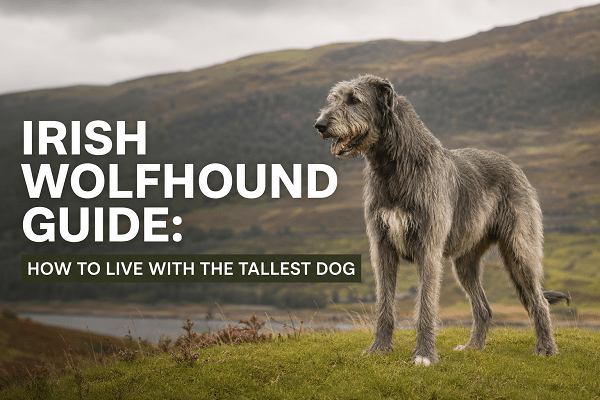
If you’ve ever looked at an Irish Wolfhound and thought, “That can’t be a pet in a normal house,” you’re half right and half wrong. They are enormous, but they’re also famously gentle, deeply loyal, and surprisingly manageable when you understand their size, health needs, and daily routine.
Table of Contents
What makes the Irish Wolfhound different
How big they really get
Temperament and family life
Exercise, training, and socialization
Health, lifespan, and vet care
Feeding, grooming, and home setup
Costs and ownership realities
FAQs
Why This Breed Stands Out
The Irish Wolfhound is not just one of the biggest dog breeds in the world; it was bred to hunt wolves and other large game, which explains its athletic frame and fearless history. Today, that ancient hunting background has mostly turned into a calm, affectionate, and dignified companion style that many owners describe as “a giant couch dog with a noble stare”.
What makes this breed unusual is the contrast: towering height, but soft manners. The breed standard from the UK and FCI sources places adult dogs at roughly 81 to 86 cm at the shoulder, with minimums of 79 cm for males and 71 cm for females in some standards. That means an Irish Wolfhound can literally stand eye-to-eye with kitchen counters, doorknobs, and small children.
How Big They Get
When people ask, “How big does an Irish Wolfhound get?” the short answer is: very big, and taller than most dogs you’ll ever meet. Breed standards commonly describe adult males at around 81 to 86 cm at the withers, with minimum weights of 54.5 kg for males and 40.9 to 40.5 kg for females depending on the standard.
Here’s the practical reality:
Their height is what surprises people first.
Their bulk arrives later, because they are lean, not blocky.
Puppies often look awkward for a long time while their legs outgrow their bodies.
Adults may weigh less than some mastiffs, but they can still take up an entire sofa.
One useful comparison: an adult Irish Wolfhound may be taller at the shoulder than a Great Dane, even though both are giant breeds. That scale matters because your home, car, furniture, and walking equipment all need to fit the dog, not the other way around.
Temperament at Home
If you want a guard dog that barks constantly and patrols the fence, this is not that breed. Irish Wolfhounds are usually described as gentle, easygoing, and patient, especially with their family. They can be affectionate without being clingy and often prefer quiet companionship over nonstop stimulation.[omlet]
This is where living with one gets interesting:
They are usually calm indoors.
They may be reserved with strangers rather than aggressive.
They can be wonderful with children if handled respectfully and supervised.
Their size alone means they can knock over a toddler without meaning to.
In a family setting, the key word is management, not drama. The dog may be kind, but its body is huge and its tail is basically a moving hazard zone. If you’ve ever lived with a giant breed, you know the biggest challenge is usually not temperament but physics.
Training and Socialization
Irish Wolfhounds are intelligent, but they are sensitive and do best with calm, reward-based training started early. Harsh corrections usually backfire, while food rewards, praise, consistency, and gentle repetition tend to work better. Many giant-breed owners mistakenly believe they need to be physically dominant because of the dog’s size. In reality, successful training comes from consistency and leadership rather than force. Our article on Dominance vs. Discipline: What K9 Trainers Know That Pet Owners Don’t explains why modern dog training focuses on structure rather than intimidation.
Understanding how different dogs learn can help owners set realistic training expectations. Some breeds respond quickly to structured obedience, while others rely more heavily on instinctive behaviors. Our guide on Obedience vs Instinct: The Two Types of Dog Intelligence Every Handler Must Understand explains why intelligence in dogs isn’t always measured by how fast they obey commands.
A smart training plan for a Wolfhound should include:
Early leash training.
Calm greetings with people and dogs.
Recall foundations.
Handling exercises for feet, ears, collar, and body.
“Place” or mat work so the dog learns to settle.
Socialization matters even more because giant-breed confidence is built, not assumed. Expose the puppy to different surfaces, sounds, vehicles, strangers, and polite dogs in a controlled way. The goal is not to make the dog overly social; it is to make the dog stable, relaxed, and easy to handle in the real world.[pdsa.org]
A real-world tip: train as if your puppy will eventually weigh as much as a grown human child. A 70-pound adolescent can still pull hard; a 120-pound adult can pull harder. Loose-leash skills should be taught from day one, not after the dog has learned bad habits.
Exercise Needs
How much exercise does an Irish Wolfhound need? Veterinary guidance from the UK PDSA suggests a minimum of two hours a day, spread across the day rather than packed into one long session. Some other breed-care guides suggest moderate daily exercise in the 40 to 60 minute range, but for a healthy adult, the more conservative and detailed advice is to build toward substantial daily movement with breaks and variety.
A good exercise routine usually looks like this:
Two or three walks per day.
Time to sniff, not just march.
Short training sessions.
Controlled play in a safe space.
Rest between activities.
The important thing is not to turn a giant puppy into a marathon athlete too early. Giant breeds need careful growth management because their joints and bones are under more strain as they develop. Think “steady and sensible,” not “run until tired.”
Large breeds can also lose significant fluids during exercise, particularly in warm climates. Owners should monitor hydration carefully and recognize the early warning signs of overheating. Learn more in Is Your Dog Drinking Enough Water? Hidden Dangers of Dehydration in Hot Climates.
Health and Lifespan
The hardest truth about the breed is that Irish Wolfhounds do not live as long as most owners wish. A published review found mean lifespan estimates ranging from 4.95 to 8.75 years, and many modern care guides place typical life expectancy around 6 to 10 years. That short lifespan is one reason experienced owners often say every year with a Wolfhound feels important.
The most frequently reported health issues include:
Dilated cardiomyopathy.
Osteogenic sarcoma.
Gastric dilation and volvulus, also known as bloat.
Osteochondrosis-related disorders.
Cardiac screening is especially important. The Irish Wolfhound Club of America states that CHIC requirements include screening for adult-onset and congenital cardiac disease, and that cardiac clearance should include an echocardiogram by a veterinary cardiologist. The Irish Wolfhound Foundation also emphasizes ongoing screening with ECG and echocardiography for this breed.
If you own one, health care should be proactive, not reactive:
Choose breeders who do cardiac screening.
Ask about orthopedic history.
Watch for bloat risk and emergency signs.
Keep regular vet follow-ups, especially for heart health.
Feeding and Body Care
Feeding an Irish Wolfhound is not just about filling a bowl. They grow fast, stay lean, and need a diet that supports controlled development, muscle maintenance, and joint health. Overfeeding a giant puppy can create more problems than people expect, especially in the first year.
Practical feeding habits:
Use a quality large-breed formula during growth.
Split meals into two or more feedings.
Avoid heavy exercise right before and after meals.
Keep body condition lean rather than “big and round.”
Ask your vet about calcium and growth balance before supplementing.
Grooming is simpler than some people imagine. Irish Wolfhounds have a rough coat that benefits from regular brushing, occasional stripping or tidying, nail care, ear checks, and routine teeth care. Because they’re so large, even basic grooming can feel like a small project, so start handling early.
Home Setup and Daily Life
Living with the world’s tallest dog means adapting your house to the dog’s actual movement patterns. A Wolfhound needs space to turn, lie down, and walk without bumping into everything. Doorways, stairs, sofas, car height, and sleeping areas all become part of the ownership equation.
A practical home checklist:
Non-slip floors or rugs.
A bed large enough for a stretched-out giant.
A car or SUV with easy entry.
Secure fencing.
Room to pivot in hallways and corners.
Raised bowls if your vet recommends them.
You also need to think about daily handling. A Wolfhound that leans on you may feel affectionate to the dog but can be exhausting or risky for an older adult or a child. The nicest giant dog in the world can still accidentally cause a fall.
Because an adult Irish Wolfhound can outweigh many people, choosing the right walking equipment becomes a safety issue rather than a convenience. A properly fitted harness can improve control while reducing stress on the neck and joints. See our guide on Best K9 Harness for Maximum Control: What Military Handlers Look For for key features to look for.
Costs and Real Ownership
Owning an Irish Wolfhound usually costs more than owning a medium-sized dog, even if the temperament is easygoing. Bigger dogs eat more, need larger gear, and often cost more to medicate, transport, and board. Veterinary care may also be more expensive because giant breeds often need specialized handling and, in some cases, more complex diagnostics.
Common cost areas include:
Food.
Large crates, beds, and collars.
Heart and orthopedic screening.
Preventive vet care.
Emergency care for bloat or injury.
Transport and boarding.
The hidden cost is time. A giant breed often needs more planning, more supervision, and more patience than people expect. If you can afford the dog but not the daily structure, the breed will feel harder than its sweet temperament suggests.
Is It the Right Dog?
An Irish Wolfhound is a wonderful fit if you want a calm, affectionate, dignified companion and you can manage giant-breed realities. It is not the best choice if you want a highly compact dog, minimal vet bills, or a low-maintenance animal that can be treated like a small pet. Size is only one part of the equation; lifespan, exercise, and health monitoring matter just as much.
This breed tends to suit:
Homes with space.
Owners who enjoy gentle, consistent training.
Families that can supervise around children.
People who understand giant-breed health risks.
Owners who prefer companionship over high-drive work.
Raising a Giant Breed the Right Way
Bringing home an Irish Wolfhound requires more than just space and food. Early socialization, handling skills, leadership, nutrition, and health management all play a major role in raising a stable, confident giant breed.
If you’re serious about building a stronger relationship with your dog from puppyhood onward, our ebook Beyond the Bark: Inside a Pro Handler’s Playbook for Raising the Ideal Dog provides practical training, behavior, and management strategies used by experienced handlers.
Get your copy here: Beyond the Bark: Inside a Pro Handler’s Playbook for Raising the Ideal Dog
Frequently Asked Questions
1. How big does an Irish Wolfhound get?
Adult Irish Wolfhounds are commonly around 81 to 86 cm tall at the shoulder, with minimum weights of about 54.5 kg for males and 40.5 to 40.9 kg for females depending on the standard.
2. How long do Irish Wolfhounds live?
Typical lifespan is short compared with many breeds, with published estimates ranging from about 4.95 to 8.75 years and many care guides placing them around 6 to 10 years.
3. Are Irish Wolfhounds good with kids?
They are usually gentle and patient with children, but their size means supervision is essential because they can accidentally knock a child over.
4. How much exercise does an Irish Wolfhound need?
PDSA recommends at least two hours a day, spread out through the day, plus play and training.
5. Are Irish Wolfhounds hard to train?
They are not hard in the “stubborn working dog” sense, but they are sensitive and respond best to calm, positive, reward-based training started early.
Conclusion
Living with an Irish Wolfhound is less about “owning a giant dog” and more about learning to manage size with care, consistency, and respect. If you can provide proper training, steady exercise, health screening, and a home that fits a towering companion, the payoff is one of the gentlest and most memorable dog relationships you can have.
The best advice is simple: start early, stay calm, keep the dog lean, and take heart health seriously. Do that, and the Irish Wolfhound stops being an intimidating giant and becomes what experienced owners already know it is, a quiet, noble family dog with an unforgettable presence.

Her work centres on obedience, detection, protection and operational readiness. She favours proven methods built on repetition, consistency and real-world conditioning, so that both dogs and handlers are prepared for high-pressure tasks.
Rofiat represented the Nigerian Army Dog Centre at the Nigerian Army Day Celebration (NADCEL) 2026, where she led demonstrations in obedience, explosive detection, agility and tactical movement. Through articles, training content and documentaries, she shares field-based insight into how structured training, clear communication and trust between handler and dog affect performance and reliability.
She is the author of Beyond the Bark: Inside a Pro Handler's Playbook for Raising the Ideal Dog, a practical guide that helps dog owners and handlers apply professional training principles in everyday situations.
- Purina Pro Plan Sport 30/20 Review: Is It Safe for K9s? - October 3, 2026
- Is K9 Advantix Safe for Dogs? A Handler’s Honest Review - October 2, 2026
- Australian Cattle Dog vs Blue Heeler: Any Difference? - October 1, 2026