Dingo: Wild Dog or Pet? Facts, Laws & Safety Guide
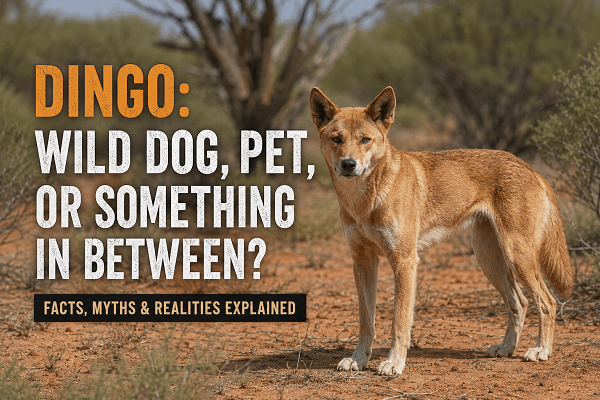
A dingo is Australia’s native wild dog. It descends from ancient domestic dogs, but it has lived wild for thousands of years. Scientists still debate whether it counts as its own species or as a very old kind of dog. In practice it’s a wild animal, not a pet. You can’t keep one like a Labrador. Even where it’s legal, such as Victoria, Australia, you need a licence and an escape-proof enclosure built first. Most dingoes avoid people. The danger comes when people feed them or crowd them.
Table of Contents
- Introduction
- What Is a Dingo? Quick Facts
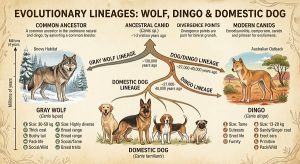
- Is a Dingo a Wild Dog or a Domestic Dog?
- Dingo vs Dog: The Real Differences
- A Handler’s View: Why a Dingo Isn’t a “Wild Labrador”
- Can You Keep a Dingo as a Pet?
- Are Dingoes Dangerous?
- How to Stay Safe Around Dingoes
- What Do Dingoes Eat?
- Dingoes, the Dingo Fence and the Ecosystem
- The Hybrid Problem: How Many “Dingoes” Are Pure?
- Dingo-Like Dogs You Can Actually Own
- Dingo Myths vs Facts
- FAQs
- Conclusion
Introduction
Ever looked at a dingo and thought, “That’s just a dog with a better tan”? You’re not alone. The dingo looks like a dog, can bond with people, and even reads our hand signals. Yet it can live, hunt and raise pups with zero help from us.
That mix creates real problems. Tourists feed dingoes and get hurt. Would-be owners buy a pup and can’t cope with the adult. Even scientists and governments argue over what to call the animal, and the name decides whether it gets protected or poisoned.
In this guide you’ll learn what a dingo actually is, how it differs from your pet dog, whether you can legally keep one, and how dangerous they really are. You’ll also see how to stay safe around them and which dingo-like breeds make better companions. I’ve written it from a working-dog angle, because handlers think about instinct versus training every day.
What Is a Dingo? Quick Facts
The dingo is a medium-sized wild canid found across mainland Australia. Dingoes reached the continent roughly 3,500 to 5,000 years ago and have lived free-ranging there ever since. Researchers describe them as having an early history of domestication, then thousands of years of living free.
| Feature | Typical dingo |
|---|---|
| Weight | About 10–20 kg; K’gari dingoes average around 18 kg |
| Height | Up to about 60 cm at the shoulder |
| Coat | Usually ginger or sandy, often with white feet, chest and tail tip; some are black and tan |
| Lifespan | Often cited as 8 to 10 years in the wild |
| Breeding | Once a year, unlike domestic dogs |
| Voice | Howls, moans and snuffs; barking is rare |
| Social life | Packs, pairs or solo, depending on food and territory |
On the dingo’s voice: dingoes use three types of howl to call pack members and warn off rivals. That’s why people call them “singing dogs.”.
Here’s one detail most guides skip. Each dingo’s tail tip, socks and fight scars are unique, and rangers use them to tell individuals apart. Rangers on K’gari know their dingoes by name and by marks, much like handlers know their dogs.
Is a Dingo a Wild Dog or a Domestic Dog?
The honest answer is that scientists still argue about it. Two camps exist, and both have evidence.
Camp 1: The dingo is its own thing. A 2025 review argues dingoes have been separated from other Canis lineages for about 8,000 to 11,000 years. It also says dingoes are genetically more distinct from domestic dogs than dog breeds are from each other. These researchers support the name Canis dingo. A skull study of 69 pre-1900 specimens backed the same idea, because those animals pre-date mixing with European dogs.
Camp 2: The dingo is an ancient dog. The Australian Museum has published a review concluding the dingo fits best as a feral population of an ancient breed of the domestic dog, carried to Australia about 4,000 years ago.
So which is right? Here’s where I land as a handler. The label matters less than the behavior. Whatever you call it, the dingo has been shaped by natural selection, not by people choosing which dogs to breed. A pet dog is the opposite.
Why the Name Matters More Than You’d Think
The “wild dog” label has real consequences. In Victoria, dingoes are listed as threatened, while “wild dogs” are declared pests. The legal definition of “wild dog” also includes dingoes and hybrids. The public usually assumes it means feral domestic dogs only.
So the same animal can be protected in one law and targeted in another. This is the biggest gap in most dingo articles, which stop at “wild dog” and move on.
Dingo vs Dog: The Real Differences
Dingoes and dogs look alike, so people expect them to act alike. They don’t. Here’s a side-by-side comparison.
| Trait | Dingo | Typical pet dog |
|---|---|---|
| Breeding cycle | Once a year | Usually twice a year |
| Barking | Rare; howls instead | Barks freely |
| Lifestyle | Lives by hunting and scavenging | Depends on people for food |
| Pack structure | Flexible family groups | Adapts to a human household |
| Escape ability | Excellent | Varies by breed |
| Legal status | Wildlife in many regions | Companion animal |
Now the part that surprises people: the brain tests.
- Reading human signals. In one study, seven dingoes passed nearly all of the gesture tests, including pointing. Their performance landed between wolves and dogs. So dingoes aren’t “dumb to people.” They read us fine.
- Solving problems alone. In a “detour” test, dingoes finished the task with shorter delays and fewer errors than dogs in earlier studies. Dingoes figure things out on their own. Dogs tend to look to us for help.
Put those together and you get an animal that understands you but doesn’t need you. That’s a big deal in the home. A dog that solves problems alone can also open latches, dig out, and beat your fence.
A Handler’s View: Why a Dingo Isn’t a “Wild Labrador”
In military and police work, we pick dogs for a rare mix: high drive and high trainability. We want a dog that’s driven to work but still wants to work with us. Breeders spent generations selecting for that link between dog and handler.
A dingo’s drive comes from survival. It hunts because it must eat, not because a person asked. You can’t build a “recall” on a bond that was never selected for.
If you want the theory behind this, read our guide on obedience versus instinct, the two types of dog intelligence. It explains why trained obedience and natural instinct can pull a dog in different directions, and a dingo lives on the instinct side of that line.
Three practical lessons carry over from working dogs:
- Early socialization helps but doesn’t rewrite instinct. Puppies from any breed can look tame and then change at maturity.
- Management beats training with high-drive animals. Secure fencing, routine and enrichment come first.
- Know your animal’s job. A dingo’s “job” is roaming, hunting and surviving. A flat with a short daily walk gives it none of that.
For the wider picture, see how working dogs differ from pet dogs. Dingoes sit even further from the “pet” end of that spectrum.
Can You Keep a Dingo as a Pet?
In a few places, yes. But the rules read more like wildlife-keeping than pet ownership. Let’s look at what the rules actually say.
Victoria, Australia: The Clearest Example
Victoria publishes a full Dingo Licence guide. Key points:
- Dingoes are protected wildlife, and owning one without the right licence is an offence.
- You must build the enclosure before you apply, and no licence is issued without one.
- Fences need at least a 1-metre return at a 45° angle into the enclosure. That design stops climbing and digging escapes.
- Dingoes can only be kept at the address named on the licence, and the guide says that if your property can’t fit the enclosure, keeping a dingo isn’t right for you.
- Away from the enclosure, the dingo must be appropriately restrained.
The guide also warns that dingoes have a strong prey drive and shouldn’t be left unsupervised with other animals. Check the current text before you apply, because the rules get updated.
Other Australian States
Rules differ by state and territory. Some require a permit, and some ban private keeping entirely. Secondary sources disagree on the details, so I’d rather not guess. Always check your state’s wildlife agency directly. Your local council may also have limits on top.
Outside Australia (US, UK, Europe)
Dingoes are generally treated as exotic or wild animals abroad. Laws vary by state, county and country, and some places ban them outright. Before you even contact a breeder, call your local wildlife or animal control authority and get the answer in writing.
The Real Costs Nobody Mentions
I won’t invent price tags, because they vary too much by region. But think about these before you commit:
- A purpose-built enclosure (before the licence, not after)
- Specialist vet care. Not every clinic treats dingoes.
- Enrichment, since a bored dingo digs, climbs and destroys.
- Time. Your dingo lives about a decade or more.
- Insurance and neighbour issues. Home insurers often exclude wild animals.
Rescue groups often warn against impulse buying for good reason. A cute pup becomes an adult wild canid who may not tolerate strangers.
Are Dingoes Dangerous?
Most dingoes avoid people. But “most” isn’t “all,” and the exceptions have been serious.
Two cases shaped how the world sees dingoes. In 1980, baby Azaria Chamberlain disappeared from a campsite near Uluru, and a 2012 coroner’s finding confirmed a dingo took her. In 2001, nine-year-old Clinton Gage died on Fraser Island, now called K’gari, after dingoes attacked him.
Today’s picture comes from K’gari, where visitors and dingoes overlap a lot:
- Rangers put the island’s dingo population at about 200 animals, which they call sustainable.
- A run of attacks in 2023 led to camping zone closures. Rangers still rejected a cull and blamed visitor behavior.
- Rangers link the rise in attacks to more people feeding and interacting with the animals.
That last point is the heart of it. A fed dingo is a dangerous dingo. Once a dingo links people with food, it loses its natural caution and starts testing humans. Experts also point out that some say dingo attacks are very rare. Both things are true: rare, and serious when it happens.
Risk is highest when:
- Someone has fed the dingo (even once)
- Children are small and unsupervised
- A person runs, jogs or walks alone
- Pups are nearby (the breeding season raises tension)
- The dingo feels cornered
Queensland Parks shares seasonal warnings, including a pup “whelping season” from 1 September to 30 November. That’s when parents guard dens more fiercely.
How to Stay Safe Around Dingoes
These rules come from rangers and Traditional Owners on K’gari. They work anywhere dingoes live.
- Never feed a dingo. Not a crumb. It’s also illegal in many parks.
- Keep children within arm’s reach, always. The Butchulla rangers’ advice includes keeping kids close and walking in groups.
- Don’t walk or jog alone. Rangers also say running can trigger an excited or negative reaction, especially from young dingoes.
- Lock up food and rubbish. Camp in fenced areas where possible.
- If a dingo approaches, stay calm and stand tall. Face it, keep your arms folded and back away slowly. Call for help. Don’t turn and run.
- Report bold or aggressive dingoes to rangers.
What Do Dingoes Eat?
Dingoes are opportunistic carnivores. They eat what the landscape offers.
- Small prey: rabbits, rodents, lizards and insects
- Larger prey: wallabies and kangaroos, mostly when hunting as a pack. In central Australia they take rodents, rabbits, lizards and even red kangaroos.
- Scavenged food: carrion and human waste
- Eggs and birds when they find them
This flexibility explains their success in deserts, forests, grasslands and coasts. It also explains conflict with farmers, since sheep and calves are easy meals compared with fast wild prey.
For anyone thinking of pet ownership, a wild-style diet needs planning. Feeding a dingo like a kibble-fed lapdog doesn’t meet its needs. Ask a vet with exotic-canid experience, and check what your licence requires.
Dingoes, the Dingo Fence and the Ecosystem
Dingoes are Australia’s top land predator. That role makes them a huge deal for ecologists and a headache for sheep farmers.
The Dingo Fence. After farmers pushed back against sheep losses, Australia built a barrier in the 1880s. It runs over 5,500 km and is often called the world’s longest fence. Within and around it, dingoes have long been trapped, poisoned and shot.
The ecological case. Dingoes may suppress foxes and feral cats, and they affect rabbit and kangaroo numbers. That can help small native animals and plants.
The scientific caution. The evidence isn’t uniform. Effects change by region, pack structure and how much people persecute dingoes. So the fair summary is this: dingoes can be powerful ecosystem regulators, but not everywhere and not automatically.
Also remember the numbers behind the debate. Alice Springs Desert Park lists the dingo’s IUCN status as vulnerable, and notes about 200,000 dingoes in desert Australia. Hybridization and lethal control are the main concerns.
The Hybrid Problem: How Many “Dingoes” Are Pure?
For years, people said “pure dingoes are almost gone, and wild dogs are everywhere.” DNA testing tells a different story.
A large study tested 5,039 wild canids across Australia.
- Only 31 (0.61%) were likely feral dogs, and 27 were dingo-dog hybrids.
- Dingo populations in northern, western and central Australia were largely free of domestic dog ancestry.
- The south-east showed higher levels of dog ancestry, which raises concerns about aerial baiting in that region.
So the picture isn’t “dingoes are everywhere” or “dingoes are gone.” It’s regional. The north and centre have mostly dingo-type animals. The south-east is more mixed.
Here’s why this matters if you’re shopping for a “pet dingo.” Many animals sold as dingoes are hybrids. A hybrid can be harder to predict, because you get a mix of wild instinct and dog traits with no guarantees. Ask any seller for DNA proof and licence papers.
Dingo-Like Dogs You Can Actually Own
If you love the dingo look and spirit, you’ve got legal options.
| Breed | Why it appeals | Handler’s note |
|---|---|---|
| Carolina Dog | Often called the “American Dingo” for its similar looks and traits | Primitive-type; independent and needs secure fencing |
| New Guinea Singing Dog | Related to dingoes and famous for its howl | Rare and escape-prone; not for beginners |
| Australian Cattle Dog | Bred in Australia with dingo influence | Intense herding drive; needs a job |
The cattle dog is the practical pick for most people. It carries a little of that Australian toughness but was bred for working alongside humans. Our article on the Australian Cattle Dog vs Blue Heeler explains which one to choose.
Dingo Myths vs Facts
| Myth | Fact |
|---|---|
| “Dingoes are just feral dogs.” | Experts still debate it. Genetic work shows a long, separate history. |
| “A dingo raised from a pup acts like a dog.” | Early handling doesn’t erase wild instinct. |
| “Dingoes can’t be smart around people.” | They read gestures well and solve problems alone. |
| “All dingoes are dangerous.” | Most avoid people. Fed or cornered animals are the risk. |
| “Wild dogs are everywhere in Australia.” | DNA tests found few true feral dogs. |
| “Dingoes are only pests.” | They’re protected in many places and may help ecosystems. |
Get More From Your Own Dog
If a dingo teaches us anything, it’s this: instinct is stubborn, and the best handlers work with it. My book, Beyond the Bark: Inside a Pro Handler’s Playbook for Raising the Ideal Dog, shares the same principles I use with working dogs, written for everyday owners.
👉 Get Beyond the Bark on Amazon
Want Weekly K9 Tips?
Join our weekly roundup of articles on working dogs, breeds and training. Subscribe to the ARFS K9 Team newsletter here.
Frequently Asked Questions
1. Is a dingo a wild dog or a pet?
A dingo is a wild dog. It descends from ancient domestic dogs but has lived free for thousands of years. Most places treat it as wildlife, not a pet. Some regions allow licensed keeping.
2. Can you legally own a dingo?
It depends on where you live. In Victoria, Australia, you need a Dingo Licence and a pre-built, escape-proof enclosure. Other Australian states differ, and many countries ban or restrict them. Contact your local wildlife authority first.
3. What’s the difference between a dingo and a dog?
Dingoes breed once a year, rarely bark, and live by hunting. They solve problems alone and read human signals but don’t depend on us. Domestic dogs were bred for companionship and work.
4. Are dingoes dangerous to humans?
They can be. Most avoid people, but fed, cornered or habituated dingoes bite. Never feed them, keep children within arm’s reach, and don’t run or jog alone.
5. What do dingoes eat?
They’re opportunistic carnivores. Their diet includes rabbits, rodents, lizards, birds, insects and carrion. Packs also take larger animals such as kangaroos and wallabies.
Conclusion
So is a dingo a wild dog, a pet, or something in between? It’s a wild canid with deep dog ancestry, and it works best as a wild animal that people respect from a distance.
Here’s what to remember:
- Science: Dingoes have a long, separate history. Whether you call them a species or an ancient dog, they aren’t ordinary pets.
- Law: Keeping one needs licences and enclosures built first. Check local rules before anything else.
- Safety: Don’t feed them, don’t run, keep kids close.
- Ecology: Dingoes matter, but the effects vary by place.
- Alternatives: If you want that look, choose a Carolina Dog or Australian Cattle Dog instead.
Your next step is simple. If you’re curious about owning a dingo, call your wildlife agency before you speak to any breeder. If you’re visiting dingo country, share the safety rules with everyone in your group. And if you want a dog that’s genuinely built to partner with you, start with Beyond the Bark and the newsletter above.

Her work centres on obedience, detection, protection and operational readiness. She favours proven methods built on repetition, consistency and real-world conditioning, so that both dogs and handlers are prepared for high-pressure tasks.
Rofiat represented the Nigerian Army Dog Centre at the Nigerian Army Day Celebration (NADCEL) 2026, where she led demonstrations in obedience, explosive detection, agility and tactical movement. Through articles, training content and documentaries, she shares field-based insight into how structured training, clear communication and trust between handler and dog affect performance and reliability.
She is the author of Beyond the Bark: Inside a Pro Handler's Playbook for Raising the Ideal Dog, a practical guide that helps dog owners and handlers apply professional training principles in everyday situations.
- Dog Agility Course Layout: Easy DIY Setup - October 7, 2026
- Local Dog Breeds: Temperament, Health & Training Guide - October 6, 2026
- How Long Do Military Working Dogs Serve? Full Guide - October 5, 2026