Mini Husky Dog Breed Guide: Origin, Price, Sizes & Truth
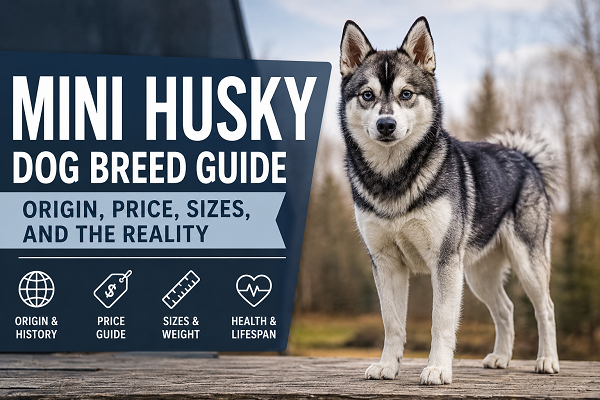
A mini husky is not one breed. It’s a nickname for three different dogs: the Alaskan Klee Kai (a real, separate breed), the miniature Siberian husky (a small Siberian husky, not a separate breed), and the Pomsky (a Pomeranian x husky cross). Adults weigh roughly 6 to 35 pounds (3 to 16 kg), and puppies from careful breeders usually cost $1,000 to $3,000 or more. Whatever the size, you still get a husky-style brain: smart, loud, stubborn and very good at escaping.
Table of Contents
- What Exactly Is a Mini Husky?
- The Real Origin Story of Each Type
- Mini Husky Size: How Small Is Small?
- Mini Husky Price and the True Cost of Ownership
- Mini Husky Scams and Red Flags
- Temperament: What Living With One Is Really Like
- Health, Dwarfism and Lifespan
- How to Check Which Mini Husky You’re Really Buying
- Is a Mini Husky Right for You?
- Your First 90 Days: A Handler’s Training Plan
- Where to Find a Good Breeder or Rescue
- Mini Husky Alternatives
- Mini Husky vs Klee Kai vs Pomsky: Comparison Table
- Why Trust This Guide
- FAQs
- The Bottom Line
Introduction: The Cute Photo Problem
You scroll past a tiny dog with ice-blue eyes, a black-and-white mask and a fluffy tail. The caption says mini husky. You search the term, and suddenly you’re looking at prices from $300 to $5,000, sizes from 6 to 40 pounds, and breeders who all say they sell the “real” one.
So here’s the problem: nobody agrees on what a mini husky is. That confusion costs buyers money, and sometimes it costs dogs their health. I’ve spent my career selecting, evaluating and training dogs, and the first rule of picking any dog is simple: know exactly what you’re looking at before you commit.
In this guide, you’ll learn:
- Which dog is actually behind the “mini husky” label
- Real size and price ranges, plus costs most guides skip
- How to spot scams, fake “teacup” claims and dwarfism
- Whether a mini husky fits your home and daily routine
- A simple 90-day plan for training your new dog
Let’s start with the biggest myth.
What Exactly Is a Mini Husky?
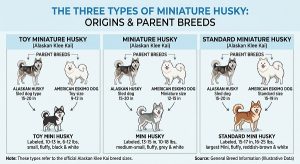
“Mini husky” is a marketing term, not a registered breed name. Sellers use it for any small dog that looks like a Siberian husky. In practice, you’ll meet three types.
What is a mini husky? A mini husky is a small, husky-looking dog sold under one nickname but made up of three different types: the Alaskan Klee Kai, the miniature Siberian husky and the Pomsky. Each has a different history, size range, price and temperament.
- Alaskan Klee Kai (AKK): A true companion breed built to look like a husky in a smaller body. Fans call it the “husky lite.” The breed community actually discourages the “mini husky” label because it’s inaccurate.
- Miniature Siberian husky: A Siberian husky bred smaller by choosing small parents. Major bodies don’t treat it as its own breed. The Siberian Husky Club of America doesn’t recognize it, and the UK Kennel Club treats it as a size variation of the standard Siberian.
- Pomsky: A designer cross between a Siberian husky and a Pomeranian. Size and looks vary a lot, even inside one litter.
You’ll also see “teacup husky” in ads. Treat that phrase as a warning sign. No kennel club recognizes a teacup husky, and extreme smallness is exactly where health problems hide. More on that below.
The Real Origin Story of Each Type
Alaskan Klee Kai: One Small Dog Named Curious
The Klee Kai story starts in Wasilla, Alaska, in the early 1970s. Linda Spurlin took in a small husky-type dog named Curious, and people who met her loved the look. Spurlin decided to build a husky-style companion on purpose.
She worked with Alaskan and Siberian huskies, and many sources say she added the Schipperke and the American Eskimo Dog to get a smaller frame. The goal was a smaller dog without breeding for dwarfism. That detail matters, and I’ll come back to it.
Here are the milestones that handlers and buyers should know:
- Late 1980s: The breed was introduced to the public, and the first breed club formed in 1988.
- 1995: The name changed from “Klee Kai” to “Alaskan Klee Kai.” The American Rare Breed Association (ARBA) recognized the breed.
- January 1, 1997: The United Kennel Club (UKC) gave full recognition.
- October 2020: The AKC accepted the breed into its Foundation Stock Service. It’s on a path toward full AKC recognition, so check the AKC site for the latest status before you buy.
The name comes from an Inuit-derived term usually translated as “small dog.”
Miniature Siberian Husky: A Size Project
The miniature Siberian husky grew out of breeders choosing smaller huskies and breeding them together over generations. No outside breed is added, which is why many registries file these dogs under Siberian husky.
This is the type I tell people to question most. Breeding small to small can work if a breeder picks naturally small, well-built dogs. It can also drift into dwarfism, where the bones grow wrong. Even breed fans on husky forums admit dwarfism exists in this area. A good breeder will explain, in plain words, how they avoid it. If they can’t, walk away.
Pomsky: The Newest Mix
The Pomeranian is tiny (usually around 7 pounds at most) and the husky can reach 60-plus pounds. Natural mating is risky, so breeders use artificial insemination, typically with the husky as the mother. The first intentional Pomsky litter was born in the United States in 2012.
Because the Pomsky is a cross, breeders talk about “generations” (F1, F1B, F2 and so on). Later generations tend to be more predictable in size and coat, but there’s still no official breed standard. Groups like the American Pomsky Kennel Club are working on one.
Mini Husky Size: How Small Is Small?
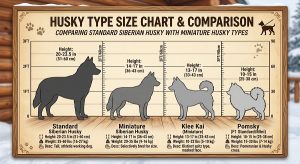
First, a baseline. The AKC standard for a full-size Siberian husky is about 20 to 23.5 inches at the shoulder and roughly 35 to 60 pounds. Every mini husky sits below that.
| Type | Height | Adult weight | Notes |
|---|---|---|---|
| Standard Siberian husky (for comparison) | 20–23.5 in (51–60 cm) | 35–60 lb (16–27 kg) | The real thing |
| Alaskan Klee Kai – Toy | Up to 13 in | Under 10–12 lb | Size classes set by UKC |
| Alaskan Klee Kai – Miniature | 13–15 in | 10–15 lb | |
| Alaskan Klee Kai – Standard | 15–17 in | 15–20 lb | 17–17.5 in counts as a fault |
| Miniature Siberian husky | About 13–17 in | About 20–35 lb | No official standard, so it varies |
| Pomsky | About 10–15 in | About 10–30 lb | Depends on parents |
Two size facts most guides skip:
- Size isn’t guaranteed. Even careful miniature husky breeders say adult size is hard to predict. Some “minis” grow to full size. If a seller promises an exact adult weight, they’re guessing or selling.
- Puppy photos lie. A fluffy 8-week-old husky puppy of any size looks tiny. Ask for the parents’ real weights and heights, and ask to see them.
Most small northern-type dogs reach near-adult height by about 10 to 12 months. Klee Kai may reach sexual maturity around 9 months, so plan neutering or spay conversations with your vet early.
Mini Husky Price and the True Cost of Ownership
Price is where most people get burned. Here’s what the market looks like, based on breeder listings and breed-guide ranges (prices vary by country and demand, so treat these as ballparks):
| Type | Typical puppy price | Wait time |
|---|---|---|
| Alaskan Klee Kai | $1,500–$3,000 | Often 6–18 months |
| Miniature Siberian husky | About $950–$1,600, sometimes higher | Often 9+ months |
| Pomsky | About $1,000–$5,000 | Varies |
Notice the gap in the mini Siberian range. That tells you the market isn’t standardized. One breeder network lists pick-of-litter fees around $600 on top of the price.
Costs Most Articles Leave Out
The puppy price is only the start. Budget for these as well:
- Shipping or travel: Many breeders are far away. Flights, handling fees and travel can add several hundred dollars, or more if you travel yourself.
- Setup and first-year vet care: Vaccines, microchip, spay or neuter, crate, harness, tags and food usually add $500 to $1,500 in year one.
- Health testing for your own peace of mind: A DNA breed test and a vet check cost money, but they’re cheap compared with surgery later.
- Grooming and cleanup: All three types have a thick double coat. They “blow coat” twice a year. Expect heavy shedding and a good brush and vacuum.
- Fence and escape-proofing: A taller fence, dig guards or a secure run can cost real money.
- Insurance or an emergency fund: Small breeds can face knee and dental problems. Keep a savings buffer or a policy.
Handler’s rule: Small dog does not mean small bills. A mini husky eats less than a full husky, but its vet, training and fencing costs are close to a medium dog’s.
Mini Husky Scams and Red Flags
Because demand is high and supply is low, scammers love this keyword. The Alaskan Klee Kai Association of America warns buyers about scammers, stores and puppy mills as the breed’s popularity grows. Watch for these:
- Prices far below the market. A “rare mini husky” for $300 to $600 is almost always a scam, a mix, or a puppy mill product.
- No video call or visit. If you can’t see the mother and the puppies in real time, don’t pay.
- Payment by gift card, crypto or wire only. Real breeders use normal contracts and receipts.
- “Teacup,” “pocket” or “micro” promises. These words usually signal extreme breeding for smallness.
- No papers, or fake papers. For Klee Kai, ask for UKC registration and pedigree. Remember that a certificate from a random website isn’t UKC registration.
- No health test results. Ask for them for both parents, on paper, before you pay a deposit.
- Puppies under 8 weeks. Responsible breeders keep puppies until at least 7 to 8 weeks.
- The seller can’t say which type it is. If they dodge the question “Is this a Klee Kai, a mini Siberian or a Pomsky?”, leave.
Temperament: What Living With One Is Really Like
If you’ve ever lived with a Siberian husky, you already know the script: smart, vocal, independent and a champion escape artist. The small versions keep most of that. Here’s how the three differ.
- Alaskan Klee Kai: Often reserved with strangers and bonded to their own family. Some are people-shy. They’re curious, quick learners, and they can make good watchdogs, but their size means they’re not guard dogs. They also don’t like being left alone for long stretches, so plan your work hours.
- Miniature Siberian husky: Usually closer to the standard husky: friendly, outgoing and mischievous. Great fun, but just as likely to dig, chew and “talk back.”
- Pomsky: The wild card. You might get the Pomeranian’s alertness and barking, the husky’s stamina and independence, or both.
Five Daily-Life Truths
- They’re loud. Expect howling, “woo-woo” talking and alarm barking. Apartment neighbors notice.
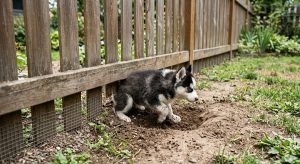
- They escape. Mini husky owners often report dogs squeezing through gaps, digging under fences and bolting through open doors. A bored one will test every weak spot.
- They need real exercise. Plan for about 45 to 60 minutes of active exercise daily, plus brain work. A slow lap around the block doesn’t count.
- They struggle with heat. The thick double coat doesn’t suit hot climates. Provide cool indoor space, shade and water, and never shave the coat to “cool” them. Shaving can ruin the coat’s natural insulation.
- Never trust off-leash recall. Husky-type dogs chase. Use a long line or a fully fenced area.
Health, Dwarfism and Lifespan
Done well, none of these types is automatically unhealthy. Done badly, they can be a vet-bill disaster.
Typical lifespans:
- Alaskan Klee Kai: about 13–16 years
- Miniature Siberian husky: similar to the standard Siberian, about 12–14 years
- Pomsky: about 12–15 years (the breed is new, so figures are estimates)
Health issues to ask about:
- Klee Kai: juvenile cataracts, thyroid problems, heart disease, liver issues, patellar luxation (a slipping kneecap) and Factor VII deficiency, a bleeding disorder that careful breeders screen for. Responsible breeders register tests with OFA for heart, knees and thyroid.
- Miniature Siberian husky: hip and eye problems like the standard husky, plus the dwarfism risk below.
- Pomsky: patellar luxation, hip or elbow problems, eye conditions, dental disease, allergies and skin problems. Small, Pomeranian-leaning dogs can also have a collapsing trachea.
The Dwarfism Problem, Explained Simply
Dwarfism means a genetic problem changes how the bones grow. In sled-dog breeds, a well-known example is chondrodysplasia in the Alaskan Malamute, a single-gene recessive condition that causes short, bent limbs. Breeders who shrink a husky by pairing small dogs repeatedly can accidentally pull in similar problems.
Signs worth a vet’s opinion:
- Legs that look short and bowed compared with the body
- A head that looks too big for the frame
- Slow growth, weak or broken teeth, and poor coat quality
- Limping or trouble climbing stairs at a young age
A dog that is small because its parents are naturally small is very different from a dog that is small because its skeleton is damaged. Ask the breeder: How do you avoid dwarfism? A real answer includes health testing, vet checks and keeping records of litters.
How to Check Which Mini Husky You’re Really Buying
Here’s a step I wish more buyers did, and one competitors rarely mention:
- Ask for the parents’ breed and registration. For Klee Kai, look for UKC papers and a pedigree. For Pomsky, ask the generation (F1, F1B, F2…).
- Ask for adult weights and heights of both parents, and ask to see them or video-call.
- Check the health tests. Hips, knees, eyes, heart and thyroid, with paper proof.
- Do a DNA breed test after you bring your puppy home. Kits from companies like Wisdom Panel or Embark can show breed mix and screen for some genetic conditions.
- Book a vet check within 72 hours (many breeders offer a health guarantee that depends on this).
- Get a written contract that covers health guarantees, return terms and spay/neuter agreements.
Is a Mini Husky Right for You?
Let’s be direct, because this is where impulse buys go wrong.
A mini husky may suit you if you:
- Love the husky look but can’t house a 50-pound dog
- Can give 45 to 60 minutes of real daily exercise
- Don’t mind noise, hair and a dog with opinions
- Can fully secure a yard or home against escapes
- Have a budget for $1,000+ upfront plus vet care
- Have someone home for part of the day (these dogs bond hard)
A mini husky is probably not for you if you:
- Want a quiet apartment dog
- Think “smaller” means “needs less exercise”
- Live somewhere very hot with no cooling
- Leave the dog alone for long workdays
- Want a dog that loves every stranger (especially the Klee Kai)
- Are choosing mainly on price
Try this before you buy: the 7-day rehearsal. For a week, walk fast for 60 minutes every day, rewatch your gates and fences for gaps, and play a recording of howling at moderate volume while you work. If you’re already tired of it, a mini husky will test you harder.
Your First 90 Days: A Handler’s Training Plan
Most guides tell you what a mini husky is. Few tell you what to do once it’s home. This is the plan I use as a handler for independent, high-energy dogs. It works for companion dogs too.
Weeks 1–2: Settle and structure
- Set a fixed feeding, potty and sleep routine.
- Start crate training so the dog sees the crate as a safe den. Our guide on how to crate train a puppy walks through it step by step.
- Teach the dog’s name, “sit” and a simple recall word using small, tasty treats.
Weeks 3–6: Socialize and build focus
- Introduce new people, sounds, surfaces and calm dogs. This matters most for the Klee Kai, because reserved dogs need steady socialization throughout life.
- Practice 5-minute training sessions several times a day.
- Start “wait” at doors and gates. This is your first escape prevention skill.
Weeks 7–12: Add exercise, impulse control and recall
- Build exercise slowly while growth plates are still developing. Use short, regular play, not long forced runs.
- Use a long line for recall practice. Our working dog exercise guide explains how to balance physical and mental work, and the same logic helps any high-drive companion dog.
- Add puzzle feeders and scent games to burn mental energy.
Potty training note: Small, thick-coated spitz-type dogs can be stubborn about house training. If accidents drag on, our breakdown of the hardest toy dog breeds to housebreak has fixes that apply here too.
If you want a full, professional-style framework for strong-minded dogs, my book Beyond the Bark: Inside a Pro Handler’s Playbook for Raising the Ideal Dog applies the same consistency-and-leadership methods I use with working dogs to everyday homes. Get it here.
Where to Find a Good Breeder or Rescue
Questions to ask any breeder:
- Can I see the mother and puppies in person or by live video?
- Which health tests have both parents passed? Can I see the results?
- How do you avoid dwarfism and extreme size breeding?
- Are puppies UKC-registered (Klee Kai) or do you list the Pomsky generation?
- What is your socialization plan, and at what age do puppies go home (not before 7–8 weeks)?
- Will you take the dog back at any age if I can’t keep it?
Patience pays here. Good Klee Kai and miniature husky breeders often keep waitlists, so a wait of months is a good sign, not a bad one.
Rescue is possible, though rare. Many guides say there’s no rescue for these dogs, but the Alaskan Klee Kai community runs a national rescue network, and adult small huskies and Pomskies occasionally appear through general husky rescues. Adopting an adult also lets you see the dog’s real size and temperament before you commit.
Mini Husky Alternatives
If the real needs of a mini husky worry you, these options may fit better:
- Adult Siberian husky from rescue: Bigger, but the adult’s personality is already clear.
- American Eskimo Dog (toy or miniature): A real, long-established breed that comes in small sizes and shares some of the Klee Kai’s heritage.
- Shiba Inu: A small spitz-type with a fox-like face, though cat-like and independent in its own way.
Mini Husky vs Klee Kai vs Pomsky: Comparison Table
| Feature | Alaskan Klee Kai | Miniature Siberian husky | Pomsky |
|---|---|---|---|
| What it is | Separate companion breed | Small Siberian husky | Pomeranian x husky cross |
| Origin | Alaska, 1970s (Linda Spurlin) | USA, 1990s (small husky breeding projects) | USA, first litter 2012 |
| Height | 13–17 in by size class | About 13–17 in | About 10–15 in |
| Weight | About 6–20 lb | About 20–35 lb | About 10–30 lb |
| Lifespan | About 13–16 years | About 12–14 years | About 12–15 years |
| Price | $1,500–$3,000 | About $950–$1,600+ | About $1,000–$5,000 |
| With strangers | Reserved | Friendly | Varies |
| Recognition | UKC, ARBA; in AKC Foundation Stock Service | Not a separate breed | Not recognized by AKC or UKC |
| Biggest risk | Shyness, rare breed scams | Dwarfism, unclear size | Unpredictable looks, dental and joint issues |
Why Trust This Guide
Experience: Cpl. Rofiat Muritala is a Nigerian Army military working dog instructor and handler with more than 14 years at the Nigerian Army Dog Centre. Her work covers dog selection, foundation training, behavior shaping and performance evaluation in real operations. She led obedience, explosive detection, agility and tactical movement demonstrations at the Nigerian Army Day Celebration (NADCEL) 2026.
Expertise: She’s the author of Beyond the Bark, a practical guide to applying professional handler principles at home.
Authoritativeness and sources: Breed facts in this guide come from breed clubs and registries (Alaskan Klee Kai Association of America, United Kennel Club, AKC, American Rare Breed Association), veterinary and breed resources (PetMD, Wisdom Panel, Hill’s Pet) and published research on dog skeletal disorders. Prices and registry status change, so verify them with the registry or breeder.
Trust: This guide is for education and isn’t veterinary advice. Talk to a licensed vet about your dog’s health. The author may earn from the book link above.
Frequently Asked Questions
Is a mini husky a real breed?
Not as a single breed. “Mini husky” usually means the Alaskan Klee Kai, which is a real, separate breed, or a miniature Siberian husky, which is a smaller Siberian and not a distinct breed. The Pomsky is a crossbreed.
How much does a mini husky cost?
Expect about $1,500 to $3,000 for an Alaskan Klee Kai, about $950 to $1,600 for a miniature Siberian husky (sometimes more), and $1,000 to $5,000 for a Pomsky. Add $500 to $1,500 in first-year costs, plus shipping if the breeder is far away.
How big does a mini husky get?
Most adults land between 10 and 35 pounds and 10 to 17 inches tall. A toy Alaskan Klee Kai stays under about 12 pounds, while a miniature Siberian husky can reach 35 pounds or more. A standard Siberian husky is 35 to 60 pounds, so even the largest mini is clearly smaller.
Are mini huskies good apartment dogs or good with kids?
They can live in apartments if you meet their exercise needs and accept the noise, but they’re not low-maintenance. Miniature Siberian huskies tend to be friendlier with kids. Klee Kai are often reserved and do best with older, calm children who respect the dog’s space.
How long do mini huskies live, and are they healthy?
Most live about 12 to 16 years. They’re healthy when bred responsibly, but problems like cataracts, heart issues, slipping kneecaps and dwarfism-related bone disease can appear, so health-tested parents matter more than any size label.
The Bottom Line
A mini husky isn’t a small, easy version of a Siberian husky. It’s a smaller package with the same brain, energy and independence. Pick the right type, choose a breeder who shows proof, and prepare your home for escapes, noise and heavy shedding.
Your action plan:
- Decide which type you actually want: Klee Kai, mini Siberian or Pomsky.
- Set a budget that covers the puppy plus year-one costs.
- Ask the six breeder questions and walk away from any seller who dodges them.
- Escape-proof your home and yard before the puppy arrives.
- Follow the 90-day plan and book your first vet check.
Want more breed guides, training tips and gear reviews each week? Subscribe to our weekly articles roundup newsletter and get the next one in your inbox.

Her work centres on obedience, detection, protection and operational readiness. She favours proven methods built on repetition, consistency and real-world conditioning, so that both dogs and handlers are prepared for high-pressure tasks.
Rofiat represented the Nigerian Army Dog Centre at the Nigerian Army Day Celebration (NADCEL) 2026, where she led demonstrations in obedience, explosive detection, agility and tactical movement. Through articles, training content and documentaries, she shares field-based insight into how structured training, clear communication and trust between handler and dog affect performance and reliability.
She is the author of Beyond the Bark: Inside a Pro Handler's Playbook for Raising the Ideal Dog, a practical guide that helps dog owners and handlers apply professional training principles in everyday situations.
- Dog Hotel Prep: 7 Must-Haves Before Boarding - October 21, 2026
- How to Enter the COBA National Dog Championship - October 20, 2026
- K9 Advantix Dosage Chart & Safety Guide for Dogs - October 19, 2026