Best Anti-Anxiety Products for Dogs in 2026 (Vet-Backed)
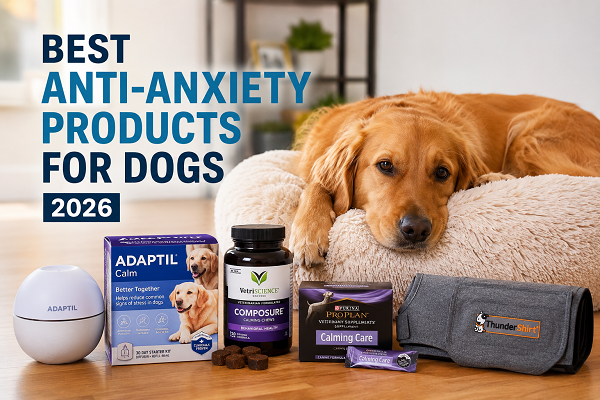
The best anti-anxiety products for dogs in 2026 combine at least two approaches at once: a pressure-based calming vest like the ThunderShirt for immediate situational relief, plus a daily calming supplement (VetriScience Calm & Confident or Purina Pro Plan Calming Care) for ongoing stress management. Pheromone diffusers like Adaptil and calming beds add extra support for dogs with separation anxiety or noise phobia. No single product works for every dog, but layering two or three usually beats relying on one.
Table of Contents
- Introduction
- Why Do Dogs Get Anxious? Understanding the Root Causes
- Signs Your Dog Is Struggling With Anxiety
- The 5 Best Anti-Anxiety Products for Dogs in 2026
- How to Layer Products for Maximum Effect
- Natural and Behavioral Approaches That Support Any Product
- When Products Aren’t Enough: Talking to Your Vet
- Frequently Asked Questions
- Final Thoughts and Action Plan
Introduction
If you’ve ever watched your dog shake through a thunderstorm, shred a couch cushion the moment you left for work, or bark themselves hoarse at the mail carrier, you already know anxiety in dogs isn’t rare. It’s actually the norm. A 2026 analysis of over 43,000 dogs enrolled in the Dog Aging Project found that 91% showed at least mild to moderate fear or anxiety in at least one everyday situation. Separation anxiety alone affects somewhere between 14% and 20% of the pet dog population, and noise sensitivity (thunder, fireworks, gunshots) runs even higher in some surveys, topping 30-40%.
I’ve spent years working alongside military and security K9s, and here’s something people don’t expect to hear: working dogs get anxious too. A dog bred for drive and confidence can still panic during a flight, freeze up at a new facility, or develop noise sensitivity after repeated exposure to gunfire without proper conditioning. Anxiety isn’t a flaw in temperament. It’s a nervous system response, and it responds to the right tools.
This guide walks through what actually works in 2026, what’s mostly marketing, and how to build a calming plan that fits your dog’s specific triggers instead of just throwing products at the problem.
Why Do Dogs Get Anxious? Understanding the Root Causes
Before you spend a dollar on a calming product, it helps to understand what you’re actually treating. Canine anxiety generally falls into a few overlapping categories:
- Separation anxiety – panic when left alone, often involving destructive chewing, house-soiling, or nonstop barking within minutes of you leaving.
- Noise phobia – fear responses to thunder, fireworks, construction, or gunshots. This is the single most common anxiety type reported by dog owners worldwide.
- Situational or novel-environment anxiety – stress around vet visits, grooming, car travel, boarding, or new people and dogs.
- Generalized anxiety – a more constant, low-grade nervousness that isn’t tied to one obvious trigger, often seen in rescue dogs or dogs with a poor socialization window as puppies.
Genetics play a real role here. Research out of Finland involving over 13,700 pet dogs found that certain breeds are far more prone to noise sensitivity and fearfulness than others, with herding and toy breeds showing up disproportionately in the data. That said, environment matters just as much. A puppy that missed proper socialization between 3 and 14 weeks of age, a dog rehomed multiple times, or one that’s simply never been taught how to self-soothe will almost always show more anxious behavior than a dog raised with structure and predictable routines.
I bring this up because it changes how you shop. A product isn’t a substitute for training or socialization, but it buys you breathing room to actually do that training without your dog (or your furniture) falling apart in the meantime.
Signs Your Dog Is Struggling With Anxiety
Owners often miss the early signs because they look subtle, or get written off as “just personality.” Watch for:
- Excessive panting or drooling when not hot or exercising
- Pacing, circling, or an inability to settle
- Whining, howling, or excessive barking when alone
- Destructive chewing focused on doors, windows, or exit points
- Hiding, trembling, or tucking the tail during storms or fireworks
- Loss of appetite or refusing treats they’d normally take instantly
- Excessive licking of paws or self, sometimes to the point of hot spots
If you’re seeing several of these together, especially the appetite loss or self-directed licking, it’s worth ruling out pain or a medical cause first. Anxiety and physical discomfort can look almost identical from the outside.
The 5 Best Anti-Anxiety Products for Dogs in 2026
I’ve broken this down by category rather than a single ranked list, because a thunderstorm-phobic Labrador and a crate-anxious rescue terrier need genuinely different tools. Here’s what consistently earns its place in a working handler’s kit and in most vet-recommended lists this year.
1. ThunderShirt Classic Calming Vest (Best for Situational Anxiety)
This is the product I recommend first to almost anyone dealing with storm or firework anxiety, and it’s one of the few calming tools with real survey data behind it, brands report improvement rates in the 80-89% range among surveyed pet parents. The vest works through gentle, constant pressure across the torso, similar to swaddling, which appears to nudge the nervous system toward a calmer state. There’s no medication, no waiting period, and no daily dosing to remember.
- Best for: thunderstorms, fireworks, vet visits, travel, crate training support
- Cost: budget-friendly, one-time purchase, reusable indefinitely
- Check current price and sizing on Amazon →
2. VetriScience Calm & Confident Chews (Best Fast-Acting Calming Chew)
Formerly known as Composure, this is the calming chew most frequently stocked in veterinary clinics, and it’s one of the only ones clinically tested to act within roughly 30 minutes and last up to four hours. It uses a colostrum calming complex, L-theanine, and vitamin B1 rather than sedatives, so most dogs stay alert and social rather than groggy. It’s dosed by weight and safe to double up on especially stressful days like New Year’s Eve.
- Best for: vet visits, grooming days, car rides, thunderstorm forecasts you know are coming
- Cost: mid-range, sold in 60 to 120-count bags
- See pricing and flavors on Amazon →
3. Adaptil Calm Home Diffuser (Best for Multi-Dog Households and Daily Stress)
Adaptil works differently than a chew or a vest. It releases a synthetic version of the pheromone a nursing mother dog produces to reassure her puppies, and it’s odorless to humans. Plug it in wherever your dog spends most of their time and it covers up to 700 square feet for around 30 days per refill. It’s one of the better background layers for households dealing with chronic low-grade stress, new-pet introductions, or multi-dog friction, since it works passively without you having to remember a daily dose.
- Best for: general household stress, multi-dog homes, dogs adjusting to a new environment
- Cost: mid-range, subscription-friendly since refills are needed monthly
- View the diffuser starter kit on Amazon →
4. Purina Pro Plan Calming Care Probiotic (Best for Long-Term Anxiety Management)
This one surprised a lot of vets when it launched, because it’s not a sedative, herbal blend, or pheromone at all, it’s a probiotic strain (Bifidobacterium longum BL999) that appears to influence the gut-brain axis. In Purina’s own clinical work, roughly 90% of dogs showed measurable improvement in anxious behaviors like excessive vocalizing, pacing, and spinning after ongoing use, though it typically takes up to six weeks of daily use to see the full effect. This is not the product for an anxiety emergency tonight; it’s the one you start today so your dog is calmer in six weeks.
- Best for: dogs with chronic, low-grade anxiety rather than one-off events
- Cost: mid-range, one packet daily for 30 days per box
- Check current stock on Amazon →
5. Best Friends by Sheri Calming Donut Bed (Best Physical Comfort Product)
Sometimes the anxiety fix isn’t chemical or pressure-based at all, it’s environmental. This raised-rim, ultra-plush donut bed gives dogs a defined, cave-like space to curl into, which taps into a natural denning instinct many anxious dogs respond well to, especially at night or during crate-free rest periods. It’s become a favorite recommendation among trainers for dogs recovering from shelter stress or adjusting to a new home.
- Best for: nighttime anxiety, rescue dogs, dogs who pace instead of settle
- Cost: mid-range to premium depending on size
- See sizes and colors on Amazon →
How to Layer Products for Maximum Effect
Here’s the thing most product pages won’t tell you: no single item on this list is going to “cure” anxiety on its own, and combining tools consistently outperforms using just one. Based on trigger type, here’s how I’d stack them:
- Thunderstorms or fireworks tonight: ThunderShirt on 30 minutes before the event, plus a Calm & Confident chew given at the same time.
- Daily separation anxiety: Adaptil diffuser running continuously in the main room, paired with a consistent, low-drama departure routine (no dramatic goodbyes) and, if your dog also uses one, a properly introduced crate as a safe space rather than a punishment zone.
- General nervous temperament: Purina Calming Care daily for the gut-brain benefit, plus a calming bed for a defined resting spot.
- Vet visits or grooming appointments: A chew 30-45 minutes before arrival, and if your dog tolerates it, the vest on the drive over.
A quick note on timing, because it trips up a lot of owners: giving a calming chew 5-10 minutes before a stressful event is almost always too late. Most of these formulas need 30-45 minutes to reach effective blood levels. Set a reminder if you know a storm or fireworks show is coming.
Natural and Behavioral Approaches That Support Any Product
Products work best as one piece of a bigger picture, not a replacement for it. A few things I insist on with every dog I work with, anxious or not:
- Daily physical and mental exercise. An under-exercised dog has more pent-up energy to convert into anxious behavior. If you’re unsure how much your dog actually needs, this exercise guide for working and high-drive dogs breaks down realistic daily targets by breed type.
- Predictable routines. Anxious dogs do better when feeding, walks, and departures happen at roughly the same time each day.
- Addressing excessive barking early, since barking and anxiety often feed each other in a loop. This guide to stopping excessive barking covers the trainer techniques we actually use in the field.
- High-value, low-guilt treats during stressful moments, like grooming or nail trims, so your dog builds a positive association instead of just tolerating the event. This list of vet-backed training treats is a good place to start if you’re also using treats for counter-conditioning.
- Never punishing anxious behavior. Yelling at a dog for destructive chewing caused by separation anxiety almost always makes the underlying anxiety worse, even if it briefly stops the behavior in the moment.
If you want the fuller system I use with client dogs, from building confidence to correcting the mistakes that quietly create anxious dogs in the first place, it’s laid out step by step in our training e-book, Beyond the Bark.
When Products Aren’t Enough: Talking to Your Vet
There’s a point where over-the-counter products stop being sufficient, and that’s not a failure on your part. If your dog shows extreme panic (destroying crates, self-injuring, complete refusal to eat for over 24 hours, or panic-related escape attempts), it’s time for a veterinary behaviorist consult rather than another supplement. Vets have access to prescription options like trazodone for situational anxiety, Sileo for noise aversion specifically, or fluoxetine and clomipramine for chronic generalized anxiety and separation anxiety. These aren’t first-line tools, and they require proper dosing and monitoring, but for maybe 5-10% of anxious dogs, they’re genuinely necessary alongside behavioral work, not instead of it.
One thing worth flagging: never give your dog human anxiety or allergy medication without veterinary guidance on dosing. Even something as commonly discussed as antihistamines has strict, weight-based dosing limits for dogs, and getting it wrong can cause real harm. If that’s ever come up for your dog, this guide to safe Benadryl dosing for dogs is a good reference before you reach for anything in your own medicine cabinet.
Frequently Asked Questions
1. What is the best over-the-counter anti-anxiety product for dogs?
For most dogs, a combination of a pressure vest like the ThunderShirt and a fast-acting calming chew like VetriScience Calm & Confident covers the widest range of situational anxiety, from storms to vet visits, without needing a prescription.
2. Do calming chews for dogs actually work, or is it a placebo for the owner?
Several formulas, particularly ones using L-theanine, colostrum calming complex, and specific probiotic strains, have clinical testing behind them showing measurable reductions in stress behaviors. That said, individual response varies, and severe anxiety often needs more than a chew alone.
3. How long does it take for dog calming products to start working?
It depends on the product type. Chews typically act within 30-45 minutes and last a few hours. Pheromone diffusers and probiotics are slower-burn tools, often needing one to six weeks of consistent daily use before you see the full effect. Vests and pressure wraps work almost immediately once properly fitted.
4. Is it safe to use a ThunderShirt or calming vest every day?
Yes, most anxiety vests are safe for extended daily wear, though most manufacturers recommend removing it every couple of hours during the first few uses to make sure your dog isn’t overheating or developing skin irritation, especially in warmer climates.
5. Can I combine multiple anti-anxiety products at once?
Yes, and in most cases you should. Combining a vest, a calming chew, and a pheromone diffuser targets the nervous system through several channels at once, and most trainers and owners report better results from layering than from relying on any single product alone.
Final Thoughts and Action Plan
Anxiety in dogs is common, it’s manageable, and in almost every case, it’s not something you caused or something your dog will simply “grow out of” without help. The data backs this up: the majority of pet dogs show some form of anxious behavior, and the dogs that improve fastest are almost always the ones whose owners combined the right products with consistent routines and training rather than expecting one purchase to fix everything.
If you’re starting today, here’s the simple version: pick one situational tool (a ThunderShirt or a calming chew) for your dog’s biggest immediate trigger, add one daily-use product (Adaptil diffuser or Purina Calming Care) if the anxiety is more constant than occasional, and pair both with the exercise and routine changes that make any calming product work better. Give it real time, most of these tools need weeks, not minutes, to show their full effect, and loop in your vet the moment things look more severe than “nervous dog on the Fourth of July.”
Your dog isn’t broken, and neither is your ability to help them. You just needed the right toolkit, and now you’ve got it.
Disclosure: This article contains affiliate links. If you make a purchase through them, we may earn a small commission at no extra cost to you. We only recommend products we’ve personally researched or used in the field.

Her work centers on applied training across obedience, detection, protection, and operational readiness, with a strong focus on Military Working Dogs (MWDs) and security K9 programs. Rather than relying on theory alone, Rofiat emphasizes proven training methods built on repetition, consistency, and real-world conditioning principles that prepare both dogs and handlers for high-pressure tasks.
Through articles, training content, and documentaries, she shares experience-based insights from the field, highlighting how structured training, clear communication, and trust between handler and dog directly impact performance and reliability.
Drawing from years of frontline experience, she is also the author of “Beyond the Bark: Inside a Pro Handler’s Playbook for Raising the Ideal Dog,” a practical guide designed to help dog owners and handlers apply professional training principles in everyday situations.
She remains committed to responsible K9 development, continuous skill refinement, and practical education for handlers, trainers, and dog professionals.
- How to Stop Puppy Biting Fast: 5 Proven Steps - September 12, 2026
- Best Dog Trainer in the US: K9 Obedience Guide (2026) - September 11, 2026
- Blue Heeler Dog Training: 5 Secrets to Control High Energy - September 11, 2026