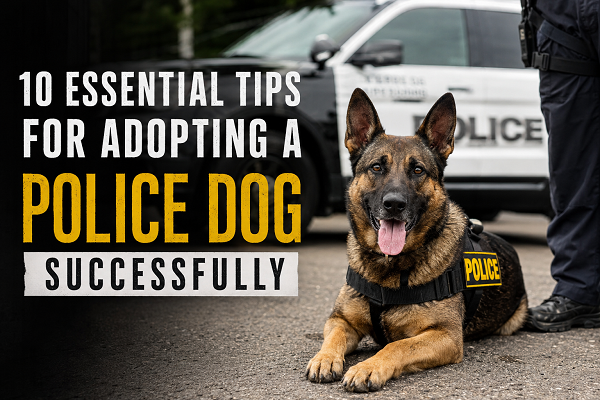
10 Essential Tips for Adopting a Police Dog Successfully
Adopting a retired police dog successfully comes down to going through a legitimate agency or department, being honest about your home and experience during screening, budgeting for higher vet and food costs, and committing to structured routine, mental stimulation, and patient decompression during the first few months. Handlers and former partners get first refusal, so civilian adopters usually need patience, references, and a genuinely appropriate home before a dog becomes available.
Table of Contents
- Introduction
- Understand What You’re Actually Signing Up For
- Go Through Legitimate Channels, Not Random Ads
- Know the Real Adoption Order (You’re Not First in Line)
- Prepare for a Serious Screening Process
- Budget for More Than the Adoption Fee
- Match the Breed and Job History to Your Lifestyle
- Plan for the First 90 Days of Decompression
- Give the Dog a Job (Even a Small One)
- Watch for Service-Related Wear and Tear
- Build Your Support Network Before You Need It
- FAQs
- Final Thoughts
Introduction
Nobody tells you upfront: adopting a working police dog isn’t like walking into a shelter and picking the friendliest face in the kennel. These dogs come with a résumé. They’ve been bred, selected, and trained for drive, focus, and bite work, not for napping by the fireplace. Bringing one home without understanding what that means can set both you and the dog up for a rough ride.
I’ve spent years around working and protection dogs, and the adopters who succeed all have one thing in common: they went in with realistic expectations and a plan. This guide walks you through ten essential, field-tested tips for adopting a retired police dog successfully, covering where to actually find one, what the screening process looks like, what it really costs, and how to help a dog that’s spent its whole life “on duty” learn to just be a dog again.
Whether you’re a first-time adopter, a former handler considering a second working dog, or simply someone who wants to give a hero a proper retirement, keep reading. You’ll learn exactly what to expect at every stage.
Understand What You’re Actually Signing Up For
Before you fill out a single application, get honest with yourself about what a retired police K9 actually is.
These dogs aren’t washed-up, worn-out animals looking for a soft landing. Most retire between 8 and 9 years old, according to K9 units like the City of Tampa Police Department, and many are still sharp, athletic, and highly driven when their working career ends. Breeds commonly used in law enforcement, German Shepherds, Belgian Malinois, Dutch Shepherds, and detection specialists like Labrador Retrievers and Bloodhounds, were selected precisely because they don’t switch off easily.
A former police dog typically brings:
- High energy and stamina. These dogs were built for multi-hour patrol shifts, not 20-minute walks.
- Strong problem-solving instincts. A dog trained to search vehicles or track a scent trail doesn’t forget those skills; it just needs a new outlet for them.
- Sensitivity to routine and structure. Handler teams train together daily for years. A sudden lack of structure can genuinely stress a retired K9.
- Occasional service-related baggage. Some dogs carry noise sensitivity, hip or joint wear, or heightened alertness from years of real-world deployments.
If you’re picturing a dog that will happily be a couch companion from day one, pump the brakes. If you’re excited by the idea of an intelligent, capable partner that needs a job and a leader, you’re on the right track.
Go Through Legitimate Channels, Not Random Ads
This is where most well-meaning people go wrong. There isn’t one central, national database of retired police dogs available for adoption and that gap gets filled by scammy classified ads and social media posts that go nowhere (or worse, aren’t legitimate at all).
Start with these types of sources instead:
- Your local police department or sheriff’s office K9 unit. Call directly and ask about their retirement and rehoming policy. Some departments handle placements in-house.
- Nonprofit working-dog rescues. Organizations that specialize in placing retired and rescued working dogs, contract working dogs, and military working dogs are your best bet for a structured, screened process.
- K9 training facilities and vendors. Facilities that supply or train police dogs sometimes have “washout” dogs, dogs that didn’t complete detection or patrol training, often for being too friendly or easily distracted, not because anything is wrong with them. These dogs can make fantastic companions and usually go through a formal adoption program of their own.
- Regional K9 associations. Groups like the North American Police Work Dog Association can sometimes point you toward departments with dogs available.
A legitimate organization will always want detailed information about your home, your experience, and your daily routine before they even discuss a specific dog. If a “seller” is more interested in your payment method than your living situation, walk away.
Know the Real Adoption Order (You’re Not First in Line)
Here’s a reality check that surprises a lot of hopeful adopters: the general public is almost never first in line for a retired police dog.
The typical order of preference when a K9 retires looks like this:
- The dog’s own handler. Most departments prioritize keeping the dog with the officer it worked alongside, it’s the most humane option and the one with the least disruption for the dog.
- Other officers in the department. If the handler can’t take the dog, colleagues familiar with its training often get the next opportunity.
- Civilian adopters. Only once those options are exhausted does a department typically open placement to the public.
This is exactly why civilian adoption can involve a long waiting list, sometimes many months. It’s also why “washout” dogs (those released from training programs before certification) and dogs from nonprofit working-dog rescues are usually a faster, more realistic route for most people, since departments rarely place fully certified, still-capable K9s outside their own ranks.
Patience isn’t optional here, it’s part of the process.
Prepare for a Serious Screening Process
Once you find a legitimate opportunity, expect the vetting to feel more like adopting a child than picking up a dog from the pound. It typically includes:
- A detailed written application covering your home layout, fencing, household members, other pets, work schedule, and experience with dogs.
- A home inspection. Reputable agencies want to see secure fencing and confirm the space actually suits a large, active working dog.
- An interview, sometimes in person, to assess your confidence and ability to handle a dog with specialized training.
- Reference checks, particularly if you’ve worked with dog trainers, veterinarians, or previous rescues.
Many organizations also have hard eligibility rules. It’s common to require:
- Fewer than three dogs already in the household
- All household members over the age of 12 (some programs set this due to the dogs’ size, strength, and high-drive temperament)
- No history of neglect or animal welfare violations
- A secure, fully fenced yard
Having military, law enforcement, or professional dog-handling experience is a genuine advantage in this process, but it’s not a strict requirement everywhere. What matters most is proving you understand exactly what you’re taking on and can provide the structure the dog is used to.
Budget for More Than the Adoption Fee
The adoption fee itself is usually modest, often in the $0 to $400 range depending on the organization, sometimes free with travel costs covered by the adopter. But that number is misleading if you stop there.
Realistic ongoing costs to plan for include:
- Veterinary care. Routine annual vet costs for a large working breed commonly run around $600 a year, not counting emergencies, dental work, or age-related conditions like hip dysplasia.
- High-quality food. These dogs burn serious calories. Budget for a performance or large-breed formula, not the cheapest bag on the shelf.
- Training refreshers. Continued obedience work, with a trainer experienced in working breeds, helps the dog transition and keeps its mind engaged.
- Transportation. If the dog isn’t local, you may need to cover travel to collect it.
- Gear. A properly fitted harness, a secure leash and long-line, crate, and enrichment toys built for power-chewers all add up quickly.
None of this should scare you off, it should just mean you go in with eyes open. Underestimating the cost of a working dog’s care is one of the most common reasons adoptions don’t work out long-term.
Match the Breed and Job History to Your Lifestyle
Not every retired K9 fits every home, and job history matters as much as breed. A dog trained for patrol and apprehension work has a very different temperament profile than one trained purely for detection (narcotics, explosives, or accelerants).
A few things worth asking before you commit:
- What was this dog’s specialty? Detection dogs are typically more food- or toy-driven and less bite-focused, which can make them an easier transition for a first-time working-dog owner.
- Was this a single-purpose or dual-purpose dog? Dual-purpose K9s (trained in both detection and apprehension) tend to carry higher drive and need more structured outlets.
- How does the dog behave around children, other dogs, and strangers? Ask directly, and ask for documented behavioral history if available.
- What commands does the dog already know? Many are trained in a foreign language (German or Dutch commands are common for European working lines), you’ll want that list before bringing the dog home.
If you’ve got a busy household with young kids, a food-driven detection dog with a calmer temperament is usually a safer starting point than a high-drive dual-purpose patrol dog. Be honest about your experience level, and let the agency guide the match, they’ve placed dogs before, and they know which temperaments succeed in which environments.
Plan for the First 90 Days of Decompression
Even a dog that’s calm and well-adjusted at the training facility can act completely differently once the structure of daily deployments disappears. Give your new companion real time to adjust, trainers generally think in terms of three phases:
- The first few days: Expect a subdued, watchful dog. It may pace, refuse food, or seem hyper-alert to every sound. This is normal decompression, not a bad sign.
- The first few weeks: Routine starts to settle in. This is the window to introduce consistent feeding times, walk schedules, and basic house rules, calmly and predictably.
- The first few months: The dog’s real personality starts to show. Confidence builds, and deeper training and bonding become possible.
During this period, avoid overwhelming the dog with visitors, dog parks, or big changes all at once. Structure and predictability do more for a retired K9 in the first three months than any amount of affection alone.
Give the Dog a Job (Even a Small One)
This is, hands down, the single biggest lesson I share with every new working-dog adopter: a police dog without a job is a dog looking for trouble.
You don’t need to replicate law enforcement work. You just need to give the dog structured purpose. Some ideas that work well:
- Scent work and nose games. Hide treats or a scented object around the house or yard. It taps directly into the dog’s detection training in a safe, rewarding way.
- Advanced obedience or trick training. Keeps the mind engaged and rebuilds the working relationship between dog and handler, now you.
- Structured daily exercise, not just free play. Aim for real physical output: long-line tracking walks, controlled fetch sessions, or tug work with clear rules (not tug-of-war chaos).
- A “working” routine at home. Some adopters give their retired K9 a simple daily task, like carrying a small pack on walks or doing a “search” of the yard each morning. It sounds small, but for a dog wired for purpose, it matters.
A bored, understimulated working dog is far more likely to develop destructive habits, excessive barking, or anxiety. A mentally engaged one settles faster and bonds harder.
Watch for Service-Related Wear and Tear
Years of jumping fences, riding in patrol vehicles, and working through all weather conditions take a physical toll. Don’t be surprised if your new companion needs a bit more medical attention than the average family pet.
Keep an eye out for:
- Joint issues, especially hip and elbow problems common in working-line German Shepherds and Malinois
- Old injuries that flare up with age or cold weather
- Dental wear from years of bite work training and, in some cases, real apprehensions
- Hearing sensitivity or noise reactivity, particularly in dogs previously exposed to gunfire or explosives training
- Anxiety or hypervigilance in dogs that spent years on high alert
Schedule a full veterinary workup within the first two weeks of adoption, even if the dog seems perfectly healthy. Establishing a baseline early makes it much easier to catch and manage problems before they become serious.
Build Your Support Network Before You Need It
You don’t have to figure this out alone, and honestly, you shouldn’t try to. Before you bring your dog home, line up:
- A veterinarian experienced with working breeds, ideally one familiar with service-related joint and dental issues.
- A trainer who understands drive-based dogs. General obedience trainers aren’t always equipped for a dog with police-level training; look for someone with working-dog or protection-dog experience specifically.
- A community of other retired-K9 adopters. Handler forums, breed-specific groups, and adoption organization alumni networks are goldmines for practical, been-there advice.
- A clear emergency plan. Know where the nearest 24-hour emergency vet is, and keep the dog’s full training and medical history on hand in case a new vet or trainer needs it.
If you want a deeper, structured resource to keep beside you through the whole process, from the first week home through building a lasting bond, our team put together a practical guide for exactly this kind of journey. You can grab a copy of our e-book, Beyond the Bark, for a step-by-step companion to raising and rehabilitating a working dog at home.
You might also want to read our related guides on understanding obedience versus instinct in working dogs and how military working dogs are trained, both give useful context for what your new companion has already been through.
Frequently Asked Questions
1. How old are most retired police dogs when they become available for adoption?
Most K9s retire around 8 to 9 years old, though detection dogs sometimes retire slightly later since their work is less physically demanding than patrol duty. A retired K9 can still have several healthy, active years ahead of it.
2. How much does it really cost to adopt a retired police dog?
Adoption fees are usually low, often free to around $400, but ongoing costs matter more. Expect roughly $600 a year in routine veterinary care alone, plus food, gear, and possible training sessions, easily $1,000 to $2,000 in the first year once you add everything up.
3. Can I adopt a retired police dog if I have young children?
It depends on the specific dog and organization. Many agencies require all household members to be over 12 due to the size and drive of these dogs, though detection dogs with calmer temperaments are sometimes placed in family homes with younger kids. Always ask for documented behavioral history first.
4. Are retired police dogs dangerous to have as pets?
Not inherently. These dogs are highly trained, not aggressive by default, apprehension work is controlled and command-based, not random aggression. That said, they do carry strong drive and specialized training, so ongoing structure, exercise, and an experienced handler mindset are essential for a safe, successful placement.
5. What’s the difference between a “retired” K9 and a “washout” dog?
A retired K9 completed a full working career, often 6 to 9 years, before stepping down due to age or health. A washout dog was released from training before certification, usually for temperament reasons like being too friendly, food-motivated, or easily distracted rather than any behavioral problem. Washout dogs are often easier for first-time adopters, since they never carried the full weight of operational deployments.
Final Thoughts
Adopting a retired police dog is one of the most rewarding things a dog lover can do, but it works best when you go in with clear eyes, not just a warm heart. Find a legitimate agency, be patient with the waiting list, budget honestly, and commit to giving your new companion structure, purpose, and time to decompress.
Do that, and you won’t just be rehoming a dog. You’ll be giving a genuine working partner the retirement it earned and gaining one of the most loyal, capable companions you’ll ever have.
If you’re just starting to research working-dog ownership more broadly, our guide on protection dog commands every owner should master and our breakdown of how often you should exercise a working dog are great next reads. And if anxiety or restlessness becomes a hurdle during those first few months, our roundup of vet-backed anti-anxiety products for dogs is worth bookmarking too.
Got questions about adopting or training a working dog? Reach out to the ARFS K9 Team directly, we’re always glad to help a good dog find the right home.

Her work centres on obedience, detection, protection and operational readiness. She favours proven methods built on repetition, consistency and real-world conditioning, so that both dogs and handlers are prepared for high-pressure tasks.
Rofiat represented the Nigerian Army Dog Centre at the Nigerian Army Day Celebration (NADCEL) 2026, where she led demonstrations in obedience, explosive detection, agility and tactical movement. Through articles, training content and documentaries, she shares field-based insight into how structured training, clear communication and trust between handler and dog affect performance and reliability.
She is the author of Beyond the Bark: Inside a Pro Handler's Playbook for Raising the Ideal Dog, a practical guide that helps dog owners and handlers apply professional training principles in everyday situations.
- Australian Cattle Dog vs Blue Heeler: Any Difference? - October 1, 2026
- Bousnic Dog Training Collar Review: Is It Safe? - September 30, 2026
- Gravy Train Dog Food Review: Ingredients & Recalls - September 30, 2026