Norwegian Elkhound Dog Breed: Pros & Cons You Must Know
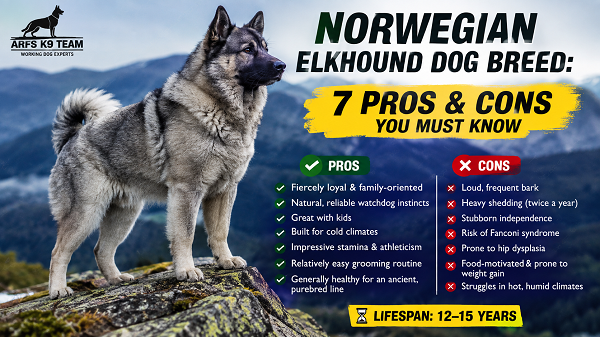
The Norwegian Elkhound is a loyal, watchful, and remarkably hardy Spitz breed with a 12-15 year lifespan, but it’s not for everyone. The biggest pros are its devoted temperament, natural watchdog instinct, and low grooming skill requirement (despite heavy shedding). The biggest cons are that double coat blowing out twice a year, a loud and persistent bark, strong independence that makes off-leash training tricky, and a breed-specific kidney condition called Fanconi syndrome that every buyer needs to know about before signing a breeder contract.
Table of Contents
- Introduction
- What Exactly Is a Norwegian Elkhound?
- 7 Pros of Owning a Norwegian Elkhound
- 7 Cons of Owning a Norwegian Elkhound
- Is the Norwegian Elkhound Right for You?
- What Does a Norwegian Elkhound Actually Cost?
- Trainer’s Notes: What I’d Tell a First-Time Elkhound Owner
- FAQs About the Norwegian Elkhound
- Conclusion
Introduction
If you’ve spent any time researching Nordic dog breeds, you’ve probably come across a photo of a Norwegian Elkhound and thought, “that’s basically a small wolf with a curled tail.” You’re not wrong to notice the resemblance. This breed has been hunting alongside Scandinavian people for thousands of years, and it still looks the part.
But here’s the problem a lot of buyers run into: they fall for the striking silver-gray coat and the confident stance in photos, then bring a puppy home without understanding what actually comes with this breed. An Elkhound isn’t a Husky, and it definitely isn’t a lapdog. It’s an independent, opinionated hunting dog that happens to also make a fantastic family companion, if you know what you’re getting into.
I’ve worked with a lot of Nordic and Spitz-type dogs over the years, and the Elkhound is one of those breeds people either love for life or find genuinely frustrating, usually because nobody warned them about the barking or the shedding before they signed the paperwork.
In this guide, you’ll learn the seven real pros and seven real cons of the Norwegian Elkhound, what it actually costs to own one, the health issues you need to screen for, and whether this ancient Viking dog fits your home, your climate, and your lifestyle. No fluff, no generic “great family dog” filler, just what you need to make a smart decision.
What Exactly Is a Norwegian Elkhound?
The Norwegian Elkhound (called Norsk Elghund in its home country) is Norway’s national dog, and honestly, the name is a bit of a mistranslation. In Norwegian, “elg” means moose, not elk, and “hund” means dog, so this breed is really a “moose dog,” not an elk dog at all. It’s also technically not a hound in the way that word is usually used. The Elkhound is a Northern Spitz breed that got filed under the AKC’s Hound Group because of what it was bred to do, not because of its ancestry.
And what it was bred to do is impressive. This dog would work independently, track a moose through rough Scandinavian terrain for hours, then hold the animal at bay by darting in and out while barking loudly enough for the hunter to find them both. That single job explains almost every trait on this list, the stamina, the independence, the big voice, and the courage.
Archaeologists have found Elkhound-type dogs buried at Viking grave sites, including Svarthola in Jæren, Norway, and DNA research traces the breed back to an extinct grey wolf lineage from western Russia and central Europe. Some estimates put the breed’s origins as far back as 5,000 B.C., which puts it among the oldest dog breeds still around today. The breed was first shown publicly in Norway in 1877 and was officially recognized by the American Kennel Club in 1913. It remains the only Spitz breed classified in the AKC’s Hound Group.
If you want proof this breed has staying power in the show ring, the Norwegian Elkhound has won the Hound Group at the Westminster Kennel Club Dog Show 11 times, a remarkable record for a breed that currently sits outside the AKC’s top 90 most-registered breeds. It’s a quiet-popularity dog: not trendy, but respected by people who actually know the breed.
7 Pros of Owning a Norwegian Elkhound
1. Fiercely Loyal and Family-Oriented
Elkhounds bond hard with their people. Once one decides you’re “their” family, you’ll have a shadow for the next 12 to 15 years. This isn’t a breed that’s aloof or independent-minded about affection, it’s independent about tasks, but deeply attached emotionally. Owners consistently describe them as dogs that want to be involved in whatever the family is doing, whether that’s cooking dinner or watching a movie on the couch.
2. Natural, Reliable Watchdog Instincts
This is where the Elkhound genuinely shines for security-conscious families. Thousands of years of alerting hunters to a moose’s location with loud, sustained barking built a dog that is hyper-aware of its surroundings and vocal the second something feels off. An Elkhound will let you know about a stranger at the door long before they reach it. It’s worth being clear, though: this is a watchdog, not a guard dog. It alerts; it typically doesn’t bite or physically confront intruders the way a trained protection breed would.
3. Genuinely Great With Kids
Despite the wolf-like appearance, well-socialized Elkhounds are patient, sturdy, and good-natured around children. Their compact but solid build (they’re not fragile like a toy breed) means they can handle a bit of rough-and-tumble play without getting hurt or getting defensive. Families researching kid-friendly breeds often overlook the Elkhound simply because it’s less famous than a Labrador or Golden Retriever, but breed clubs and long-time owners rank it highly for household compatibility.
4. Built for Cold Climates and Outdoor Living
If you live somewhere with real winters, the Elkhound’s double coat is a genuine asset. It was engineered by nature (and later refined by breeders) to survive brutal Scandinavian winters. That thick, weatherproof coat means this dog can comfortably spend time outside in snow and freezing temperatures that would send most breeds straight back to the door.
5. Impressive Stamina and Athleticism
An Elkhound that tracked moose across mountainous terrain for hours didn’t get there by accident. This is a genuinely athletic breed with serious endurance. If you’re into hiking, snowshoeing, or long-distance walking, an Elkhound will happily keep pace with you for hours in a way that shorter-legged or brachycephalic breeds simply can’t.
6. Relatively Easy Grooming Routine (Despite the Coat)
Here’s a pleasant surprise: even though Elkhounds have a thick double coat, the actual grooming skill required is fairly minimal. You don’t need trips to a professional groomer for haircuts, scissoring, or clipping the way you would with a Poodle or Bichon. A weekly brush with a good undercoat rake, plus more frequent brushing during shedding season, keeps most Elkhounds looking sharp. It’s a “brush more, book fewer appointments” kind of coat.
7. Generally Healthy for an Ancient, Purebred Line
With a typical lifespan of 12 to 15 years, the Norwegian Elkhound holds up well compared to many purebred dogs of a similar size. It isn’t free of hereditary issues (we’ll get into that in the cons section), but it doesn’t carry the extreme structural problems you see in some heavily “improved” show breeds. Its ancient lineage and relatively limited popularity have kept the gene pool from being overbred the way some trendier breeds have been.
7 Cons of Owning a Norwegian Elkhound
1. The Bark Is Loud, Frequent, and Not for Everyone
Remember that whole “bark to alert the hunter from a distance” job description? That instinct didn’t switch off just because the moose hunting stopped. Elkhounds are known for being vocal, sometimes excessively so and that bark carries. If you live in an apartment, have close neighbors, or simply want a quiet dog, this is one of the biggest red flags to consider. Consistent training from puppyhood helps manage it, but you’re working against thousands of years of purpose-bred instinct.
2. Shedding Season Is No Joke
That gorgeous, weatherproof double coat “blows”, meaning it sheds out in dramatic clumps, typically twice a year, once in spring and once in fall. During those weeks, you’ll find fur on your clothes, your furniture, and probably in your morning coffee if you’re not careful. Daily brushing during blowout season isn’t optional; it’s damage control. If you or a family member has allergies, this breed is a hard no.
3. Stubborn Independence Makes Training a Real Commitment
This is a breed developed to make decisions on its own, hundreds of yards from a hunter, without waiting for instructions. That independence is exactly why it succeeded as a hunting dog, and exactly why it can frustrate first-time owners in obedience training. Elkhounds are intelligent, but “intelligent” doesn’t mean “eager to please” the way a Golden Retriever is. Recall training, in particular, takes real consistency, because a strong prey drive can override a half-hearted “come” command.
4. Fanconi Syndrome Is a Serious Breed-Specific Risk
This is the one piece of health information every prospective Elkhound owner absolutely needs before buying. Fanconi syndrome is an inherited kidney disorder that disrupts how the kidney tubules reabsorb essential nutrients, leading to excessive thirst and urination, weight loss, muscle wasting, and, if untreated, kidney failure. Symptoms typically show up between one and seven years of age, meaning a puppy can look perfectly healthy at eight weeks and still develop the condition years later. The good news: routine annual urine screening can catch it early, and with prompt treatment (medication, diet management, increased water access), affected dogs can live long, stable lives. The bad news: this isn’t a condition you can casually skip testing for. Only buy from breeders who actively screen breeding stock and can speak knowledgeably about it.
5. Prone to Hip Dysplasia and Other Orthopedic Issues
Like many medium-to-large breeds, Elkhounds can develop hip dysplasia, a malformation of the hip joint that leads to pain, arthritis, and reduced mobility over time. Signs include limping, difficulty standing up, or a distinctive “bunny hopping” gait when running. Reputable breeders screen breeding dogs through hip evaluation programs (OFA in the US, BVA/KC in the UK), and asking to see those results before buying a puppy is non-negotiable.
6. Food-Motivated and Prone to Weight Gain
Elkhounds are notoriously food-driven, which is great news for training treats and terrible news for waistlines. This breed gains weight easily, and extra pounds accelerate joint problems like arthritis, especially in a breed already predisposed to hip issues. Portion control and consistent exercise aren’t optional extras here, they’re part of managing this breed responsibly for its entire life.
7. Struggles in Hot, Humid Climates
The same coat that makes an Elkhound thrive in a Norwegian winter becomes a liability in Texas summer heat or tropical humidity. This breed can overheat quickly if you don’t manage exercise timing, shade, and water access carefully in warm climates. If you live somewhere with long, hot, humid summers, you’ll need a real cooling strategy (shaded yard time, early morning walks, indoor AC access) rather than assuming the dog will just “handle it.”
Is the Norwegian Elkhound Right for You?
Here’s the honest breakdown. The Norwegian Elkhound tends to be a great fit if you:
- Live somewhere with cold or moderate winters
- Have a fenced yard or access to regular long walks and hikes
- Want a genuinely loyal, alert family watchdog (not a trained protection dog)
- Have kids and want a sturdy, patient breed around them
- Don’t mind a vocal dog and don’t live in a noise-sensitive apartment building
- Are committed to consistent, patient obedience training
- Can commit to annual health screening, especially kidney function testing
It’s probably not the right fit if you:
- Live in an apartment with thin walls or strict noise rules
- Want an “easy,” highly obedient first-time dog
- Live somewhere with hot, humid summers and no reliable cooling plan
- Have severe pet allergies in the household
- Want a breed with minimal grooming maintenance during shedding season
If you’re weighing the Elkhound against other alert, family-friendly watchdog breeds, it’s worth comparing it side by side with other options before deciding, our breakdown of the best family watchdog breeds covers several breeds with a similar alert-but-friendly temperament.
What Does a Norwegian Elkhound Actually Cost?
Pricing on this breed varies a lot depending on the breeder, bloodline, and region, but here’s a realistic range based on current market data:
| Source | Typical Price Range |
|---|---|
| Pet-quality puppy (reputable breeder) | $700 – $1,500 |
| Show-quality or champion bloodline | $1,500 – $3,000+ |
| Rescue or breed-specific adoption | $100 – $300 |
Beyond the purchase price, budget for:
- First-year costs (vet visits, vaccinations, spay/neuter, gear, initial training): roughly $3,000–$3,700
- Ongoing annual costs (food, grooming supplies, routine vet care, insurance): $2,000+ per year
- Health screening add-ons: annual urinalysis for kidney function and periodic eye exams (CAER) aren’t technically mandatory, but skipping them on a breed prone to Fanconi syndrome and PRA is a false economy
A cheap puppy from an unscreened backyard breeder can end up costing far more over a dog’s lifetime in vet bills. Ask for proof of hip evaluations, PRA DNA testing, and Fanconi syndrome screening before you pay a deposit.
Trainer’s Notes: What I’d Tell a First-Time Elkhound Owner
I’ve handled and trained a range of working and Nordic breeds over the years, and if there’s one piece of advice I’d give someone new to Elkhounds, it’s this: start structured training and socialization the day the puppy comes home, not “whenever you get around to it.” Independent breeds like this one form habits fast, and an untrained adult Elkhound with a strong prey drive and a loud bark is a much harder project than a well-guided puppy.
The other thing I always tell people: don’t skip the paperwork. Ask breeders directly about Fanconi syndrome testing, hip scores, and eye clearances. A responsible breeder will have these answers ready and won’t get defensive when you ask. If a breeder can’t produce health testing documentation, that’s your answer right there, walk away.
If you’re bringing home a puppy of any independent-minded breed, our guide on how to crate train a puppy the way K9 trainers do is a solid starting point, since crate structure builds the foundation everything else depends on. And because Elkhounds need real physical outlets to stay balanced, it’s worth reading through how often you should actually be exercising a working-type dog, a bored, under-exercised Elkhound is a much more vocal and destructive Elkhound.
FAQs About the Norwegian Elkhound
1. Are Norwegian Elkhounds good family dogs?
Yes. Norwegian Elkhounds are loyal, patient, and generally excellent with children when properly socialized. They’re alert without typically being aggressive toward family members or guests once introduced, making them a solid choice for households that want a watchful but friendly companion.
2. Do Norwegian Elkhounds shed a lot?
Yes, significantly. Their thick double coat sheds year-round at a moderate level and then “blows” heavily twice a year, usually in spring and fall. Regular brushing with an undercoat rake, especially during those seasonal periods, is essential to manage the shedding.
3. Is the Norwegian Elkhound a hound or a Spitz breed?
Technically, it’s a Spitz breed, even though the AKC classifies it in the Hound Group. It’s the only Spitz-type breed in that group, placed there because of its historic hunting function rather than its physical ancestry.
4. How long do Norwegian Elkhounds live?
Most Norwegian Elkhounds live between 12 and 15 years with proper care, a solid lifespan for a medium-to-large breed. Longevity depends heavily on catching hereditary issues like Fanconi syndrome and hip dysplasia early through regular veterinary screening.
5. Are Norwegian Elkhounds easy to train?
They’re intelligent but independent, which makes training a genuine commitment rather than a quick process. They respond best to consistent, positive reinforcement and food-based rewards (they’re very food-motivated), but they don’t have the eager-to-please instinct of retriever breeds, so patience and consistency matter more than raw repetition.
Conclusion
The Norwegian Elkhound isn’t a breed you pick because it’s popular or trendy, it’s a breed you pick because you actually want what it offers: unmatched loyalty, a genuinely reliable watchdog instinct, cold-weather toughness, and a dog with thousands of years of proven working heritage behind it. The trade-offs are real too, the barking, the seasonal shedding, the independent streak, and the need to stay on top of breed-specific health screening for conditions like Fanconi syndrome and hip dysplasia.
If you’ve read through all seven pros and seven cons and you’re still nodding along, this is probably a breed that will reward you with over a decade of loyal companionship. If the barking or the shedding gave you pause, that’s useful information too, better to know now than six months into ownership.
Before you commit, talk to a Norwegian Elkhound breed club or rescue group, meet a few adult dogs in person if you can, and ask breeders hard questions about health testing. A little homework now saves a lot of heartache later.
If you want a deeper, structured framework for evaluating any working or companion breed before you commit, including temperament testing, health red flags, and training timelines, our e-book Beyond the Bark walks through exactly that process, drawn from real K9 handling experience.
Written from real K9 handling and training experience at ARFS K9 Team. For more breed guides, training advice, and working dog insights, explore our Breeds category and Training & Handling category.

Her work centres on obedience, detection, protection and operational readiness. She favours proven methods built on repetition, consistency and real-world conditioning, so that both dogs and handlers are prepared for high-pressure tasks.
Rofiat represented the Nigerian Army Dog Centre at the Nigerian Army Day Celebration (NADCEL) 2026, where she led demonstrations in obedience, explosive detection, agility and tactical movement. Through articles, training content and documentaries, she shares field-based insight into how structured training, clear communication and trust between handler and dog affect performance and reliability.
She is the author of Beyond the Bark: Inside a Pro Handler's Playbook for Raising the Ideal Dog, a practical guide that helps dog owners and handlers apply professional training principles in everyday situations.
- Is K9 Advantix Safe for Dogs? A Handler’s Honest Review - October 2, 2026
- Australian Cattle Dog vs Blue Heeler: Any Difference? - October 1, 2026
- Bousnic Dog Training Collar Review: Is It Safe? - September 30, 2026