How to Make a Dog Like You at The First Meeting
To make a dog like you at the first meeting, let the dog choose to come to you. Stand sideways, skip the stare, keep your hands low, and toss a treat. Once the dog approaches, pet its chest or shoulder for about three seconds, then pause. If it leans in, keep going. If it steps away, let it.
Table of Contents
- Why a Dog Decides About You So Fast
- Before You Meet: Your 2-Minute Prep
- The CALM Greeting: Your First 60 Seconds
- Green, Yellow and Red Lights: Reading the Dog
- How to Pet a Dog the First Time (The Consent Test)
- Treats and Toys: What Works and What Backfires
- Different Dogs, Different Plans
- Special Situations: Partner’s Dog, Rescues, Kids, Fences
- 8 Mistakes That Ruin a Good First Impression
- Signs a Dog Is Starting to Like You
- What If the Dog Growls or Backs Away?
- How Long Does It Really Take?
- Why You Can Trust This Advice
- Conclusion
- FAQs
Introduction
You walk in, the dog trots over, and you reach down to say hello. The dog freezes, then backs away. Sound familiar?
Learning how to make a dog like you isn’t about being “a dog person.” It’s about knowing what a dog is reading from you in those first seconds. Whether you’re meeting a friend’s puppy, a rescue you might adopt, a client’s guard dog, or your new partner’s best friend, the first meeting sets the tone.
It also matters for safety. The US Centers for Disease Control and Prevention (CDC) says about 4.5 million people are bitten by dogs each year, and one in five of those bites needs medical attention. Most of those bites don’t come from “bad” dogs. They come from people who didn’t read the dog.
In this guide, you’ll learn why dogs judge you so quickly, the exact greeting steps I use, how to read body language in real time, and how to change your approach for shy, excited, reactive, and working dogs. I’ll also cover the situations other guides skip, like meeting a partner’s dog or a dog behind a fence.
1. Why a Dog Decides About You So Fast
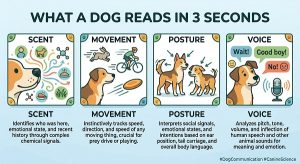
Dogs don’t judge you on your words or your smile. They judge your scent, movement, posture, and voice, usually in that order.
Here’s what’s going on:
- Smell comes first. A dog has roughly 300 million scent receptors. You have about 6 million. Before you say hello, the dog has already picked up where you’ve been and what animals you’ve touched.
- Stress has a smell. In a 2018 study, Italian researchers found that dogs exposed to human “fear sweat” showed more stress signs than dogs exposed to other odours. So if you’re nervous, the dog may know.
- Movement speaks loudly. Fast, direct, looming movement looks like pressure. Slow, curved, relaxed movement looks like “no threat here.”
- Your voice matters, but less. A 2018 University of York study found dogs paid more attention to high-pitched, dog-directed speech when the words were dog-related, like “good dog.” Random chatter in a baby voice did much less.
So here’s the thing: you can’t convince a dog to like you. You can only make yourself easy to trust. That’s the whole game.
2. Before You Meet: Your 2-Minute Prep
Most guides start at “approach the dog.” I start earlier, because prep removes half the problems.
Talk to the owner first. If the owner is there, ask:
- What’s the dog’s name?
- Is it okay if I say hello?
- Any treats allowed? Any allergies?
- Does the dog have fears, past trauma, or spots it hates being touched?
- How does the dog usually behave with new people?
It takes ten seconds and it’s the best “dog whisperer” trick there is. If the owner says no, take that politely. A no is a gift: it tells you the dog isn’t up for it today.
Dial down your scent. Skip strong perfume, cologne, or heavily scented lotion. Dogs have a sensitive nose, and a cloud of fragrance is a lot to process in a stranger.
Bring the right treats. Small, soft, smelly pieces work best: cooked chicken, cheese cubes, or a high-value training treat. Check with the owner first. Keep them in a pocket or pouch so you aren’t waving food around.
Check your own energy. Take one slow breath before you walk in. If you’re anxious or hyped up, the dog will often mirror that. Calm is contagious.
Choose the place if you can. Some dogs guard their home. Others feel safest there. If you’re introducing a dog to a new partner, ask the owner which works better for their dog. A quiet outdoor space, with room for the dog to move away, is often easier than a tight hallway.
3. The CALM Greeting: Your First 60 Seconds
I teach this as a simple four-part routine. It works on friendly Labradors and nervous rescues alike, and it’s easy to remember when your heart is racing.
C: Check in with the owner. Get permission and info (see above).
A: Angle your body. Stop a few steps away and turn slightly sideways. Facing a dog head-on, chest first, feels confrontational in dog language. A side angle feels neutral.
L: Let the dog choose. Stay still or crouch at the knees (not bending over the dog). Keep your hands low and relaxed. Talk to the owner. Look at the dog only in soft, short glances. Let the dog come to you, sniff, and decide.
M: Mark it with a treat. When the dog comes closer or looks at you calmly, toss a small treat near its feet, or slightly to the side. This tells the dog: “Good things happen around this person.”
What about “let the dog sniff your hand”?
You’ll see that advice everywhere, and it’s fine when done right. But here’s my tweak: don’t poke your hand toward the dog’s nose. Keep your arm relaxed by your side, fingers loose, and let the dog come to it. If the dog doesn’t come, that’s an answer too. Reaching at a nervous dog squeezes its personal space, and a dog that feels trapped may snap.
The CDC also says to avoid petting a dog until it has seen and sniffed you first.
Quick eye contact rule
Skip the stare. Hard, fixed eye contact reads as a challenge to many dogs. Use soft glances and let your eyes drift away. A slow blink or a turn of your head is like saying, “I’m no threat.”
4. Green, Yellow and Red Lights: Reading the Dog
Once the dog is near, its body tells you what to do next. Here’s the quick guide I use with new handlers.
| Light | What you see | What to do |
|---|---|---|
| Green (go slow, but go) | Loose, wiggly body. Soft eyes. Relaxed mouth. Tail wagging loosely at mid-height. Dog moves toward you and stays | Offer a treat, try the consent test |
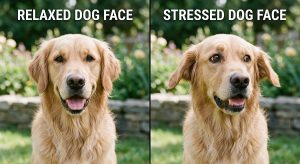
| Yellow (pause) | Lip licking, yawning, looking away, sniffing the ground suddenly, half-hearted tail wag, slow approach and retreat | Stop. Give space. Look away. Toss a treat and wait |
| Red (stop and back off) | Freezing, hard stare, stiff body, tail high and stiff or tucked tight, ears pinned, whale eye (you can see the white of the eye), curled lip, growl, raised hackles | Don’t touch. Don’t stare. Turn sideways, move away slowly, let the owner take over |
A few things people get wrong:
- A wagging tail doesn’t always mean “friendly.” A fast, stiff wag with a tense body can mean the dog is wound up and uncertain.
- Yawns and lip licks often mean stress, not sleepiness. Trainers call them “calming signals” or “cut-off signals.”
- A growl is useful. It’s the dog saying, “I’m uncomfortable.” Punishing a growl teaches dogs to skip the warning and go straight to a bite.
If you want a deeper look at fear signals, check our guide to how to tell if a dog is scared: 10 body language signs. Many of those early stress cues overlap with long-term worry, too. We’ve covered those in 7 warning signs your dog is struggling with anxiety.
5. How to Pet a Dog the First Time (The Consent Test)
This is where most first meetings go wrong, so I’ll slow down.
Wait for an invitation. The dog should come to you, lean on you, nudge your hand, or settle near you. If it’s still hesitant, don’t touch yet.
Start low, not high. Begin with the chest, shoulder, or the side of the neck. Whole Dog Journal recommends a chest scratch as the best first contact, for about three seconds, then taking your hand away. Reaching over the head is a classic mistake. A hand coming down from above, into the dog’s blind spot, can feel like a threat.
Do the 3-second consent test:
- Pet or scratch for about three seconds.
- Stop and lift your hand away.
- Watch what the dog does.
The SPCA uses a similar rule and suggests three to five seconds, then checking whether the animal wants more or prefers a break.
Read the answer:
- Dog leans in, nudges you, paws at you, or moves closer: that’s a “yes.” Pet again, gently.
- Dog stays still or wanders off: that’s a “no thanks” or “not now.” Respect it.
- Dog stiffens, licks lips, or turns its head away: that’s a “stop.” Back off.
Use slow, flat strokes rather than fast patting or ruffling. Think “calm massage,” not “scruffing a puppy.”
What to avoid: hugging, kissing the face, grabbing paws, touching the tail, or rubbing the belly on a first meeting. Some dogs love these after they trust you. None of them is a good opener.
Handler note: In working dog circles, we’re taught to “ask the dog,” not “tell the dog.” It’s the same here. The best petting happens when the dog wants it.
6. Treats and Toys: What Works and What Backfires
Food is a powerful friend-maker, but only if you use it well.
Do this:
- Toss, don’t hand over, for shy or unsure dogs. Tossing lets the dog take the treat without having to walk right up to a stranger. Many trainers recommend this for nervous dogs.
- Use small pieces, so the dog eats quickly and doesn’t rush at your fingers.
- Offer on a flat palm once the dog is relaxed, to prevent accidental nips.
- Pair the treat with your presence. You’re teaching: “This person = good stuff.”
- Reward calm behavior, like a sit or eye contact from a distance. That tells the dog what works.
Don’t do this:
- Don’t bribe a scared dog closer. Luring a frightened dog into your space can push it past its limit.
- Don’t treat a dog that’s growling or barking at you. You may reward the wrong thing. Give space first, and treat when the dog calms down.
- Don’t force a refused treat. Some dogs say no to food when they’re stressed. That’s useful information. Back off and try later.
- Don’t skip the owner’s okay. Allergies, diets, and medical conditions are real.
Toys: A soft toy or a tug can help with playful, confident dogs. But for a first meeting, treats are safer. Toys can trigger over-excitement or guarding.
7. Different Dogs, Different Plans
One greeting doesn’t fit every dog. Here’s how I adjust.
| Dog type | What they need | Your best move |
|---|---|---|
| Puppy (under 6 months) | Gentle play, short sessions, no overwhelm | Crouch, use a happy voice, offer a toy. Keep hands away from the face. Check vaccination status before contact with other dogs |
| Overly excited or jumpy dog | Calm attention only when calm | Turn away or stand still until all four paws are down, then reward. Don’t push the dog off (that’s still attention) |
| Shy or rescue dog | Space, time, zero pressure | Ignore it more than feels natural. Sit sideways, toss treats, let it approach. Don’t loom |
| Reactive or guarded dog | A clear plan from the owner | Follow the owner’s rules exactly. Keep distance. Don’t try to “fix” it yourself |
| Aloof or independent breed (e.g., many livestock guardians, Akita-type breeds, some hounds) | Respect, not cuddles | Offer calm presence. Affection may come later and look quiet |
| Toy breed (Chihuahua, Yorkie, etc.) | Less looming, more gentleness | Get low, avoid scooping up, keep voice soft |
| Herding or working breed (Border Collie, Belgian Malinois, German Shepherd) | Clear body language and focus | Move predictably, don’t flap hands or run around. These dogs notice everything |
| Senior dog | Comfort, low stress | Approach slowly, avoid noisy startles, touch gently around sore joints |
| Service or working dog on duty | To focus on its handler | Don’t greet, pet, or talk to it. Ask the handler only if it’s okay, and accept a no |
On that last one: Assistance Dogs International and most working-dog programs ask the public not to distract working dogs. In my years around military working dogs, I’ve seen how one casual pet from a passer-by can break a dog’s focus. The dog isn’t “being rude” when it ignores you. It’s doing its job.
8. Special Situations: Partner’s Dog, Rescues, Kids, Fences
These are the scenarios people search for most, and the ones the top results barely cover.
Meeting Your Partner’s Dog
Dogs can be protective of their person, so this meeting has extra emotions.
- Swap scents in advance. Ask your partner to bring home a worn T-shirt or sweater of yours for a few days, so your smell is familiar before you arrive. Trainers at iHeartDogs suggest the same trick in reverse.
- Meet on neutral ground if the dog guards the home. A quiet park or a walk works well.
- Let your partner stay relaxed. Dogs read their person. If your partner is tense, the dog will be too.
- Walk together first. A shared walk beats a face-to-face greeting. Walking side by side is easier on a dog than standing nose to nose.
- Give small treats, and let your partner be the one who ends the greeting if the dog gets overwhelmed.
Meeting a Rescue or Shelter Dog
- Ask staff about the dog’s history, triggers, and how it behaves with strangers.
- Visit more than once if you can. Dogs in kennels often act differently from dogs at home.
- Remember the 3-3-3 rule many rescues use: about 3 days to decompress, 3 weeks to learn the routine, and 3 months to feel at home. So a “shy” dog on day one might be a different dog by month three.
Meeting a Dog With Kids Around
Children aged 5 to 9 have the highest rate of dog bite injuries, according to the CDC. Teach kids this simple rule: ask, stand still, let the dog sniff, pet the chest or shoulder, stop after a few seconds. Never let kids hug, kiss, or climb on a dog they don’t know, and always supervise.
Dogs on a Leash, Behind a Fence, or in a Car
- On a leash: A tight leash can make a dog feel trapped. Ask the owner to keep the leash loose, and let the dog approach in a curve rather than head-on.
- Behind a fence or gate: Don’t reach over or through. Many dogs feel they must defend their space, and fingers through a fence is a common bite story.
- In a car or crate: Leave it alone. A dog in a confined space can feel more defensive.
9. 8 Mistakes That Ruin a Good First Impression
- Rushing in. Fast, direct movement looks like pressure.
- Reaching for the head. Start under the chin or on the chest instead.
- Staring. Soft glances only.
- Looming or bending over. Crouch at the knees and angle sideways.
- High-pitched squealing. A happy voice is fine, but shrieking can overexcite or scare some dogs.
- Hugging or kissing. Humans love hugs. Many dogs read them as restraint.
- Ignoring stress signals. A lip lick or head turn is a whisper. Listen before it becomes a shout.
- Forcing the meeting. Chasing, cornering, or “just let him get used to it” ends badly.
If you’ve made one of these, don’t panic. Just slow down, give space, and reset. Dogs forgive more than we think when we change our behavior.
10. Signs a Dog Is Starting to Like You
How do you know it’s working? Look for these:
- The dog approaches you on its own and stays nearby
- Loose, wiggly body and a soft, relaxed face
- The dog leans into you or presses against your leg
- It nudges your hand for more petting after the 3-second pause
- It offers play, like a play bow or bringing a toy
- It settles near you and relaxes enough to lie down
- It takes treats gently and looks back at you for more
A quick correction on something you may have read: some sources say a dog staring at you means it likes you. With a familiar, bonded dog, soft eye contact can be affectionate. With a stranger, a hard stare can be a warning. Look at the whole body, not just the eyes.
And a rolled-over belly doesn’t always mean “scratch me.” Sometimes it’s a sign of stress or appeasement. Check the rest of the body before you reach in.
11. What If the Dog Growls or Backs Away?
It happens, even to experienced handlers. Here’s what to do:
- Stop moving. Don’t reach, don’t lean in.
- Look away. Turn your head and body slightly sideways.
- Don’t run. Fast movement can trigger chasing.
- Back away slowly, step by step, without turning your back fully if you can help it.
- Let the owner step in.
- Don’t scold the dog. It did you a favor by warning you.
Then give it time. Often the dog just needs a break, space, and a few treats tossed from a distance. If the dog’s behavior seems extreme, or it ever breaks skin, talk to the owner and a qualified trainer or vet. A bite that breaks the skin needs medical attention.
12. How Long Does It Really Take?
Here are the ranges I see in real life. They vary by dog, history, and setting.
- Confident, social dogs: 30 seconds to a few minutes
- Average adult dogs: 5 to 20 minutes of calm presence
- Shy or wary dogs: 1 to 3 visits
- Rescues with a tough past: days to weeks
- Reactive or fearful dogs: weeks to months, on the owner’s plan
So if your first meeting doesn’t end in cuddles, you haven’t failed. You’ve given the dog a calm, safe memory of you. That’s the real win. The next meeting starts from there.
To build lasting trust after the first meeting:
- Show up the same way every time: calm, predictable, same greeting
- Take a walk together instead of only “greeting events”
- Join a short training or play session so the dog learns that you’re fun and fair
- Keep treats handy for the first few visits
That same pattern of consistency and repetition is how working dogs bond with handlers. If you’re curious how it plays out at a higher level, read our guide to K9 training methods used by the military.
13. Why You Can Trust This Advice
I’m writing this the way I’d teach a new handler on the training field. My background is in military working dog instruction and handling, with more than 14 years at the Nigerian Army Dog Centre, including obedience, K9 patrol, and explosive detection courses. In that world, a dog’s trust is part of the job, and a bad first approach can cost weeks.
The advice here also lines up with respected sources:
- CDC guidance on dog bite prevention (let dogs see and sniff you first; ask before petting)
- Whole Dog Journal and the SPCA on the consent test and petting length
- Assistance Dogs International guidance on not distracting working dogs
- University of York research on dog-directed speech
Note: This guide is for general education. It isn’t a substitute for a vet or a certified behaviorist. If a dog has bitten or you feel unsafe, step away and get professional help.
If you want to go deeper into raising and handling dogs the way professionals do, my book, Beyond the Bark: Inside a Pro Handler’s Playbook for Raising the Ideal Dog, breaks down these handler principles for everyday dog owners.
Conclusion
Making a dog like you at the first meeting comes down to one idea: make yourself easy to trust and let the dog set the pace.
Here’s the short version to remember:
- Prep first: ask the owner, skip the strong perfume, bring small treats.
- Use CALM: Check in, Angle sideways, Let the dog choose, Mark with a treat.
- Read the lights: green means go slow, yellow means pause, red means back off.
- Pet with consent: chest or shoulder for three seconds, then stop and watch.
- Match the dog: puppies, shy rescues, reactive dogs, and working dogs all need different plans.
- Be patient: some dogs warm up in a minute, others need a few visits. Both are normal.
Try it at your very next dog meeting. Count your three seconds, watch the dog’s answer, and you’ll be surprised how fast it changes.
Want more handler-tested tips like this every week? Subscribe to our weekly articles roundup newsletter here and get new training guides straight to your inbox.
Frequently Asked Questions
How long does it take for a dog to warm up to a new person?
It depends on the dog. Confident, social dogs may warm up in minutes. Shy or rescue dogs often need several calm visits. Dogs with a rough past can take weeks. Let the dog set the pace.
Is it okay to make eye contact with a dog when you first meet?
Keep it soft and brief. Hard, steady eye contact feels like a challenge to many dogs. Use quick glances, look at the owner, and turn your body slightly sideways.
Should I let a strange dog sniff my hand?
Yes, but let the dog come to you. Keep your hand low and relaxed by your side instead of pushing it toward the dog’s nose. If the dog backs away, don’t follow.
Why doesn’t a dog like me even when I’m kind?
Usually it’s not about you. The dog may be shy, stressed, in a new place, or have a history that makes strangers scary. Strong scents, loud voices, or looming posture can also put dogs off. Give space and time, and try again.
Do dogs remember first impressions?
Yes, they often do. Dogs learn by association, so a calm, positive first meeting makes the next one easier, and a scary one can stick. That’s why a slow, gentle approach pays off for weeks after.

Her work centres on obedience, detection, protection and operational readiness. She favours proven methods built on repetition, consistency and real-world conditioning, so that both dogs and handlers are prepared for high-pressure tasks.
Rofiat represented the Nigerian Army Dog Centre at the Nigerian Army Day Celebration (NADCEL) 2026, where she led demonstrations in obedience, explosive detection, agility and tactical movement. Through articles, training content and documentaries, she shares field-based insight into how structured training, clear communication and trust between handler and dog affect performance and reliability.
She is the author of Beyond the Bark: Inside a Pro Handler's Playbook for Raising the Ideal Dog, a practical guide that helps dog owners and handlers apply professional training principles in everyday situations.
- Dog Hotel Prep: 7 Must-Haves Before Boarding - October 21, 2026
- How to Enter the COBA National Dog Championship - October 20, 2026
- K9 Advantix Dosage Chart & Safety Guide for Dogs - October 19, 2026