Frenchton Puppies: Cost, Size & Care Guide
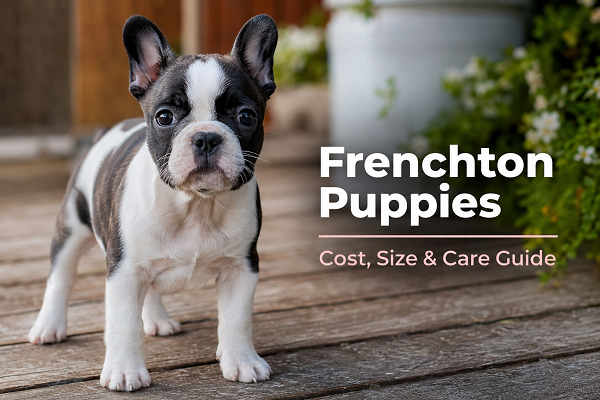
A Frenchton puppy (French Bulldog x Boston Terrier) typically costs $1,000 to $6,000 from a breeder, with most families paying somewhere around $2,000 to $3,000. Adults settle in at 15 to 25 pounds and 11 to 16 inches tall, live 12 to 15 years, and need low-maintenance grooming but close attention to breathing, weight, and heat tolerance because they’re a brachycephalic (flat-faced) breed.
Table of Contents
- Introduction
- What Is a Frenchton?
- Frenchton Size and Growth: What to Expect
- How Much Does a Frenchton Puppy Cost?
- The Real Lifetime Cost of Owning a Frenchton
- Frenchton Temperament: What They’re Actually Like
- Health and Lifespan: What Every Owner Needs to Know
- Grooming and Daily Care
- Feeding a Frenchton the Right Way
- Exercise and Training Tips
- Is a Frenchton Right for Your Family?
- Finding a Responsible Breeder or Rescue
- FAQs
- Final Thoughts
Introduction
If you’ve ever met a Frenchton in person, you already know the pull. That stocky little body, the bat ears, the “did you bring me a snack?” expression, it’s a hard combination to walk away from. But before you say yes to one of those faces, you need the real numbers, not the Instagram version.
I’ve spent years around working dogs and companion breeds alike, and I get asked about Frenchtons more than almost any other mixed breed these days. So in this guide, we’re going to walk through exactly what a Frenchton puppy costs, how big they actually get, what their health looks like long-term, and how to care for one properly, day to day. No fluff, just what you need to make a smart decision.
What Is a Frenchton?
A Frenchton is a designer crossbreed, half French Bulldog, half Boston Terrier. Breeders in the United States started intentionally pairing the two in the mid-1990s, and the goal wasn’t just a cute mashup. It was actually a health-driven decision. French Bulldogs are famous (and, let’s be honest, a little infamous) for severe breathing problems tied to their extremely flat faces. Boston Terriers carry a slightly longer muzzle and a bit more airway room, so crossing the two was meant to soften some of the French Bulldog’s worst structural issues while keeping that same goofy, affectionate personality people love.
Does it always work out that way? Mostly, but not guaranteed. More on that in the health section, because this is the part most puppy listings gloss over.
Since the Frenchton is a hybrid, it isn’t recognized by the American Kennel Club (AKC) or the UK Kennel Club, though it does have recognition through some designer breed registries in the US, UK, and Australia. That matters if you’re chasing papers and pedigree, but it doesn’t matter much for how the dog actually lives in your home.
Frenchton Size and Growth: What to Expect
Frenchtons land in that sweet spot people love for apartment living: small enough to carry, sturdy enough to not feel fragile.
- Weight: 15 to 25 pounds at maturity
- Height: 11 to 16 inches at the shoulder
- Body type: Compact, muscular, stocky, with the French Bulldog’s broad chest and the Boston Terrier’s slightly longer legs
- Coat: Short and smooth, in brindle, black, white, fawn, cream, or pied combinations
- Maturity age: Most Frenchtons reach their full adult size between 12 and 18 months
Here’s a detail worth knowing before you pick a puppy out of a litter: males tend to run a bit longer and taller than females, and litters from the same parents can still vary noticeably in size. If you’re set on a smaller Frenchton, ask the breeder for the size range of the puppy’s parents and grandparents rather than guessing from an 8-week-old pup, because puppy paws and puppy fluff lie.
If you’re weighing a Frenchton against other popular designer breeds before you commit, it’s worth comparing notes. Our guide to Pyrenees Bernese mix puppies covers the opposite end of the size spectrum, a genuinely giant hybrid, while the Cavalier cross Poodle puppy guide breaks down another small, low-shedding companion breed with a very different temperament profile.
How Much Does a Frenchton Puppy Cost?
This is usually the first question people ask, and honestly, the answer has a wide range because so much depends on the breeder and the puppy’s coloring.
| Source | Typical Price Range |
|---|---|
| Backyard breeder | $1,000 – $1,500 |
| Reputable hobby breeder | $2,000 – $3,500 |
| Established, health-tested breeder | $3,000 – $6,000+ |
| Rare colors (lilac, blue, sable, merle) | $3,000 – $6,300+ |
| Rescue or breed-specific rescue | $250 – $750 |
Across multiple breeder listings and marketplaces, the average price most people actually pay lands around $2,000 to $3,000, with a broader realistic range of $1,000 to $6,000 depending on lineage, breeder reputation, location, and coat color. Standard brindle or black-and-white “tuxedo” Frenchtons tend to sit at the lower end. Rare colors like lilac, blue, and sable command a premium simply because of demand, not because they’re a “better” dog.
A word of caution here: if you see a Frenchton puppy advertised for $500 with no health testing, no vet records, and a seller who won’t let you visit in person, walk away. Underpriced puppies from unscreened parents are one of the fastest routes to a dog with severe, expensive airway or joint problems down the line. I’ve seen it happen more than once, and it’s heartbreaking for the family who just wanted to save a little money upfront.
The Real Lifetime Cost of Owning a Frenchton
The purchase price is genuinely just the entry fee. Here’s where the ongoing costs typically land:
- Food: $50–$75 per month for a high-quality, portion-controlled diet
- Pet insurance: $50–$80 per month, and it runs on the higher side for this breed specifically because insurers price in the airway and surgical risk that comes with being brachycephalic
- Routine vet care: Annual checkups, vaccines, and dental cleanings typically run $300–$600 per year
- Grooming supplies: Minimal, usually under $100 a year given the short coat
- Potential BOAS correction surgery: $2,000–$5,000 if your dog develops significant airway obstruction and needs surgical correction
Add it all up over a 12-to-15-year lifespan, and most owners are looking at a lifetime cost somewhere between $20,000 and $40,000, and that’s before factoring in any emergency vet visits, which brachycephalic breeds are statistically more likely to need. If that number surprises you, it should. It’s exactly why pet insurance quoted early, ideally before your puppy turns one, is one of the smartest financial moves a Frenchton owner can make.
Frenchton Temperament: What They’re Actually Like
Frenchtons are, in a word, people-dogs. They were bred from two companion breeds that both genuinely love being near their humans, and it shows.
Typical Frenchton traits:
- Affectionate and eager to be close to you, often described as “velcro dogs”
- Playful and a little goofy, they don’t grow out of the puppy energy entirely
- Generally good with children and other pets when properly socialized early
- Moderate barkers, not silent, but not the neighborhood alarm system either
- Alert and social with strangers rather than suspicious
- A stubborn streak inherited from the French Bulldog side, which can show up as selective hearing during training
That last point matters more than people expect. Frenchtons are smart, but “smart” doesn’t always mean “compliant.” They respond far better to short, upbeat, reward-based sessions than to long drills or repetition for its own sake. If you’re used to working with more instinct-driven or high-drive breeds, you’ll notice a Frenchton’s motivation runs almost entirely on food, praise, and attention rather than task-drive. Our Mini Husky trainability and temperament guide is a good side-by-side read if you’re comparing how differently small breeds can respond to structured training.
If you want a deeper, structured approach to shaping good behavior in a companion dog from week one, our team put together the e-book Beyond the Bark, which walks through the same foundational obedience and bonding principles we use with working dogs, scaled down for family pets like the Frenchton.
Health and Lifespan: What Every Owner Needs to Know
Let’s be direct about this part, because it’s the single most important section in this article.
Frenchtons live an average of 12 to 15 years, which is genuinely longer than either parent breed on its own (French Bulldogs average 10–12 years). That’s the good news, and it’s the main reason this cross was developed in the first place.
The less comfortable truth: a Frenchton is still a brachycephalic breed. The World Small Animal Veterinary Association has specifically flagged flat-faced breeds and their heightened risk of Brachycephalic Obstructive Airway Syndrome (BOAS) as a genuine welfare concern in the veterinary community, not just a cosmetic quirk to shrug off.
Health issues to watch for:
- BOAS (breathing difficulty) — narrowed nostrils and airway, worse in heat or after exercise
- Eye conditions — cherry eye, corneal ulcers, cataracts, more common because of the breed’s prominent eyes
- Patellar luxation — kneecaps slipping out of place, inherited more from the Boston Terrier side
- Dental overcrowding — from the compressed jaw structure
- Skin fold infections — facial wrinkles trap moisture and bacteria if not cleaned
- Obesity — even a few extra pounds significantly worsens breathing in this breed
- Heat intolerance — flat faces make panting an inefficient cooling method
The practical takeaway: never let a Frenchton overheat, never leave one in a parked car even briefly, keep them lean, and ask your breeder directly whether the puppy’s parents had a BOAS evaluation, patella check, and eye exam before breeding. A reputable breeder will have this documentation ready without hesitation. If they get defensive or vague when you ask, that’s your answer.
Grooming and Daily Care
This is genuinely one of the easier parts of Frenchton ownership. The short coat doesn’t mat, doesn’t need professional grooming, and sheds moderately rather than heavily.
Weekly grooming routine:
- Brush once or twice a week with a soft bristle or rubber curry brush to lift loose hair
- Wipe and dry facial folds daily or every other day, moisture trapped in the wrinkles is the number one cause of skin infections in this breed
- Check and clean ears weekly to prevent buildup
- Trim nails every 3–4 weeks, or whenever you hear them clicking on hard floors
- Brush teeth several times a week given the dental crowding risk
Bathing only needs to happen every 4–6 weeks unless your dog gets visibly dirty. Over-bathing strips natural oils and can actually make skin issues worse, not better.
For a broader, step-by-step routine that covers this from the very first bath onward, our essential grooming guide for healthy puppies walks through the habits that make grooming a bonding experience instead of a wrestling match.
Feeding a Frenchton the Right Way
Portion control is not optional with this breed, it’s protective medicine. Extra weight puts direct pressure on an already-compromised airway.
- Puppies (under 6 months): 3–4 small meals per day
- Adults: 2 meals per day, measured, not free-fed
- Choose a high-quality food with real meat as the first ingredient, and avoid excessive fillers like corn or soy that offer little nutritional value
- Use a slow-feeder bowl if your Frenchton tends to gulp air while eating, which is common in flat-faced breeds and can trigger digestive discomfort
- Keep fresh water available at all times, especially after activity or in warm weather
Ask your vet to help you calculate a calorie target once your Frenchton reaches adulthood. What looks like “just a couple treats a day” can quietly add 10–15% to a small dog’s body weight over a year, and for this breed, that’s a meaningful health risk, not a minor cosmetic issue.
Exercise and Training Tips
Frenchtons have moderate energy, they’re playful, not high-drive. Most do well with:
- 30 to 45 minutes of activity daily, split into two shorter sessions rather than one long walk
- Interactive toys and short training games for mental stimulation
- Play sessions like gentle tug or fetch in a cool, shaded space
- Avoiding strenuous exercise, especially in heat above roughly 75–80°F (24–27°C), when their airway simply can’t keep up with cooling demand
For training, keep sessions to 5–10 minutes, use high-value treats, and end on a win. Crate training, in particular, tends to go smoothly with this breed because they naturally gravitate toward a cozy, enclosed space, but the introduction still matters. Our crate training guide with K9 trainer tips breaks down the exact structure we use to get faster, calmer results without the whining-filled first week most new owners dread.
Is a Frenchton Right for Your Family?
A Frenchton is likely a good fit if you:
- Live in an apartment or smaller home without a big yard
- Want a dog that genuinely wants to be near you most of the day
- Can commit to daily short walks rather than long runs or hikes
- Have the budget for pet insurance and potential specialist vet visits
- Live somewhere with reliable indoor climate control
A Frenchton may not be the right match if you:
- Live somewhere with long, hot, humid summers and no air conditioning
- Want a jogging or hiking companion
- Are away from home for long stretches regularly, they don’t do well with extended isolation
- Aren’t prepared for above-average pet insurance and vet costs
Finding a Responsible Breeder or Rescue
Whichever route you take, ask for proof, not promises.
From a breeder, request:
- BOAS (airway) evaluation on both parents
- Patella and eye exam results
- References from previous puppy buyers
- An in-person or video visit of the puppy with its littermates and parents
Consider rescue first. Breed-specific rescues and general shelters occasionally have Frenchtons or Frenchton-type mixes available for $250–$750, a fraction of breeder pricing, and many come already vet-checked and partially trained. It’s worth a look before you commit to a breeder waitlist.
FAQs
1. How much does a Frenchton puppy cost on average?
Most Frenchton puppies from breeders cost between $2,000 and $3,000, with a full realistic range of $1,000 to $6,000 depending on breeder reputation, lineage, and coat color.
2. How big do Frenchtons get?
Adult Frenchtons typically weigh 15 to 25 pounds and stand 11 to 16 inches tall at the shoulder, reaching full size by 12 to 18 months of age.
3. Are Frenchtons healthy dogs?
They’re generally healthier than a purebred French Bulldog due to hybrid vigor, but they’re still a brachycephalic breed and carry real risk for breathing issues (BOAS), eye conditions, and patellar luxation. Responsible breeding and weight management significantly reduce these risks.
4. Do Frenchtons shed a lot?
They shed moderately, not heavily. Their short coat is low-maintenance but not hypoallergenic, so they’re not a good match for households with significant dog allergies.
5. Are Frenchtons good with kids and other pets?
Yes, generally. They’re playful, sociable, and adaptable, and tend to do well with children and other pets when they’re properly socialized as puppies.
Final Thoughts
A Frenchton can be one of the most rewarding small companion dogs you’ll ever bring home, affectionate, funny, adaptable, and genuinely devoted to their people. But the flat-faced structure that makes them so charming is also the exact thing that demands the most attention from you as an owner. Keep them lean, keep them cool, screen your breeder carefully, and budget honestly for the vet care this breed sometimes needs.
If you do those things, you’re looking at 12 to 15 years with a dog who will follow you from room to room just to be near you. That’s a pretty good trade.
Author Note: Our team works hands-on with working and companion dogs across obedience, socialization, and health-focused care, and we write these breed guides the same way we’d advise a friend asking us in person, with the real numbers, not the sales pitch.

Her work centres on obedience, detection, protection and operational readiness. She favours proven methods built on repetition, consistency and real-world conditioning, so that both dogs and handlers are prepared for high-pressure tasks.
Rofiat represented the Nigerian Army Dog Centre at the Nigerian Army Day Celebration (NADCEL) 2026, where she led demonstrations in obedience, explosive detection, agility and tactical movement. Through articles, training content and documentaries, she shares field-based insight into how structured training, clear communication and trust between handler and dog affect performance and reliability.
She is the author of Beyond the Bark: Inside a Pro Handler's Playbook for Raising the Ideal Dog, a practical guide that helps dog owners and handlers apply professional training principles in everyday situations.
- Is K9 Advantix Safe for Dogs? A Handler’s Honest Review - October 2, 2026
- Australian Cattle Dog vs Blue Heeler: Any Difference? - October 1, 2026
- Bousnic Dog Training Collar Review: Is It Safe? - September 30, 2026