Alsatian Dog Training: The First 30 Days Guide

The first 30 days of Alsatian (German Shepherd) puppy training should focus on four things in this order: potty training and a predictable routine, gentle crate conditioning, name recognition and hand-target games, and controlled exposure to new people, sounds, and surfaces during the critical 8–16 week socialization window. Keep training sessions to 5 minutes, twice a day, and never force interactions, confidence built now is confidence you’ll rely on for the next 10+ years.
Table of Contents
- Why the First 30 Days Matter So Much
- Alsatian or German Shepherd? Clearing Up the Name
- Before Puppy Comes Home: Your Prep Checklist
- Week 1 (Days 1–7): Survival Mode and Settling In
- Week 2 (Days 8–14): Building the Routine
- Week 3 (Days 15–21): Widening the World
- Week 4 (Days 22–30): Locking In the Foundation
- The Socialization Window: Why You Can’t Wait
- Costs and Realistic Expectations
- 7 Mistakes That Sabotage the First Month
- Trainer’s Notes: Real Experience, Real Results
- FAQs
- Conclusion and Next Steps
Why the First 30 Days Matter So Much
If you’ve ever brought home a German Shepherd puppy or as folks in the UK and much of Europe still call them, an Alsatian, you already know the first few weeks feel like a blur of chewed shoes, 3 a.m. potty runs, and a level of exhaustion nobody warned you about.
Here’s the thing though: those first 30 days aren’t just survival. They’re the foundation your dog will stand on for the next decade or more. Behaviorists have long pointed to the period between roughly 3 and 16 weeks of age as the window where a puppy’s brain is most open to new experiences, and a big chunk of that window falls right inside your first month together. What your puppy learns or doesn’t learn, right now shapes whether you end up with a confident, biddable adult dog or one that’s nervous around strangers, reactive on leash, or destructive when left alone.
I’ve handled working German Shepherds and Belgian Malinois in military and security settings for over a decade, and I can tell you the dogs that turned out rock-solid weren’t the ones with the “best genetics” on paper. They were the ones whose handlers got the first 30 days right. This guide walks you through exactly how to do that, day by realistic day, without the overwhelm.
Alsatian or German Shepherd? Clearing Up the Name
Quick history lesson, because I get asked this constantly: “Alsatian” and “German Shepherd” are the same breed. After World War I, British breed clubs dropped “German” from the name over anti-German sentiment and rebranded the dog as the “Alsatian Wolf Dog,” after the Alsace region on the French-German border. The UK Kennel Club only officially restored the name “German Shepherd Dog” in 1977, but “Alsatian” stuck around in everyday British, Irish, and Australian usage, and you’ll still hear it plenty today.
So wherever you’re reading this from, the training advice below applies whether you call your dog an Alsatian, a GSD, or a German Shepherd, it’s one breed, one training approach.
It’s also worth knowing early on that this breed sits firmly in the working dog group, bred originally for herding and now used worldwide in police, military, and protection roles. If you want the bigger picture on what that classification actually means for a family pet, this working dog guide breaks down how working breeds differ from companion breeds in drive, exercise needs, and trainability, useful context before you even start Day 1.
Before Puppy Comes Home: Your Prep Checklist
Don’t wait until the car ride home to think about logistics. Have these ready in advance:
- Crate sized for an adult Alsatian (roughly 42 inches) with a divider panel so it grows with the puppy
- Puppy-safe food matching whatever the breeder or shelter was already feeding, to avoid a stomach upset on top of everything else
- A collar, a 6-foot leash, and a long line (15–20 feet) for later recall work
- Baby gates or an exercise pen to block off unsupervised areas of the house
- Enzymatic cleaner for the inevitable accidents (regular cleaners don’t fully remove the scent, which encourages repeat accidents in the same spot)
- A vet appointment booked within the first 48–72 hours
- A puppy socialization class researched and, ideally, pre-registered, good ones fill up fast
One more thing: decide on your household rules before the puppy arrives, not after. Is the dog allowed on the couch? Which door do they go out for potty breaks? Who feeds them and when? If working line versus show line temperament differences matter to how you plan to raise this dog, it’s worth reading up on working line vs. show line GSD training differences before you even bring the puppy home, it changes how much daily engagement you’ll realistically need to provide.
Week 1 (Days 1–7): Survival Mode and Settling In
Your goals this week are modest on purpose: safety, routine, and gentle exposure. Don’t try to “train” much yet.
Potty training starts on day one. Take your puppy out first thing in the morning, after every meal, after every nap, after every play session, and roughly once an hour in between. Praise quietly the second they finish, not five minutes later in the kitchen. Most Alsatian puppies at 8 weeks have a bladder that can hold roughly 1 hour for every month of age, so an 8-week-old puppy needs a bathroom break close to hourly during the day.
Crate training begins immediately, but gently. Feed meals in the crate with the door open at first. Toss treats inside. Let your puppy wander in and out on their own terms for the first day or two before you close the door for short stretches. By the end of week 1, most puppies can manage 30–45 minutes crated during the day without distress, and many settle for overnight sleep with one bathroom break around 2–3 a.m.
Name recognition is your only real “command” this week. Say the puppy’s name once, and the instant they glance at you, mark it (“yes!”) and reward. Repeat 10–15 times a day in short bursts.
Keep visitors and outings minimal but not zero. Your puppy hasn’t finished their vaccine series, so you’re avoiding dog parks and pet stores where unknown dogs congregate. But the American Veterinary Society of Animal Behavior actually recommends starting supervised, low-risk socialization before the vaccine series is complete, not after, carrying your puppy through a quiet parking lot, letting them watch the world from your arms outside a coffee shop, and inviting one or two calm, vaccinated adult dogs over for controlled meetings are all fair game from day one.
Week 2 (Days 8–14): Building the Routine
By now your puppy should be sleeping in the crate through most of the night with maybe one bathroom trip, and accidents should be dropping, though don’t panic if you’re still cleaning up a mess or two a day. That’s completely normal at this stage.
Introduce the “sit” cue. Hold a treat just above your puppy’s nose and slowly move it back over their head. As their bottom naturally lowers, say “sit” and reward the instant it touches the ground. Five-minute sessions, twice a day, is plenty, an 8- to 10-week-old Alsatian genuinely cannot focus much longer than that.
Start handling exercises. Gently touch paws, ears, and mouth for a few seconds each, followed immediately by a treat. This isn’t optional fluff, it’s what makes future nail trims, vet exams, and grooming sessions manageable instead of a wrestling match. German Shepherds “blow their coat” (shed the undercoat heavily) roughly twice a year, so early comfort with brushing pays off fast.
Widen the sound library. Play recordings of thunderstorms, fireworks, and vacuum cleaners at low volume while your puppy eats or plays, gradually increasing volume over several days. This desensitization now can prevent noise phobias that are genuinely hard to fix later in life.
Bite inhibition matters more than people realize. Alsatian puppies explore the world mouth-first, and littermate play is where they’d normally learn how hard is too hard. Without littermates around, that job falls to you: when a nip is too hard, yelp or say “ouch” in a higher pitch, briefly withdraw attention, then resume play. This mimics what a littermate would do and teaches bite pressure control gradually.
Week 3 (Days 15–21): Widening the World
This is often the week owners notice their puppy getting genuinely playful and curious, which means it’s the perfect week to lean harder into socialization while that natural curiosity is working in your favor.
Add “down” and “come” to your repertoire. For “down,” lure from a sit position by moving the treat straight to the floor between the puppy’s paws. For “come,” practice indoors first, in a hallway with no distractions, calling in an upbeat voice and rewarding enthusiastically every single time, never call your puppy to you for something unpleasant like a bath or nail trim, or you’ll poison the cue.
Take socialization outings seriously now. Depending on your vet’s guidance and local disease risk, many vets are comfortable with controlled outings, carried or in a stroller if vaccines aren’t complete, to places like hardware stores, outdoor cafés, or a friend’s fenced yard. Expose your puppy to men in hats, people using umbrellas, children playing, cyclists, and different walking surfaces like gravel, tile, and grates. Keep every encounter short and end on a good note.
Extend crate time and start “alone” practice. Leave the room for a minute, then five, then ten, while your puppy is calm in the crate. This is your best insurance against separation anxiety, which is genuinely common in this breed if it’s never practiced being alone.
Introduce a mat or place cue. Toss a treat onto a mat or bed, say “place” as the puppy steps on, and reward. This becomes hugely useful later for settling the dog during mealtimes or when guests arrive.
Week 4 (Days 22–30): Locking In the Foundation
By the final week of your first month, most well-managed Alsatian puppies are showing real progress: sit and down on cue most of the time, coming when called indoors, sleeping through the night in the crate, and having noticeably fewer accidents.
Push training sessions to 8–10 minutes, but still split across 2–3 sessions a day rather than one long block. Puppy attention spans grow slowly.
Practice commands in new locations. A “sit” your puppy nails in the kitchen may fall apart completely in the front yard. That’s not stubbornness, it’s a real phenomenon called poor generalization, and it’s one of the most common reasons owners think their dog “forgot” a command. Practice the same cues in three or four different rooms and, once your vet clears it, outdoors.
Begin loose-leash walking basics in the yard or a quiet hallway. Reward your puppy for walking near your leg rather than pulling. Don’t expect polished leash manners yet, you’re planting a seed you’ll cultivate for months.
Book your puppy class if you haven’t already. Structured group classes, run by a certified trainer using reward-based methods, give your puppy safe exposure to other vaccinated puppies plus expert eyes on your technique. This is also a great point to start thinking further ahead, if protection or advanced working roles are part of your long-term plan for this dog, formal bite work and drive-channeling typically doesn’t start until 8–10 months, but the groundwork you lay now directly determines how trainable your dog is later. My guide on training steps for working breeds like the Belgian Malinois covers that longer arc if you’re curious where this all leads.
The Socialization Window: Why You Can’t Wait
I want to slow down on this one because it’s the single biggest mistake I see new Alsatian owners make.
Canine behaviorists and the AKC both point to roughly 8–16 weeks as the critical socialization window, the period when a puppy’s brain forms lasting associations with what’s “normal” and “safe” versus what’s threatening. After around 12–16 weeks, that window doesn’t slam shut, but it narrows considerably, and new experiences become noticeably harder to introduce without fear responses.
For a breed already predisposed toward watchfulness and reserve with strangers, which is written right into most breed standards, skipping this window is how you end up with an adult Alsatian that barks or lunges at delivery drivers, houseguests, or other dogs. That’s not “protective instinct kicking in.” In most cases, it’s under-socialization, and it’s largely preventable.
A few rules I give every new owner:
- Aim for quality over quantity. A handful of calm, positive exposures beats a chaotic dog park visit every time.
- Never force a greeting. If your puppy backs away from a person or dog, let them retreat and observe from a distance instead.
- Vaccination status matters, but so does the calendar. Talk to your vet about a risk-managed approach to early socialization rather than waiting until the full vaccine series is complete at 16+ weeks, by then, you’ve lost most of the window.
- Mix up locations, surfaces, sounds, and people, not just other dogs. Confidence with an umbrella-carrying stranger matters just as much as confidence with another puppy.
Handler bonding plays into this too. The stronger and more consistent your relationship with your puppy, the more they’ll look to you for guidance in new situations instead of reacting on instinct alone, the same principle that shows up again and again in how working dog teams build trust under real pressure.
Costs and Realistic Expectations
Owners are often surprised by the numbers, so let’s be upfront about them:
| Expense | Typical Range |
|---|---|
| Alsatian/GSD puppy (companion-quality, reputable breeder) | $1,200–$3,500 |
| Puppy with working or protection-line pedigree | $3,000–$9,000+ |
| First-month vet visits and core vaccines | $150–$300 |
| Crate, leash, bowls, basic supplies | $150–$400 |
| Group puppy class (6–8 weeks) | $100–$250 |
| Private trainer (if needed) | $75–$150 per session |
Set your expectations on timeline too: most puppies reach roughly 70–80% potty reliability by the end of the first month, not 100%. Commands like “sit” and “down” are usually solid indoors by day 30, but real reliability, responding around distractions, in new places, every time, typically takes 3 to 6 months of consistent practice. German Shepherds as a breed also mature slowly; what you teach at 8 weeks often doesn’t fully “click” until 6–9 months, and full emotional maturity can take up to 2–3 years. Patience isn’t optional with this breed, it’s the whole method.
7 Mistakes That Sabotage the First Month
- Skipping outings until vaccines are “done.” By 16 weeks, the critical window has mostly closed. Talk to your vet about a managed approach instead.
- Training sessions that run too long. A puppy who checks out after 3 minutes isn’t being defiant, they’re maxed out. Stop before that happens.
- Inconsistent household rules. If one family member allows jumping on the couch and another doesn’t, your puppy isn’t confused about right and wrong, they’re being trained inconsistently, and that’s on the humans.
- Punishing accidents after the fact. A puppy can’t connect a scolding at 6 p.m. to an accident from 6 a.m. It only teaches them to fear you, not to potty outside.
- Rushing the crate. Forcing a puppy into a closed crate before they’re comfortable creates a lifelong negative association. Go slower than feels necessary.
- Assuming a “calm” puppy doesn’t need socialization. Quiet, easygoing puppies are just as prone to fear-based reactivity in adolescence if socialization gets skipped, it just shows up later and can be more surprising when it does.
- Calling the puppy to you for anything unpleasant. Baths, nail trims, and time-outs should never follow “come.” Go get your puppy for those instead, and protect the recall cue.
Trainer’s Notes: Real Experience, Real Results
I’m Rofiat Muritala, a former military K9 handler and certified dog trainer with over 14 years of hands-on experience raising, training, and deploying working German Shepherds and Belgian Malinois in security and operational settings. I’ve also spent years since then helping everyday families raise the same breeds as calm, confident companions rather than working dogs and honestly, the first-30-days principles barely change between the two paths. A well-socialized, well-structured Alsatian puppy is a well-socialized, well-structured Alsatian puppy, whether their future involves a family living room or a security detail.
The single biggest predictor I’ve seen of a stable adult dog isn’t bloodline, and it isn’t even the trainer you eventually hire. It’s whether the owner treated those first four weeks as seriously as I’ve laid out here.
FAQs
1. Is “Alsatian” a different breed from a German Shepherd?
No. “Alsatian” is simply the traditional British name for the German Shepherd Dog, dating back to post-WWI anti-German sentiment. Training advice for one applies fully to the other.
2. What’s the very first thing I should train in the first 30 days?
Potty training and a predictable daily routine come first, closely followed by gentle crate conditioning. Formal obedience cues like “sit” can start around week 2, once the basics are settling in.
3. How many hours a day should I spend training an Alsatian puppy in month one?
Not as many as you’d think. Two to three sessions of 5–10 minutes each, spread through the day, is plenty for an 8- to 12-week-old puppy. Longer sessions cause frustration, not faster learning.
4. When can I take my Alsatian puppy out in public?
Talk to your vet, but most recommend starting low-risk, controlled socialization (carried outings, quiet environments, meetings with known vaccinated dogs) well before the vaccine series finishes, since the critical socialization window closes around 12–16 weeks.
5. Why does my Alsatian puppy bite so much in the first month?
It’s normal exploratory and teething behavior, not aggression. Redirect to appropriate chew toys and use a yelp-and-withdraw response to teach bite inhibition, the same way a littermate would.
Conclusion and Next Steps
The first 30 days with an Alsatian puppy aren’t about perfection, they’re about laying down habits, trust, and exposure that pay off for the next decade. Get the potty routine and crate training running smoothly, keep training sessions short and upbeat, and don’t let the socialization window slip by while you wait for a “perfect” moment that never comes.
If you take one thing from this guide, let it be this: consistency beats intensity every time with this breed. A calm, structured 10 minutes a day will get you further by day 30 than an exhausting weekend “training marathon” ever will. Stay patient, celebrate the small wins, the first full night in the crate, the first reliable “sit” and trust that the work you’re putting in now is exactly what turns an eight-week-old Alsatian puppy into the loyal, confident dog this breed is famous for being.

Her work centres on obedience, detection, protection and operational readiness. She favours proven methods built on repetition, consistency and real-world conditioning, so that both dogs and handlers are prepared for high-pressure tasks.
Rofiat represented the Nigerian Army Dog Centre at the Nigerian Army Day Celebration (NADCEL) 2026, where she led demonstrations in obedience, explosive detection, agility and tactical movement. Through articles, training content and documentaries, she shares field-based insight into how structured training, clear communication and trust between handler and dog affect performance and reliability.
She is the author of Beyond the Bark: Inside a Pro Handler's Playbook for Raising the Ideal Dog, a practical guide that helps dog owners and handlers apply professional training principles in everyday situations.
- How to Enter the COBA National Dog Championship - October 20, 2026
- K9 Advantix Dosage Chart & Safety Guide for Dogs - October 19, 2026
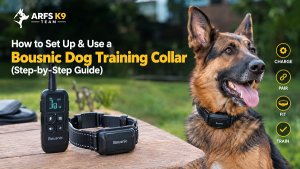
- How to Set Up & Use Bousnic Dog Training Collar - October 18, 2026