How to Choose a Puppy: 6 Costly Mistakes to Avoid
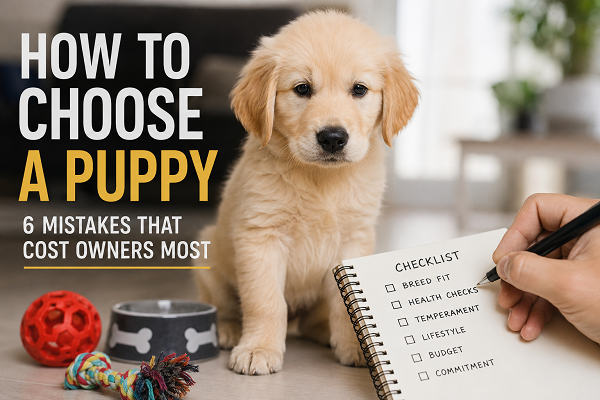
To choose a puppy well, match the breed’s energy and size to your real daily life, buy only from a breeder or rescue you can visit in person, bring the puppy home at 8 weeks or later, get health tests and a written contract, and watch each puppy’s behavior over several visits. The six mistakes that cost owners the most are impulse buying, picking the wrong source, choosing on looks, taking a puppy home too early, skipping health proof, and misreading temperament.
Table of Contents
- Quick Answer: How to Choose a Puppy in 7 Steps
- Mistake #1: Letting Your Heart Decide Before Your Lifestyle Does
- Mistake #2: Buying From the Wrong Source (Mills, Dealers and Online Scams)
- Mistake #3: Choosing a Breed for Looks Instead of Drive
- Mistake #4: Bringing a Puppy Home Too Early
- Mistake #5: Skipping Health Proof and the Contract
- Mistake #6: Misreading Temperament
- What a Wrong Choice Really Costs
- Rescue Puppies: A Different Set of Rules
- Trainer’s Notes: How I Choose Dogs for Work
- Final Thoughts
- FAQs
- Sources
Introduction: Why Choosing a Puppy Goes Wrong So Often
Here’s the problem. You walk into a room full of puppies, and within about ten seconds your brain has already picked one. That’s not a decision. That’s a reflex. And it’s the reason so many families end up with a dog that’s too big, too wild, too sick, or just plain wrong for their home.
I’ve spent years selecting, training and handling working dogs. In professional programs, a dog that washes out almost never fails because it’s “bad.” Someone matched the wrong dog to the wrong job. The same thing happens in ordinary living rooms every week, only with more heartbreak and bigger vet bills.
So if you’re wondering how to choose a puppy, this guide gives you a clear process. You’ll learn the six mistakes that cost owners the most money and stress, how to spot a puppy scam, what the research actually says about temperament tests (the answer surprised me too), what the first year really costs, and a simple scorecard you can use on litter day. Whether you’re a first-time owner or a handler adding a new working prospect, you can follow along.
Quick Answer: How to Choose a Puppy in 7 Steps
If you only have two minutes, here’s the short version.
- Audit your life first. Count your real hours at home, your budget, your space and your experience, not the ones you wish you had.
- Pick a breed or type that fits that life. Match energy, size, coat and drive.
- Find a source you can visit. That means a breeder who health-tests the parents, or a rescue that fosters its puppies.
- See the mother and the place the puppies live. Never pay before you’ve met the puppy in person.
- Wait until 8 weeks minimum. Toy breeds often do better at 10 to 12 weeks.
- Get paperwork in writing. Health tests, vaccination records, a contract and a vet check within 72 hours.
- Watch behavior over more than one visit. Choose the puppy whose temperament fits you, not the one that looks cutest.
Now let’s look at where people go wrong.
Mistake #1: Letting Your Heart Decide Before Your Lifestyle Does
The “Baby Schema” Effect Is Real
Ever wonder why you can’t look away from a puppy’s face? Big round eyes, a round head, a clumsy wobble. Ethologist Konrad Lorenz called this the “baby schema,” and it triggers the same caring reflex we feel toward human infants. Sellers know it. That’s why puppies in pet stores and online photos are lit warmly and placed right at eye level.
The trouble is that the feeling tells you nothing about whether the dog fits your life.
How This Mistake Shows Up
- You stop noticing red flags like lethargy, a cloudy eye or a puppy hiding in the corner, because you’re already attached.
- You underestimate adult size. A Bernese Mountain Dog puppy that weighs 10 pounds today can reach 70 to 115 pounds as an adult.
- You ignore energy. The puppy is calm for the 20 minutes you visit, so you assume it’s calm all day.
- You say yes to the first litter you see because “someone else is interested.”
My Fix: The Lifestyle Audit
Before you look at a single listing, write down honest answers to these questions:
- How many hours a day will the puppy be alone?
- Who walks, feeds and trains the dog on a rainy Monday?
- What’s your monthly dog budget, including an emergency fund?
- How much hair, noise and mess can you live with?
- Does everyone in the house actually want this dog?
- What’s your top size limit? Be strict.
Then add the 48-hour rule. After you meet a puppy you like, go home and wait two full days before you commit. A good breeder won’t punish you for that. A pushy seller will, and that tells you something important.
Should You Even Get a Puppy? (Puppy vs. Adult Dog)
Most guides skip this question, and it saves people a lot of grief. A puppy needs frequent toilet trips, constant supervision, and months of training before it’s reliable. An adult dog of two or three years already shows you its size, energy and personality. For busy households, a calm adult rescue can be the smarter choice.
Choose a puppy if you have time to train daily, patience for chewed shoes and sleepless nights, and you want to shape the dog from the start. Choose an adult if you work long hours, have small children, or you want a known temperament.
I know a family in Manchester who fell for a Siberian Husky puppy at a market stall. That was already a red flag. Eighteen months later they’d replaced two sofas and a fence panel, and they were walking the dog four times a day just to keep the howling manageable. Lovely dog. Completely wrong household.
Mistake #2: Buying From the Wrong Source (Mills, Dealers and Online Scams)
Where your puppy comes from shapes its health and behavior more than almost anything you do later. This is also the area where buyers get hurt in two different ways: by cruel puppy-farm operations and by plain old fraud.
Puppy Mills, Backyard Breeders and Dealers
A puppy mill breeds for volume, not welfare. The Humane Society of the United States has long estimated that around 10,000 puppy mills operate in the U.S., and many sell through classified ads and social media, never using the word “mill.” In the UK, puppy dealers buy from farms and resell as “home-bred.”
Warning signs:
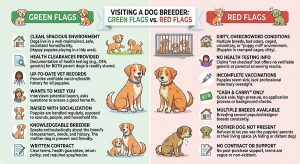
- Several breeds or many litters for sale at once
- No chance to see where the puppies live or meet the mother
- Puppies “ready to go” right now, with no waiting list
- Meeting you in a car park or service station
- No written health guarantee, only verbal promises
- No questions for you at all
Puppy Scams: The Mistake Nobody Warns You About
Most top-ranking guides don’t mention scams at all, and that’s a gap. Fake sellers use stolen photos, build a convincing website, and then keep coming back for more money. In the U.S., the Better Business Bureau’s 2022 Scam Tracker update found that the average puppy-scam loss was $850, up 60 percent since 2017. Yorkshire Terriers, Dachshunds and French Bulldogs made up nearly 30 percent of reports.
One case in the BBB’s data shows how it works. A Texas buyer paid $850 for a Dalmatian puppy, then got an email saying the dog needed travel insurance, so she paid another $725. Then came a “thermal electronic crate” for $615. There was never a puppy.
Scam red flags:
- The price is far below normal for the breed
- The seller will only talk by text or email
- They want payment through gift cards, wire transfer or payment apps
- You’re asked for extra fees for shipping, insurance or special crates
- They refuse a live video call with the mother and puppies, or refuse a visit
The rule I give every new buyer: never pay a deposit for a puppy you haven’t seen in person (or, at minimum, on a live video call where you ask the seller to show you the puppy and its mother doing something you request on the spot).
The Law Can Protect You, If You Know It
In England, Lucy’s Law came into force in April 2020. It bans third-party sales of puppies, so you must buy directly from the breeder or from a rescue. That one rule removes the middleman dealers who relabel farm puppies. Rules differ across the world, so check your own country’s welfare law before you buy.
UK charities such as PDSA also recommend buying from a Kennel Club Assured Breeder and using a written puppy contract. In the U.S., the parent club for your breed is a good place to start, and AKC’s breeder referral lists are a useful (though not perfect) filter.
What Good Breeders Actually Do
Whether you’re in Texas, Toronto, Lagos or Yorkshire, good breeders:
- Health-test both parents (OFA or PennHIP in the U.S., BVA/Kennel Club schemes in the UK, plus breed-specific DNA tests)
- Raise puppies inside the home around normal noise and people
- Let you meet the mother, and the father when possible
- Give a written health guarantee, often 1 to 2 years
- Ask you lots of questions, and take the puppy back if things go wrong
- Keep a waiting list, sometimes 6 to 12 months for popular working breeds like the Belgian Malinois or German Shepherd
A script that works: ask the breeder to name the exact health clearances the sire and dam hold. A serious breeder answers quickly, with numbers. One who has to “go and check” hasn’t made it a priority.
Mistake #3: Choosing a Breed for Looks Instead of Drive
Instagram Dogs vs. Real Life
A French Bulldog curled up on a cushion looks perfect on screen. What the photo hides is brachycephalic airway syndrome, the breathing trouble that affects many flat-faced breeds. The French Bulldog became the AKC’s most-registered breed in 2022, and that popularity wave brought a lot of owners who hadn’t planned for the vet bills.
Looks are the least useful thing to choose on. What really decides whether you’ll love living with a dog is drive, energy and care needs.
Match the Dog to Your Real Life
| If your life looks like this | Be careful with | Often a better fit |
|---|---|---|
| Out 9 hours a day, small flat | High-drive herding or working breeds | A calm adult dog, or a lower-energy breed |
| Active, runs daily, big garden | Very low-energy breeds will bore you | Retrievers, pointers, athletic mixes |
| First-time owner | Strong guarding breeds with no handler experience | Friendly, trainable, forgiving breeds |
| Hot climate, no air conditioning | Flat-faced and heavy double-coated breeds | Short-coated, lean breeds |
| Little time for grooming | Poodle mixes, Afghan Hounds, Old English Sheepdogs | Short, smooth-coated breeds |
The High-Drive Trap
This one deserves a closer look. A Belgian Malinois, Border Collie or working-line German Shepherd isn’t a “bigger, smarter pet.” It’s a dog bred to work for hours with intense focus. In a sedentary home, that energy turns into chewing, barking, digging and sometimes nipping. If you’re weighing a working breed, it’s worth understanding how working-line and show-line German Shepherds differ in drive and training needs before you fall for a specific litter.
Smart Moves Before You Commit
- Meet a full-grown adult of the breed. Spend an hour with it, not five minutes.
- Check breed health data from OFA or your national Kennel Club breed health surveys.
- Budget for grooming. Professional grooming for double-coated or curly breeds often costs $80 to $150 per visit, every 6 to 8 weeks.
- Consider a mixed breed. Many mixes carry a wider gene pool, though no dog is guaranteed healthy, so health checks still matter.
Mistake #4: Bringing a Puppy Home Too Early
The 8-Week Rule
Most veterinary behavior experts agree that a puppy shouldn’t leave its mother and littermates before 8 weeks. Toy breeds and sensitive working lines often do better at 10 to 12 weeks. Those extra weeks are not just cute. They’re when a puppy learns bite inhibition (how to soften its mouth), how to read other dogs, and how to cope with frustration.
Skip that time, and you become the teacher. Usually the hard way.
The Socialization Window: Don’t Waste It
Here’s an angle many guides miss. The key period for learning that the world is safe runs from roughly 3 to 14 weeks of age. That means half of it happens at the breeder’s house, before you ever meet the puppy. A breeder who raises puppies in a quiet back shed has already used up part of that window.
Ask the breeder:
- What sounds, floors and people have the puppies already met?
- Have they met adult dogs other than the mother?
- Have they been handled daily, including paws, ears and mouth?
- Do they sleep, eat and play in a part of the home, or in a kennel outside?
Then keep it going. In your first weeks, introduce your puppy to new surfaces, sounds and friendly people, at a pace that never frightens it. A bad scare at 10 weeks can stick for years.
Red Flags
- Puppies “ready” at 5 to 6 weeks
- Pressure to collect early (“just come and get it now”)
- No documented birth date

Mistake #5: Skipping Health Proof and the Contract
A puppy can look perfectly healthy and still carry an inherited problem that won’t show up for months. That’s why paperwork isn’t box-ticking. It’s the closest thing you get to a warranty on a living animal.
Documents to Ask For
- A vet exam record from the last few days
- Vaccination and deworming history for the puppy’s age
- Health test results for both parents (hips, elbows, eyes, heart, depending on breed)
- A written health guarantee that covers genetic conditions
- A written contract that says what happens if you can’t keep the dog, such as a breeder buy-back
Your Own Checks
- Book a vet visit within 48 to 72 hours of pickup. Reputable breeders expect it and often build it into the contract.
- Bring a stool sample.
- Sign up for pet insurance on day one. Many policies exclude conditions that already exist, so waiting until after the first problem is too late.
- Think about a DNA panel. Tests like Embark and Wisdom Panel typically cost $130 to $200 and screen for a long list of inherited conditions. A panel won’t fix anything, but it lets you adjust diet, exercise and vet monitoring early. It also doesn’t replace parent health tests, so treat it as a bonus.
Quick Health Check at the Litter
- Bright, clear eyes with no discharge
- Clean ears and nose
- A smooth, shiny coat with no bald patches or sore skin
- A round (not bloated) belly and no diarrhea
- Normal, easy breathing
- Walks without limping
A lethargic puppy in a bouncy litter is information. Don’t ignore it.
Mistake #6: Misreading Temperament
This is the one that fools people on both sides: those who choose on looks, and those who trust a “puppy test” too much.
What the Research Really Says
Many websites tell you to run a quick puppy aptitude test at 7 weeks and you’ll know the adult dog. The science doesn’t back that up. In a 2016 study in the Journal of Applied Animal Welfare Science, researchers tested 52 puppies at 7 weeks and followed up with 34 of them at 6 years old. The puppy scores predicted only 2 of the 8 adult temperament measures. The authors concluded that overall, the puppy scores were unreliable at predicting adult temperament. Another review from the working-breeding world puts it bluntly: puppy evaluations are not a crystal ball.
What does that mean for you? It means don’t hand your decision to a single test, and don’t trust a breeder who promises “this one will be a perfect guard dog” at 7 weeks.
So How Do You Judge Temperament?
Use three layers, not one.
- The parents. The mother (and father, if you can meet him) is your best preview of the traits that run in the line. Is she calm, friendly and recovers fast from a surprise?
- The breeder’s knowledge. After 8 weeks of watching the litter every day, a good breeder knows each puppy’s personality. Ask which puppy suits your home and why.
- Your own observation, over time. Visit more than once, at different times of day.
What to Watch For
- Does the puppy settle after play, or stay wound up?
- How does it react to a light clap or a dropped object a few feet away? Does it recover within seconds?
- Does it accept gentle handling of paws, ears and mouth?
- How does it behave with littermates: bossy, easygoing, or constantly hiding?
- Does it guard food or toys, or stiffen when you approach?
- How does it act when separated from the litter for a minute?
My Litter-Day Scorecard
Score each puppy from 1 to 5. I use this with families choosing a pet and with handlers choosing a working prospect. It doesn’t predict the future. It keeps emotion from running the show.
| Category | What you’re scoring | Weight |
|---|---|---|
| Confidence with strangers | Approaches calmly, doesn’t bolt or freeze | High |
| Recovery from a startle | Bounces back within seconds | High |
| Handling tolerance | Accepts paws, ears, mouth being touched | Medium |
| Littermate behavior | Neither bullies nor constantly retreats | Medium |
| Food and toy possessiveness | No stiffening, growling or guarding | High |
| Energy match | Matches (not exceeds) your real daily activity | High |
If a puppy averages under 3, pass, no matter how cute it is. And remember the parents’ score counts too.
Temperament Red Flags
- Extreme fear that doesn’t ease after a few minutes
- Unprovoked growling or snapping, even in play
- Hyperactivity that never settles with calm handling
- Early, intense resource guarding
If you want the full process professional handlers use to evaluate and shape a dog from day one, my book, Beyond the Bark: Inside a Pro Handler’s Playbook for Raising the Ideal Dog, walks through the exact approach I use with working-dog candidates.
What a Wrong Choice Really Costs
Most people budget for the purchase price and stop. Here’s a more honest view. Prices vary a lot by country, breed and clinic, so treat these as ranges from 2026 cost guides, not promises.
| Item | Typical range |
|---|---|
| Puppy from a health-testing breeder | $800 to $4,500 |
| Rescue or shelter adoption fee | $150 to $600 |
| First-year care for the puppy (vet, food, supplies, training, insurance) | Roughly $1,500 to $6,700, depending on size and breed |
| Group puppy class (6 weeks) | $100 to $300 |
| Emergency vet visit | $500 to $3,000 or more |
| Optional DNA panel | $130 to $200 |
Canadian veterinary data tells the same story. The Ontario Veterinary Medical Association’s 2025 Cost of Care report puts core first-year puppy costs (vet care, food, supplies, insurance, licensing) at about CAD $5,500, before you pay for the puppy itself.
Here’s the part people miss. A “cheap” puppy from an unscreened source can easily cost more than a well-bred one, because you pay later for problems that testing could have prevented. Planning the budget isn’t pessimistic. It’s what separates owners who cope from owners who surrender.
Rescue Puppies: A Different Set of Rules
Some of the best-matched dogs I’ve seen came from rescues. The mistakes above still apply, but a few things change:
- You’ll have less history. Age and breed mix are often estimates, so lean harder on observation.
- Ask about foster behavior. A puppy who has spent even two weeks in a foster home gives you real data on house-training, other pets and noise.
- Budget for a thorough first vet visit. Catch-up vaccines and parasite treatment are common.
- Choose on temperament, not breed guesses. DNA labels on shelter dogs are often wrong, and a mixed-breed puppy picked for its calm nature often turns into a steady family dog.
Trainer’s Notes: How I Choose Dogs for Work
I’m Cpl. Rofiat Muritala, a Nigerian Army military working dog instructor and handler with more than 14 years of experience at the Nigerian Army Dog Centre. My work covers dog selection, foundational training, behavior shaping and performance evaluation in real operational settings, and I’ve completed advanced obedience, K9 patrol and explosive detection courses. In 2026 I led obedience, detection, agility and tactical-movement demonstrations at the Nigerian Army Day Celebration (NADCEL).
What does that have to do with your family pet? A lot. Here’s what selection work has drilled into me:
- Match before you train. No training method fixes a dog that’s wrong for the job. The same goes for the household.
- Look at the line, not just the puppy. The parents tell you more than a 7-week-old ever can.
- Treat every test as one clue. We never pick a dog on a single observation. You shouldn’t either.
- Plan for the whole dog. A working dog is evaluated for years. Your pet will live with you for 10 to 15. Choose like it.
I explain these principles in more detail in my book and in the training guides on this site.
Final Thoughts
Choosing a puppy is a 10 to 15 year decision made in about ten minutes of excitement. The fix is simple: slow down, check your life, check the source, check the paperwork, and watch the dog.
Here’s your quick recap:
- Don’t decide in the moment. Use the 48-hour rule.
- Buy only from a source you can visit, and never pay for a puppy you haven’t met.
- Choose on drive and lifestyle fit, not looks.
- Hold the line at 8 weeks minimum, and ask about early socialization.
- Get health tests and a contract in writing, and book a vet visit within 72 hours.
- Judge temperament over several visits, and treat any test as one clue, not a verdict.
Once you’ve chosen, the first days matter just as much. Our National Puppy Day puppy checklist walks you through what to buy and do before pickup, and learning how to crate train a puppy the right way in week one makes the transition much smoother.
Want more expert dog and K9 advice every week? Subscribe to our weekly articles roundup newsletter and get new guides straight to your inbox.
The right puppy isn’t the one that grabs your eye first. It’s the one that fits into your life like it was always meant to be there. Take your time, ask the hard questions, and your future dog will thank you.
Frequently Asked Questions
How old should a puppy be before I bring it home?
At least 8 weeks. Toy breeds and sensitive working lines often do better at 10 to 12 weeks. Those weeks with the mother and littermates teach bite control and social skills, and in some places, such as England, selling a puppy too young is against welfare rules.
How can I tell if a breeder is reputable or a scam?
A reputable breeder lets you visit, shows you the mother, gives written proof of parent health tests, offers a contract, and asks you plenty of questions. A scam seller avoids visits, pushes payment by gift card or wire, and adds surprise fees for shipping or insurance. Never pay a deposit before you’ve met the puppy in person.
Do puppy temperament tests actually work?
Only partly. A 2016 study that tested puppies at 7 weeks and again at about 6 years found the puppy scores predicted just 2 of 8 adult measures. Use tests as one clue, and rely more on the parents’ behavior, the breeder’s daily knowledge of the litter, and several visits of your own.
Is a puppy or an adult dog better for a first-time owner?
It depends on your time. A puppy needs constant supervision and months of training. An adult dog from a good rescue shows you its size and personality up front, which makes it easier if you work long hours or have young children.
How much does the first year of owning a puppy cost?
Expect roughly $1,500 to $6,700 for care in year one, depending on the dog’s size and your country, plus the purchase or adoption fee. Add an emergency fund, because a single emergency vet visit can cost $500 to $3,000 or more.
Have you picked a puppy recently, or are you in the middle of the search? Drop a comment below. I read every one.
Sources
- Better Business Bureau: Puppy Scams Fall, but Individual Losses Rise (2022 Scam Tracker update)
- BBB warning on online pet shopping (Dalmatian scam example)
- Robinson, Thompson & Ha (2016), Puppy Temperament Assessments Predict Breed and AKC Group but Not Adult Temperament
- Functional Breeding: Puppy evaluations, how reliable are they?
- PDSA: Getting a dog, what we recommend
- Veterinary Nursing Journal: Advising clients on choosing a pet (Lucy’s Law)
- AKC: How to find the perfect puppy
- Rover: Cost of owning a dog in 2026
- Money.ca: First-year pet costs in Canada, 2026 (OVMA Cost of Care report)

Her work centres on obedience, detection, protection and operational readiness. She favours proven methods built on repetition, consistency and real-world conditioning, so that both dogs and handlers are prepared for high-pressure tasks.
Rofiat represented the Nigerian Army Dog Centre at the Nigerian Army Day Celebration (NADCEL) 2026, where she led demonstrations in obedience, explosive detection, agility and tactical movement. Through articles, training content and documentaries, she shares field-based insight into how structured training, clear communication and trust between handler and dog affect performance and reliability.
She is the author of Beyond the Bark: Inside a Pro Handler's Playbook for Raising the Ideal Dog, a practical guide that helps dog owners and handlers apply professional training principles in everyday situations.
- Dog Hotel Prep: 7 Must-Haves Before Boarding - October 21, 2026
- How to Enter the COBA National Dog Championship - October 20, 2026
- K9 Advantix Dosage Chart & Safety Guide for Dogs - October 19, 2026