Best Grooming Kits for Military Dogs: Top 5 Packs
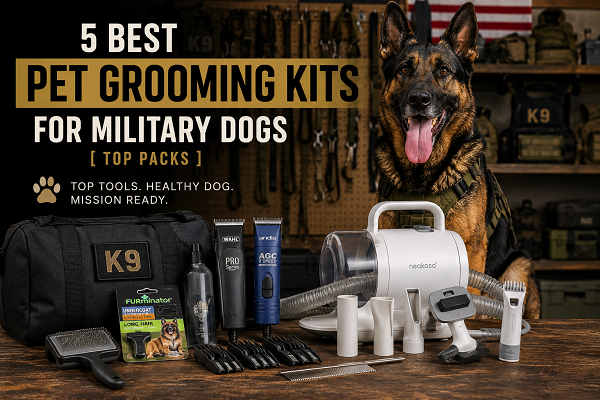
The best grooming kit for a military or working dog combines four things: an undercoat rake or deshedding tool, a slicker brush and metal comb, a nail grinder or clippers, and a quiet detachable-blade clipper for paws and sanitary areas only. Add a vacuum-style kit if shedding is a daily fight. Skip toy-breed “salon” bundles, because working dogs have dense double coats and need tools built for them.
Table of Contents
- Why Grooming Kits for Military Dogs Are Different
- What to Look for Before You Buy
- Quick Comparison: The 5 Best Packs at a Glance
- The 5 Best Grooming Kits for Military Dogs
- Build Your Own K9 Field Grooming Kit (Checklist)
- Which Tools Fit Which Breed?
- A Realistic Weekly Grooming Routine
- How to Handle a Coat Blow (Step by Step)
- Grooming Is a Health Check: What to Look For
- 7 Grooming Mistakes Handlers Make
- What It Costs: Home Kit vs. Groomer
- Why Trust This Guide (Handler Experience)
- FAQs
- Final Thoughts
Why Grooming Kits for Military Dogs Are Different
Ever tried running a cheap $30 trimmer through the coat of a German Shepherd? Then you know how it goes. The motor bogs down, the blade gets hot, the dog gets annoyed, and you end up with a patchy mess.
Here’s the thing: military working dogs (MWDs), police K9s and civilian protection dogs aren’t groomed like a Yorkie. Most come from a short list of breeds: Belgian Malinois, German Shepherds, Dutch Shepherds and, for detection work, Labrador Retrievers. These dogs carry dense coats, work in dirt, mud, heat and dust, and need skin and paws in top shape every single day.
That’s why grooming kits for military dogs are their own category. In the U.S. military, handlers at the Department of Defense Military Working Dog program (based at Joint Base San Antonio-Lackland in Texas) treat grooming as part of daily care, not a beauty routine. A U.S. Air Force photo caption from a working dog compound makes the point plainly: regular grooming keeps the coat and skin healthy, which helps prevent hot spots, bald patches and rashes.
The same idea shows up in how support groups send care packages to deployed dogs. Their wish lists don’t focus on fancy gear. They ask for basics: brushes and combs, nail clippers, dog shampoo and conditioner, ear wash, eye drops, paw salve, towels and cooling gear. In other words, a good grooming kit is really a small health kit.
That’s the mindset I want you to take home, whether your dog is a K9 on duty, a protection dog or a serious sport dog. (Image idea: a handler brushing a Malinois outside a kennel, with alt text “handler grooming a military working dog with an undercoat rake”.)
If you’re still building your overall kit, start with our guide to essential K9 training equipment every working dog handler needs, then come back here for the grooming side.
What to Look for Before You Buy
I’ve watched too many handlers grab the cheapest bundle online, use it twice on a thick coat and toss it in a drawer. Save yourself the money. Here’s what actually matters:
- A real motor, not a toy. Look for a rotary or high-torque motor that can run through dense hair without overheating. Cheap magnetic motors stall.
- Detachable blades. You’ll want a short blade for paw pads and sanitary trims, and the option to swap blades as they dull.
- Low noise and vibration. A dog that’s scared of the clipper will fight you every time. Quieter tools make life easier, especially for nervous or reactive dogs.
- An undercoat tool, not just a brush. A basic brush only skims the topcoat. Double-coated dogs need something that reaches the dead undercoat.
- Nail care you can actually use. Grinders help with dogs who hate clippers, and fast, clean nails matter for a dog that runs and turns hard on every shift.
- Easy cleaning. Mud, grass seed and sand get everywhere. Washable parts and water resistance save time.
- Hair control. A vacuum attachment or a good shop-vac routine keeps your home (and your lungs) happier during seasonal shedding.
- Field-ready storage. A kit that fits in a duffel or vehicle box gets used. A kit that lives in a cupboard doesn’t.
Quick Comparison: The 5 Best Packs at a Glance
| # | Pack | Best for | Main job | Cord? |
|---|---|---|---|---|
| 1 | Wahl Lithium Ion Pro Series Cordless Clipper Kit | First-time handlers wanting one clipper | Paws, sanitary areas, mats | Cordless (can plug in) |
| 2 | Andis UltraEdge Super 2-Speed Detachable Blade Clipper | Heavy coats and long sessions | Professional-style trimming | Corded |
| 3 | FURminator Undercoat deShedding Tool (large dog) | Every double-coated working dog | Removing dead undercoat | No power needed |
| 4 | Neakasa (Neabot) P1 Pro Grooming Vacuum Kit | Multi-dog homes and kennels | Brushing plus hair capture | Plug-in |
| 5 | oneisall 4-in-1 Clipper and Grooming Kit | Budget touch-ups and nails | Paw trim and nail grinding | Cordless |
Prices and models change often, so always check the current listing before you buy.
The 5 Best Grooming Kits for Military Dogs
My picks are based on motor quality, how well they handle thick double coats, noise, cleanup and what working-dog handlers and professional groomers tend to rely on. Remember the rule I’ll repeat later: for most working breeds, clippers are for detail work, not for shaving the whole dog.
1. Wahl Lithium Ion Pro Series Cordless Animal Clipper Kit (Model 9766)
Wahl has been making clippers for over a century, and this cordless kit is the closest thing to an all-rounder for home use. It runs on a rechargeable battery, so you’re not tangled in a cord while your dog shifts around. If the battery runs low, you can plug it in and finish the job. Guide combs let you set different lengths.
Best for: a first-time handler who only wants to buy one clipper and be done. Watch out for: battery life drops on very thick coats, so charge it before every session.
👉 Check current price on Amazon
2. Andis UltraEdge Super 2-Speed Detachable Blade Clipper (AGC2)
Many professional groomers reach for the Andis AGC2. Its two-speed rotary motor handles longer sessions without heating up too fast, and the detachable blades let you switch from a fine blade for paw and sanitary work to a longer cut where needed.
Best for: big, thick-coated dogs and handlers who want salon-level power at home. Watch out for: it’s corded, so it’s less portable. Not a great choice for field use.
👉 Check current price on Amazon
3. FURminator Undercoat deShedding Tool (Large Dog)
This one isn’t a clipper, and that’s the whole point. Double-coated working breeds hold a thick layer of soft undercoat that regular brushes barely touch. The FURminator’s stainless steel edge reaches through the topcoat and pulls out loose, dead undercoat without cutting the guard hairs, when used correctly.
The maker claims it can cut loose shedding hair by up to 90% with regular use. Your results will vary by breed and season, but the pile of fur after one session on a shedding Shepherd is hard to ignore.
Best for: every Malinois, GSD and Dutch Shepherd owner. Watch out for: don’t press hard or overuse it on one spot. Too much pressure can irritate skin and thin the coat. Many groomers prefer an undercoat rake for daily maintenance and save the FURminator for the heavy shedding weeks.
👉 Check current price on Amazon
4. Neakasa (Neabot) P1 Pro Grooming Vacuum Kit
If you’ve never used a vacuum-style grooming kit, it changes how grooming day feels. The P1 Pro bundles a brush, deshedding tool, clipper and guide combs with a vacuum, so loose hair goes straight into a dust cup instead of onto your floor, couch and clothes.
It’s the priciest option on this list, but for kennels, multi-dog homes or anyone who hates cleaning up fur, it earns its keep.
Best for: multi-dog handlers and heavy-shedding breeds. Watch out for: some dogs fear the vacuum noise. Introduce it slowly, with treats, over several days before you try to use it on the coat.
👉 Check current price on Amazon
5. oneisall 4-in-1 Dog Clippers and Grooming Kit
This is the budget pick. It combines a cordless clipper with a detachable stainless steel blade, a paw trimmer and a nail grinder in one kit. It’s water-resistant (rated IPX7), so you can rinse it clean after a muddy training day.
It won’t beat the Wahl or Andis on raw power, but for paw tidying, nail grinding and quick touch-ups between full sessions, it does the job.
Best for: single-dog homes and quick maintenance. Watch out for: it’s not built for heavy trimming on thick coats.
👉 Check current price on Amazon
Want the full handler mindset, not just gear? My e-book Beyond the Bark walks through how professional handlers raise disciplined, healthy working dogs, and grooming is part of that daily routine. Grab your copy here.
Build Your Own K9 Field Grooming Kit (Checklist)
Here’s something most guides skip: the best grooming kit for a working dog often isn’t one box. It’s two. One “home kit” for deep sessions, and a small “field kit” that lives in your vehicle or duty bag.
Here’s what I’d put in a field kit:
- Slicker brush and a metal comb for quick burr and tangle removal.
- Nail clippers or a small grinder plus styptic powder, in case you clip too short.
- Dog-safe wipes and a towel for muddy paws and bellies.
- Paw balm or salve to protect pads on hot, rough or salty ground.
- Ear cleaner and cotton pads for dogs that swim or work in dust.
- Sterile eye wash to flush grit and grass seeds.
- Tick remover (a hooked tool or fine tweezers) and a small jar for checking species if needed.
- Dog toothbrush and enzymatic dog toothpaste. Never use human toothpaste.
- A small pair of blunt scissors for trimming around pads and removing mats safely.
- Cooling gear in hot climates, such as a cooling vest. Our guide to dog cooling vests and which ones actually work can help you choose.
Notice the pattern? Most of this is care, not cosmetics. That’s how real working-dog programs think about it too.
Which Tools Fit Which Breed?
Not every working dog needs the same setup. Here’s a simple guide:
| Breed | Coat type | Must-have tools | Notes |
|---|---|---|---|
| German Shepherd | Dense double coat, medium or long | Undercoat rake, slicker brush, deshedding tool | Heavy shedder all year, with big spring and fall blowouts |
| Belgian Malinois | Short, dense double coat | Rubber curry or grooming mitt, light undercoat rake, nail grinder | Don’t over-rake, since their coat is shorter |
| Dutch Shepherd | Short, long or wire coat (varies) | Match tools to coat. Wire coats may need a stripping comb. | Check your dog’s coat type first |
| Labrador Retriever | Short, water-resistant double coat | Rubber brush, deshedding tool, ear cleaner | Ears need extra care after water work |
The Leerburg Q&A I came across makes the same point: an undercoat rake is useful for double-coated dogs like German Shepherds and Malinois, but it won’t do much for a truly single-coated dog.
A Realistic Weekly Grooming Routine
Handlers are busy. Between training, feeding and shifts, grooming drops down the list fast. This routine is realistic, not perfect:
- Every day (2-5 minutes): Run your hands over the whole dog. Check paws, ears, eyes and coat for burrs, ticks, cuts or hot spots.
- 2-3 times a week (10-15 minutes): Brush with a slicker or rake. Increase during spring and fall.
- Weekly: Check nails. Many working dogs need trimming or grinding every 2 to 4 weeks, depending on how much they run on hard ground.
- Every 4-6 weeks: Do a sanitary trim, tidy paw hair and check for mats. Bathe only if the dog actually needs it. Over-bathing strips natural oils.
- After muddy or dusty sessions: Rinse or wipe the dog down, dry the ears and check the paws before the dog goes back in the kennel or house.
And don’t forget the bond. Calm, predictable grooming is one of the easiest ways to teach a dog to accept handling. If you’re training obedience too, our essential protection dog commands guide pairs well with this routine.
How to Handle a Coat Blow (Step by Step)
Twice a year, usually in spring and autumn, double-coated dogs “blow” their undercoat. It looks like your dog is melting. Here’s how I handle it:
- Brush dry first. Start with an undercoat rake, working in the direction of hair growth in small sections.
- Bathe with a dog-specific shampoo. Warm water loosens dead hair. Rinse until the water runs clear.
- Dry thoroughly. Damp undercoat can trap moisture and lead to skin problems. A high-velocity dryer helps if you have one. Keep the heat low.
- Rake again while dry. A lot more comes out after a bath.
- Finish with a deshedding tool. Use light strokes and don’t linger on one spot.
- Vacuum or collect the hair. A vacuum kit like the Neakasa saves cleanup time.
- Repeat every few days until the loose coat stops coming out.
Most blowouts take two to four weeks, so be patient.
Grooming Is a Health Check: What to Look For
This is the part of grooming that matters most for working dogs. Every session is a free exam. Watch for:
- Hot spots: red, wet, irritated patches that can appear quickly. Mats and moisture are common triggers.
- Ticks and fleas: check the ears, armpits, groin and between toes.
- Cracked or worn paw pads: a pad injury can sideline a working dog.
- Torn or overgrown nails: these change how the dog stands and moves.
- Ear redness, odor or discharge: a sign of infection.
- Eye discharge or squinting: grass seeds and dust are common culprits.
- Lumps and bumps: note the size and location, and tell your vet if anything changes.
- Skin flaking or bald patches: can point to allergies or parasites.
If you see anything worrying, call your vet. A grooming kit helps you notice problems early, but it doesn’t replace veterinary care.
7 Grooming Mistakes Handlers Make
- Shaving a double coat to the skin. It’s one of the most common mistakes I see. The coat insulates against heat and cold and protects against sun. Shaving can also cause patchy regrowth. For hot days, use shade, water and cooling gear instead.
- Clipping before deshedding. Packed undercoat makes blades drag, heat up and tug the skin. Rake first, clip second.
- Skipping nails and paws. For a working dog, this isn’t cosmetic. It affects performance and injury risk.
- Using human clippers or scissors. They aren’t made for dog coat density and dull fast.
- Bathing too often. Frequent baths strip oils. Brush often, bathe when needed.
- Rushing the introduction. Let your dog sniff the clipper, vacuum or grinder. Reward calm behavior. A few short, positive sessions beat one stressful one.
- Waiting until the coat “looks bad.” Little and often beats one giant session.
New to handling in general? Our guide to essential dog grooming tips for a healthy puppy shows how to start tolerance training early, which makes adult grooming much easier.
What It Costs: Home Kit vs. Groomer
Prices vary by country and brand, but here are rough ranges in US dollars:
- Basic brush and nail kit: roughly $40-$80
- Mid-range setup (quality clipper plus undercoat tool): roughly $100-$180
- Vacuum-based system: roughly $150-$250
- Professional groomer visit for a large double-coated dog: often $60-$120 per session
Do the math. Six to eight groomer visits a year can easily outrun the cost of a good home kit, especially with more than one dog. A groomer is still worth it for occasional deep cleans or severe matting.
Why Trust This Guide (Handler Experience)
This guide comes from the ARFS K9 Team, led by Cpl. Rofiat Muritala, a Nigerian Army military working dog instructor and handler with more than 14 years of experience at the Nigerian Army Dog Centre. Her work covers dog selection, foundational training, behaviour shaping and performance evaluation in real operational environments, and she has completed advanced obedience, K9 patrol and explosive detection courses.
In plain words: these tips come from people who work dogs, not from a product spec sheet. Always confirm medical concerns with a qualified vet.
Disclosure: some links above are affiliate links. If you buy through them, we may earn a small commission at no extra cost to you.
FAQs
1. What is the best grooming kit for a military working dog?
The best setup combines an undercoat rake or deshedding tool, a slicker brush, a comb, nail care tools and a detachable-blade clipper for small areas. For heavy shedders or several dogs, a vacuum grooming kit like the Neakasa P1 Pro adds a lot of value.
2. How often should I groom a military or police K9?
Check the coat, paws and ears daily. Brush 2-3 times a week, check nails weekly, and do a detail trim every 4-6 weeks. Brush more often in spring and autumn.
3. Can I shave a German Shepherd or Malinois in summer?
Usually no. A double coat helps regulate temperature and shields the skin from sun. Shaving can cause uneven regrowth. Use shade, fresh water, rest breaks and cooling gear instead.
4. What’s the difference between a deshedding tool and a regular brush?
A regular brush mostly smooths the topcoat. A deshedding tool or undercoat rake reaches the dead undercoat underneath and pulls it out, which is why it works much better on double-coated breeds.
5. Do working dogs need professional grooming?
Not always. With the right tools, most handlers can manage routine care at home. A professional groomer is useful for deep cleans, severe mats or when you’re short on time.
Final Thoughts
Grooming a military or working dog isn’t about looking sharp for a parade. It’s about protecting the coat, catching health problems early and keeping your dog comfortable enough to do the job.
Here’s your quick action plan:
- Start with an undercoat tool and a slicker brush.
- Add a nail grinder or clippers and learn to use them calmly.
- Pick a Wahl or Andis clipper for paws and sanitary trims only.
- Consider a vacuum kit if shedding is wearing you down.
- Build a small field kit for the truck or duty bag.
- Check the dog’s body every day. Little and often wins.
Want more handler-tested tips like this every week? Subscribe to our weekly articles roundup newsletter and we’ll send the best new guides straight to your inbox.

Her work centres on obedience, detection, protection and operational readiness. She favours proven methods built on repetition, consistency and real-world conditioning, so that both dogs and handlers are prepared for high-pressure tasks.
Rofiat represented the Nigerian Army Dog Centre at the Nigerian Army Day Celebration (NADCEL) 2026, where she led demonstrations in obedience, explosive detection, agility and tactical movement. Through articles, training content and documentaries, she shares field-based insight into how structured training, clear communication and trust between handler and dog affect performance and reliability.
She is the author of Beyond the Bark: Inside a Pro Handler's Playbook for Raising the Ideal Dog, a practical guide that helps dog owners and handlers apply professional training principles in everyday situations.
- How to Enter the COBA National Dog Championship - October 20, 2026
- K9 Advantix Dosage Chart & Safety Guide for Dogs - October 19, 2026
- How to Set Up & Use Bousnic Dog Training Collar - October 18, 2026