Is an AKC Registered Dog Worth It? Full 2026 Breakdown
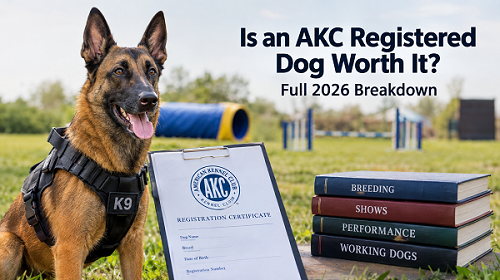
An AKC registered dog is worth it if you plan to breed, show, or compete in AKC-sanctioned events, the registration confirms lineage and unlocks those doors. For the average pet owner, though, AKC papers alone don’t guarantee health, temperament, or working ability. They’re a paperwork trail, not a quality seal. If you’re buying a working, protection, or performance dog, breeder reputation, health testing, and (for many working breeds) a foreign working registry matter far more than an AKC certificate ever will.
Table of Contents
- What Is AKC Registration, Exactly?
- What AKC Registration Actually Proves and What It Doesn’t
- Full Registration vs. Limited Registration: Which Do You Need?
- How Much Does AKC Registration Really Cost in 2026?
- The Real Benefits of AKC Registration
- The Puppy Mill Problem: Why “AKC Registered” Isn’t a Safety Guarantee
- AKC vs. Working-Line Registries: What K9 and Protection Dog Buyers Need to Know
- When AKC Registration Is Worth It and When It Isn’t
- How to Register Your Dog With the AKC (Step-by-Step)
- FAQs
- Final Verdict
Introduction
So here’s the question I get asked more than almost anything else, whether it’s a first-time puppy buyer texting me a listing or a client shopping for a protection prospect: “It’s AKC registered, that means it’s a good dog, right?”
Nope. Not automatically. And that misunderstanding costs people money, and sometimes it costs them a dog with serious health or temperament problems they weren’t prepared for.
I’ve spent years around working dogs, selecting them, training them, and watching handlers make both great and terrible purchase decisions. I’ve seen $3,000 “AKC registered” puppies from operations that would make your stomach turn, and I’ve placed unregistered working-line dogs that went on to become some of the most solid, reliable animals I’ve ever handled. Papers were never the deciding factor in either case.
In this guide, I’ll walk you through exactly what AKC registration is, what it actually proves (and what it doesn’t), what it really costs in 2026, and when it’s genuinely worth paying for, plus a section most articles skip entirely: how AKC registration stacks up against the working-dog registries (like the German SV/FCI system) that matter more if you’re buying a Malinois, GSD, or other dog for protection, sport, or service work.
1. What Is AKC Registration, Exactly?
The American Kennel Club was founded in 1884, making it one of the oldest dog registries in the world, and today it recognizes over 200 breeds grouped into seven official categories (Sporting, Hound, Working, Terrier, Toy, Non-Sporting, and Herding). If you want a refresher on how those groupings actually work and what they say about a dog’s original job, we cover it in The 7 Types of Dogs: A Complete Guide to Dog Classification.
When people say a dog is “AKC registered,” they mean the dog’s birth, breed, and parentage have been recorded in the AKC Stud Book, and the AKC has issued a registration number and certificate for that individual dog.
That’s genuinely it. Registration is a record-keeping system, not a quality inspection. Think of it less like a health certificate and more like a birth certificate. It tells you who the parents were (on paper) and confirms the breed, but it says nothing about whether the dog behind that paperwork is structurally sound, mentally stable, or free of inherited disease.
This surprises a lot of first-time buyers, and honestly, it’s the single biggest source of confusion in the entire purebred dog market. A breeder can be running a genuinely excellent program with health-tested, well-socialized dogs and use AKC registration. A breeder can also be running a high-volume puppy mill in poor conditions and use AKC registration. The paperwork looks identical in both cases.
2. What AKC Registration Actually Proves and What It Doesn’t
Let’s get specific, because vague claims are exactly what’s wrong with most of the content already ranking on this topic.
2.1 What AKC Registration DOES Confirm
- The dog is (on record) a purebred member of a recognized breed
- The dog’s parents were themselves AKC registered
- The dog is eligible to compete in AKC events (conformation, obedience, agility, and more)
- There’s an official paper trail if a registration or ownership dispute ever comes up
2.2 What AKC Registration Does NOT Confirm
- Health. The AKC does not require hip, elbow, eye, heart, or genetic disease screening for standard registration. A dog with severe hip dysplasia can be fully AKC registered.
- Temperament. There’s no behavioral evaluation involved in basic registration.
- Structural or working quality. Registration says nothing about drive, nerve, bite work suitability, or trainability, the things that actually matter for a K9, protection, or sport prospect.
- Breeder ethics. The AKC doesn’t vet breeding conditions before issuing standard registration; its Compliance Audit Program does random kennel inspections, but it’s not a pre-purchase guarantee for every litter.
- That your dog is actually purebred. AKC DNA testing (more on this below) checks parentage, not breed purity, and it’s used on only a fraction of registered dogs.
I want to underline that last point because it trips people up constantly: AKC’s own DNA program explicitly states that its testing verifies parentage and genetic identity, not breed purity. Two completely different things.
3. Full Registration vs. Limited Registration: Which Do You Need?
This is where most buyers get confused, and it’s an area competing articles gloss over. There are two tiers of AKC registration, and the difference matters a lot depending on what you want from your dog.
3.1 Full vs. Limited at a Glance
| Feature | Full Registration | Limited Registration |
|---|---|---|
| Certificate color | White with purple border | White with orange border |
| Can compete in conformation shows | Yes | No |
| Can compete in obedience, agility, tracking, herding, etc. | Yes | Yes |
| Offspring eligible for AKC registration | Yes | No |
| Typical use case | Breeding programs, show dogs | Pet homes, working homes not planning to breed |
| Cost to upgrade to Full | Usually $100–$300, litter-owner discretion | N/A |
3.2 Which One Actually Fits You
Reputable breeders often sell pet-home puppies on Limited Registration on purpose. It’s a tool to protect their bloodlines and discourage backyard breeding from dogs that weren’t specifically selected for reproduction. If you’re buying a companion or working dog and have zero plans to breed, Limited Registration is completely fine and often cheaper. Only chase Full Registration if breeding or conformation showing is genuinely part of your plan; it’s not something to pay extra for “just in case.”
4. How Much Does AKC Registration Really Cost in 2026?
Here’s a real cost breakdown, because too many articles either skip numbers entirely or quote outdated figures.
4.1 Standard Registration Fees
- Individual dog registration (online): roughly $35 for puppies registered on time
- Individual dog registration (older dog / paper form): around $65
- Late registration penalty: additional fees apply if you register more than 6 months after the litter’s recording date, and the penalty increases the longer you wait
- Litter registration: approximately $35 base plus roughly $3 per puppy
- Ownership transfer fee: around $20
4.2 Extra Fees That Add Up
- Upgrading Limited to Full Registration: typically $100–$300, set at the breeder’s discretion
- AKC DNA Profile kit: around $55
- Imported dog registration: roughly $100
- Reactivation fee (lapsed application): around $50
None of these numbers are outrageous on their own. Where cost becomes a real factor is when you stack registration packages, DNA profiling, pedigree certificates, and late fees together. A breeder’s “AKC registration included” line can quietly mean anywhere from $35 to well over $150 in actual processing depending on what’s bundled in.
My honest take: don’t let registration cost be the deciding factor in your budget. It’s a rounding error compared to what you’ll spend on food, vet care, and training over a dog’s lifetime. If you’re eyeing a working or protection-line prospect specifically, the real cost swings are far bigger than registration fees; our breakdown in German Shepherd vs. Belgian Malinois: Which Breed Is Right For You lays out realistic price ranges for companion, working, and fully trained protection dogs so you can budget with your eyes open.
5. The Real Benefits of AKC Registration
I don’t want this to read as an anti-AKC piece, because that’s not accurate either. There are legitimate benefits, and for the right buyer, they’re worth having.
- Eligibility for AKC events. You need registration to enter conformation shows, and most performance events (agility, obedience, rally, tracking, barn hunt) require at minimum a Purebred Alternative Listing or PAL number if the dog isn’t already registered.
- Pedigree access. You can request a three-generation pedigree, which is genuinely useful for understanding what’s behind your dog, especially if you’re researching working ability or known health issues in a line.
- AKC Reunite microchip recovery. Many registration packages bundle in lost-pet recovery services. AKC Reunite is a legitimate nonprofit and has reportedly returned tens of thousands of lost pets to their families over the years.
- Canine Good Citizen and title eligibility. If you want official AKC titles on your dog, even something as basic as a CGC, registration (or a PAL number for mixed/unregistered dogs) is required.
- DNA Profile Program access. For $55, you can add your dog’s genotype to the AKC’s parentage database, useful if you’re breeding and want to protect against disputed litters, or simply want tamper-proof ID on file.
- A little bit of resale/breeding value. Fair or not, full AKC registration on health-tested parents does carry weight in the purebred marketplace, particularly for breeders selling breeding stock.
6. The Puppy Mill Problem: Why “AKC Registered” Isn’t a Safety Guarantee
This is the part every buyer needs to sit with before they hand over a deposit.
The Humane Society and multiple animal welfare organizations estimate there are roughly 10,000 licensed and unlicensed puppy mills operating in the U.S. alone, collectively selling more than 2 million puppies a year. A meaningful share of those puppies come with AKC papers, because, and this is the key thing to understand, AKC registration confirms lineage, not living conditions.
The AKC has acknowledged this gap itself and built out inspection and compliance systems over the years, including random kennel inspections and a DNA-based Compliance Audit Program to catch fraudulent parentage claims. That’s a real and meaningful effort. But it’s reactive, not preventative; it catches problems in the system, it doesn’t screen every breeder before a puppy changes hands.
6.1 A Pre-Purchase Checklist for Buyers
What this means for you as a buyer: treat “AKC registered” as one data point, not a green light. Before you buy, always:
- Ask to see both parents (or at minimum the dam) in person or on video call
- Ask for proof of health testing specific to the breed (OFA hips/elbows, cardiac, eye clearances, genetic panels)
- Visit the whelping area if at all possible; conditions tell you more than paperwork ever will
- Ask how many litters the breeder produces per year and how many breeds they keep
- Be wary of breeders who offer registration “included” but can’t answer basic health-testing questions
If a breeder can’t or won’t show you the health clearances behind the pedigree, the AKC certificate in the folder is worth a lot less than it looks.
7. AKC vs. Working-Line Registries: What K9 and Protection Dog Buyers Need to Know
This is the section most general pet-blog articles skip completely, and it’s exactly where things get interesting if you’re shopping for a German Shepherd, Belgian Malinois, Dutch Shepherd, or another breed with a serious working heritage.
Here’s something a lot of buyers don’t realize: many of the top working, protection, and detection line dogs in the world aren’t primarily AKC dogs at all. They come from European working registries, most commonly the SV (Verein für Deutsche Schäferhunde, the German Shepherd Dog’s mother club) and the FCI (Fédération Cynologique Internationale), which governs most of continental Europe’s breed clubs.
7.1 Why Working-Line Breeders Favor SV/FCI Over AKC
The SV imposes breeding requirements the AKC simply doesn’t:
- Both parents must hold a working title (historically Schutzhund/SchH, now IGP) before their offspring can even be considered for breed-worthiness
- Mandatory hip and elbow dysplasia screening with an “A-stamp” clearance before breeding is approved
- A formal temperament and nerve-stability evaluation (Körung/breed survey), where dogs with poor nerve or excessive fear don’t pass
- An endurance test (the AD) confirming physical soundness
The AKC has no equivalent requirement built into standard registration. A dog can be fully AKC registered without ever setting foot near a working title, a hip x-ray, or a temperament evaluation. That’s not a knock on the AKC; it was never designed as a working-dog performance registry. But it’s a critical distinction for anyone buying a dog meant to actually do a job.
This is exactly why most law enforcement and military working dog programs don’t select based on AKC papers at all. A large share of U.S. police K9s are imported from Europe, and the Netherlands, Germany, and Czech Republic in particular have decades of breeding programs built specifically for police and military work, evaluated on drive, nerve, and scenting ability rather than a show-ring standard. You can see how this plays out breed by breed in our guide to the Top Types of Police Dogs & Their Roles.
7.2 A Word of Caution on Unregistered “Protection Dogs”
On the flip side, don’t assume “unregistered” automatically means “working quality” either. There are plenty of backyard operations breeding high-drive dogs with poor impulse control and unstable nerve, marketing them straight to families as protection dogs with zero health testing and no legitimate registry behind them at all. Some outfits use registries like the ACA, which, unlike AKC, SV, or FCI, will register a dog on paperwork alone with no proof of lineage required, and which isn’t recognized by the FCI or SV. That combination (no legitimate registry, no health testing, marketed for “family protection”) is a bigger red flag than a simple lack of AKC papers.
7.3 The Question That Actually Matters
Don’t ask “is it AKC registered?” Ask “what registry backs this pedigree, and what health or working requirements did that registry actually enforce before this litter was approved?” That question tells you far more than the AKC logo on a certificate ever will. If you want a deeper breakdown of how bloodline shapes trainability once the dog is home, our guide on Working Line vs. Show Line GSD: Training Differences walks through exactly what to expect from each type.
8. When AKC Registration Is Worth It and When It Isn’t
8.1 It’s Worth It If:
- You plan to breed your dog and want offspring to be AKC-eligible
- You want to compete in AKC conformation shows
- You want access to AKC-titled events like obedience, agility, or rally
- You want the pedigree records and DNA parentage tools for a serious breeding program
- The breeder already includes it in the price and health testing checks out; at that point, there’s no reason to decline it
8.2 It’s Probably Not Worth Chasing If:
- You just want a healthy, well-adjusted companion or working dog with no breeding or show plans
- You’re buying a working/protection prospect where working titles and health clearances from a specialty registry matter more than an AKC certificate
- A “AKC registered” listing is being used to justify a price jump with no health testing, working titles, or visible breeding standards to back it up
- You’re adopting a rescue or mixed-breed dog; a PAL (via AKC Canine Partners) can still get you into most companion events without full registration
I’ll be blunt: I’ve placed and trained plenty of exceptional working dogs that were never AKC registered a day in their lives. I’ve also seen fully papered dogs with poor structure and worse nerves. Registration status was never the variable that predicted the outcome, breeder practice, health testing, and early development were.
9. How to Register Your Dog With the AKC (Step-by-Step)
If you’ve decided registration makes sense for your situation, here’s the actual process:
- Get your AKC registration application from your breeder, this comes with the puppy and includes a unique litter/registration number.
- Choose Full or Limited registration (this decision is usually made by the breeder/litter owner, not the buyer).
- Fill out the application with your information as the new owner, and select any add-on packages (pedigree, DNA kit, insurance trial, and so on).
- Submit online at akc.org for the fastest processing and lowest fee, or by mail if you prefer paper forms.
- Pay the registration fee (around $35 if done promptly; more if registering later or by mail).
- Receive your certificate, typically within a few weeks online, longer by mail.
- Keep the paperwork somewhere safe; you’ll need it for event entries, breeding, or ownership transfer down the line.
10. Frequently Asked Questions
Does AKC registration mean my dog is healthy?
No. AKC registration confirms lineage and breed eligibility, not health. There’s no mandatory hip, elbow, eye, or genetic screening tied to standard registration. Always ask breeders for independent health clearances (like OFA results) regardless of registration status.
Can I register a mixed-breed dog with the AKC?
Yes, through AKC Canine Partners, which issues a PAL (Purebred Alternative Listing) style enrollment for mixed breeds and unregistered purebreds. It allows participation in companion events like obedience, agility, and rally, though not conformation.
Is Limited Registration bad for my dog?
Not at all. Limited Registration simply means offspring won’t be AKC-eligible and the dog can’t compete in conformation. It carries the exact same lifetime benefits, microchip recovery access, and event eligibility (obedience, agility, tracking, and more) as Full Registration.
Why do some working and protection dog breeders skip AKC registration entirely?
Many serious working-line breeders, especially for German Shepherds, Belgian Malinois, and Dutch Shepherds, prioritize registries like the SV or FCI that require working titles, hip/elbow clearances, and temperament testing before breeding approval, requirements standard AKC registration doesn’t enforce. AKC papers and working pedigrees aren’t mutually exclusive, but the working registry is usually the more meaningful credential for performance buyers.
How much does it cost to AKC register a puppy in 2026?
Basic individual registration runs about $35 online if done promptly, with penalty fees added for late registration. Litter registration, DNA profiling, pedigree certificates, and Full-to-Limited upgrades all carry separate costs on top of that base fee.
11. Final Verdict: So, Is It Worth It?
AKC registration is worth it when it matches what you actually need from your dog: breeding eligibility, show-ring access, or a formal pedigree record. It is not, and was never meant to be, a stand-in for health testing, temperament evaluation, or working proof. Treat the certificate as one piece of a much bigger picture, not the whole picture.
If you’re buying a companion, ask the breeder for health clearances first and treat registration as a nice-to-have. If you’re buying a working, protection, or performance prospect, look past the AKC logo entirely and ask about the actual registry standards, working titles, and health screening behind the pedigree; that’s where the real answers live.
And whichever path you’re on, remember that papers train nothing. The dog’s early development, the breeder’s honesty, and the work you put in after you bring the puppy home will shape the dog you end up with far more than any certificate in a folder. If you want a practical, field-tested framework for that early development work, Beyond the Bark: Inside a Pro Handler’s Playbook for Raising the Ideal Dog walks through exactly how experienced handlers build trainability and stability from week one, regardless of what’s printed on the registration papers.
About the Article
This guide was reviewed by the ARFS K9 Team, drawing on hands-on experience evaluating and training working, protection, and companion dogs across multiple breeding and registry backgrounds. If you’re weighing a working-line prospect, our guide to Essential Dog Training for Belgian Malinois is a good next stop once you’ve settled the pedigree question.

Her work centres on obedience, detection, protection and operational readiness. She favours proven methods built on repetition, consistency and real-world conditioning, so that both dogs and handlers are prepared for high-pressure tasks.
Rofiat represented the Nigerian Army Dog Centre at the Nigerian Army Day Celebration (NADCEL) 2026, where she led demonstrations in obedience, explosive detection, agility and tactical movement. Through articles, training content and documentaries, she shares field-based insight into how structured training, clear communication and trust between handler and dog affect performance and reliability.
She is the author of Beyond the Bark: Inside a Pro Handler's Playbook for Raising the Ideal Dog, a practical guide that helps dog owners and handlers apply professional training principles in everyday situations.
- Is K9 Advantix Safe for Dogs? A Handler’s Honest Review - October 2, 2026
- Australian Cattle Dog vs Blue Heeler: Any Difference? - October 1, 2026
- Bousnic Dog Training Collar Review: Is It Safe? - September 30, 2026