10 Biggest Dog Breeds in the World (and How to Care for Them)
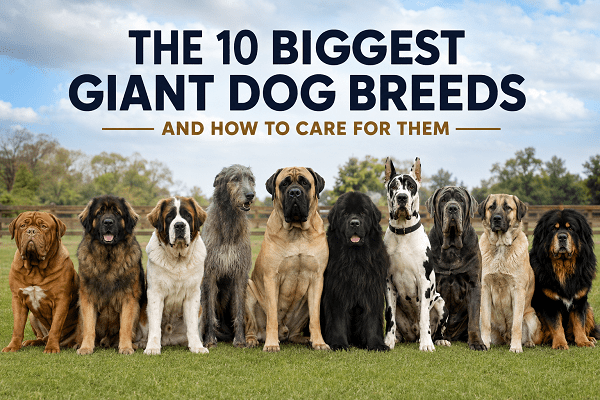
The English Mastiff is the biggest dog breed in the world by weight, and the Great Dane is the tallest. The rest of the top 10 are the Irish Wolfhound, Saint Bernard, Neapolitan Mastiff, Newfoundland, Leonberger, Tibetan Mastiff, Caucasian Shepherd and Anatolian Shepherd (Kangal). Caring for any of them comes down to five things: large-breed puppy food, slow growth, bloat prevention, early training and a budget that matches their size.
Table of Contents
- Introduction
- What Counts as the “Biggest” Dog?
- Quick Comparison Table
- The 10 Biggest Dog Breeds in the World
- Is a Giant Breed Right for You?
- How to Care for a Giant Dog
- Health Problems to Watch For
- Training a Giant Dog
- Why Trust This Guide
- Frequently Asked Questions
- Conclusion
Introduction
Ever walked into a room and found a dog that stood level with your waist? That’s life with the biggest dog breeds in the world. They’re gentle, loyal and a little goofy. They also eat like a small horse and can knock over a toddler with one happy wag.
Here’s the problem. Most guides list giant dog breeds and stop there. They don’t tell you what happens when a 70 kg puppy pulls you down the street. They also skip the belly-twisting emergency that can kill a healthy giant in hours.
In this guide you’ll learn:
- which breeds are truly the biggest, and what “biggest” means
- the latest height and weight records
- size, lifespan and temperament for each breed
- how to feed, exercise, groom and train a giant
- how to prevent bloat, the top emergency risk for deep-chested giants
What Counts as the “Biggest” Dog?
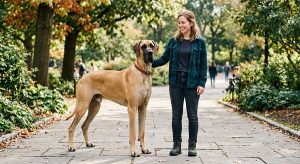
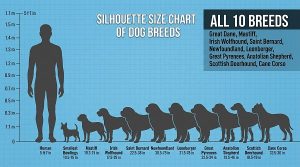
There’s no official cutoff. Most vets and breeders call a dog “giant” when an adult weighs about 45 kg (100 lb) or more, or stands around 70 cm (28 in) at the shoulder. Size also gets measured three different ways:
- Heaviest: The English Mastiff wins.
- Tallest: The Great Dane wins.
- Longest: Mastiffs and Irish Wolfhounds lead.
So if one person says “Mastiff” and another says “Great Dane,” both can be right.
Record Holders (Updated for 2026)
- Heaviest: Aicama Zorba, an English Mastiff, weighed 343 pounds (156 kg) and stood 37 inches (94 cm) at the shoulder. Another Mastiff, Hercules, weighed 128 kg and had a 96.5 cm neck when he took the heaviest-dog record in 2001.
- Tallest ever: Zeus, a Great Dane, holds the record at 1.118 m (3 ft 8 in).
- Tallest living male: Reggie, a Great Dane from Idaho, measured 1.007 m (3 ft 3 in) in January 2025.
- Tallest living female: Minnie, a Great Dane from Connecticut, measured 97.5 cm (3 ft 2 in) in June 2025.
Guinness doesn’t make it easy to claim a title. One family said the process can take up to 12 weeks, and they used a measuring stick made for a miniature horse. Titles also change fast. The previous holder, Kevin, died in June 2024, just days after his title was announced.
Quick Comparison Table
These are typical adult male ranges. Females run smaller.
| Breed | Height | Weight | Lifespan | Temperament |
|---|---|---|---|---|
| English Mastiff | 76 cm+ (30 in+) | 73-104 kg (160-230 lb) | 6-10 yrs | Calm, protective |
| Great Dane | 76-86 cm (30-34 in) | 54-82 kg (120-180 lb) | 7-10 yrs | Gentle, sensitive |
| Irish Wolfhound | 81 cm+ (32 in+) | 55-70 kg (120-155 lb) | 6-8 yrs | Quiet, friendly |
| Saint Bernard | 70-90 cm (28-35 in) | 63-82 kg (140-180 lb) | 8-10 yrs | Patient, affectionate |
| Neapolitan Mastiff | 66-79 cm (26-31 in) | 50-90 kg (110-200 lb) | 7-9 yrs | Loyal, guarded |
| Newfoundland | 69-74 cm (27-29 in) | 59-68 kg (130-150 lb) | 9-10 yrs | Sweet, water-loving |
| Leonberger | 71-80 cm (28-31.5 in) | 50-77 kg (110-170 lb) | 7-9 yrs | Friendly, social |
| Tibetan Mastiff | 66 cm+ (26 in+) | 45-68 kg (100-150 lb) | 10-12 yrs | Independent, watchful |
| Caucasian Shepherd | 65-75 cm+ (26-30 in+) | 45-77 kg (100-170 lb) | 10-12 yrs | Fearless guardian |
| Anatolian Shepherd (Kangal) | 69-74 cm (27-29 in) | 41-68 kg (90-150 lb) | 11-13 yrs | Independent, calm |
The 10 Biggest Dog Breeds in the World
1. English Mastiff
The English Mastiff is the heavyweight champion of the dog world. Males commonly pass 76 cm and often weigh 73-104 kg. They look intimidating, but most are slow-moving couch companions.
Handler’s note: Mastiffs mature slowly and get heavy early. Keep puppies lean, because extra weight hits their joints hard. Expect drool, snoring and a lifespan of about 6-10 years.
2. Great Dane
Great Danes are often called the “Apollo of dogs.” They’re famous record holders, as you saw above. Danes usually stop growing between 2.5 and 3 years old, so your “puppy” can stay a puppy for a long time.
Handler’s note: Danes have the highest bloat risk of any breed (more on that below). They’re also sensitive dogs, so harsh training backfires. Heart disease and bone cancer both run in the breed.
3. Irish Wolfhound
Irish Wolfhounds are tall and rough-coated, built like a greyhound that kept growing. Males stand 81 cm or more. They were bred to hunt wolves, yet most are quiet and kind indoors.
Handler’s note: They’re sighthounds, so a squirrel or cat can trigger a sprint. Use a secure fence and a strong leash. Lifespan is often just 6-8 years, and heart disease and bone cancer are real risks.
4. Saint Bernard
Famous for Swiss Alps rescues, Saint Bernards are patient and affectionate. They can weigh as much as 180 pounds (81.6 kg), yet they’re agile enough for search and rescue work.
Handler’s note: They overheat easily, so plan for shade, water and cool floors in warm climates. Expect drool and some eyelid problems. Keep their weight lean.
5. Neapolitan Mastiff
With loose skin, a huge head and a heavy presence, this Italian mastiff is built to guard. Neapolitan Mastiffs usually weigh about 77 kg and can reach 90 kg.
Handler’s note: This isn’t a first-dog breed. They need early socialization and calm, firm handling. Clean the skin folds regularly to prevent infections.
6. Newfoundland
Newfoundlands are “gentle giants” with webbed feet, a thick coat and a love of water. They were bred for water work and have a long history of rescuing people.
Handler’s note: Brush them several times a week, because the coat mats fast. They hate heat. Ask your vet about heart screening, since subaortic stenosis appears in the breed.
7. Leonberger
The Leonberger is a German mountain dog that blends Newfoundland, Saint Bernard and Great Pyrenees bloodlines. Males can weigh up to 77 kg. Most are social and love being with their people.
Handler’s note: They shed heavily twice a year. Ask breeders about nerve-disease (polyneuropathy) testing. Lifespan is around 7-9 years.
8. Tibetan Mastiff
An ancient guardian breed from the Himalayan regions, the Tibetan Mastiff has a dense double coat and a huge presence. It’s one of the longer-lived giants, at 10-12 years.
Handler’s note: They think for themselves and often bark at night, as they were bred to do. Training takes patience, so they suit experienced owners. They “blow” their coat once a year, so brush daily during that window.
9. Caucasian Shepherd Dog
Also called the Caucasian Ovcharka, this breed guards livestock against wolves and bears. Males commonly weigh 45-77 kg or more.
Handler’s note: This is a serious working guardian. It needs an experienced owner, high fences and early socialization. In a pet home without a job, it can become over-protective.
10. Anatolian Shepherd (Kangal)
The Anatolian Shepherd and the Kangal are closely related Turkish flock guardians. They’re fast, powerful and independent, and they have some of the longest lifespans on this list (11-13 years).
Handler’s note: They’re built to patrol and think alone. A bored one digs, roams and barks. Give them space, a job and a securely fenced yard.
Honorable Mentions
- Boerboel: This South African mastiff-type guardian reaches 68-90 kg.
- Dogue de Bordeaux: Heavy and muscular, but shorter than the true giants.
- Great Pyrenees: A white mountain livestock guardian.
- Scottish Deerhound: One of the tallest breeds, at 76-81 cm.
- Bernese Mountain Dog: Large rather than truly giant, but often grouped with them.
Is a Giant Breed Right for You?
Cuteness fades faster than a 60 kg adult grows. Before you commit, run this quick test:
- Space: Can the dog turn around in your hallway and lie flat in your living room?
- Vehicle: Will it fit in your car? A Great Dane won’t fit in a small hatchback.
- Strength: Can you hold a 50 kg dog that lunges at a cat?
- Budget: Giants cost more for food, medication, boarding, insurance and emergencies.
- Time: Slow maturity means 2-3 years of “teenage” behavior in an enormous body.
Still unsure about the match? Our Dog Breed Selector scores your lifestyle against the breeds that fit it.
The Real Cost of Owning a Giant Dog
These are rough planning ranges, not quotes. Prices vary by country.
| Cost | Typical range |
|---|---|
| Puppy from a health-tested breeder | US$1,500-4,000+ |
| Food | US$100-250 per month |
| Routine vet care and preventives | US$500-1,200 per year |
| Insurance | Higher premiums for giants |
| Emergency bloat surgery | Often US$3,000-8,000+ |
Giants cost more at the vet because anesthesia and medication doses scale with body weight. One owner of a 200-pound Great Dane reports that his dog eats about four pounds of food every day. Budget for that.
Buy Smart and Avoid Fake Papers
Giant puppies sell for serious money, so scammers love them. Before you pay a deposit, read our guide on how to spot fake AKC registered dogs. Also ask the breeder for:
- hip and elbow scores (OFA or PennHIP)
- heart screening (essential for Danes and Wolfhounds)
- DNA tests relevant to the breed
- the ages and causes of death of the parents and grandparents
A breeder who dodges those questions is a red flag.
How to Care for a Giant Dog
Life-Stage Timeline
| Stage | What matters most |
|---|---|
| 8-16 weeks | Socialization, house training, crate routine, large-breed puppy food |
| 4-6 months | Rapid growth: keep puppies lean, avoid stairs and long runs |
| 6-18 months | Teenage phase: more training, more patience |
| 2-3 years | Final filling out; many dogs only now reach emotional maturity |
| Adult | Lean weight, regular vet checks, joint support |
| 5+ years | Earlier senior checks; bloat and cancer risk rises |
Feeding Giant Dogs
Feed a large-breed puppy formula until your vet says to switch. These foods control calories and calcium so bones grow steadily, not too fast. Follow these rules:
- Measure every meal. Don’t free-feed.
- Split the day into two or three meals rather than one huge one.
- Keep the body lean. You should feel the ribs easily but not see them.
- Never add calcium supplements to a growing puppy unless your vet says so.
- Slow fast eaters with a slow-feeder bowl or scatter feeding.
- Rest the dog for about an hour before and after meals.
Exercise Without Wrecking Joints
Giant puppies need movement, but not marathon sessions. Think short, frequent and on soft ground.
- Puppies: Keep walks short, a few minutes per month of age at a time. Skip jumping, hard-surface running and stairs.
- Adults: Daily leash walks, easy swimming and mental games.
- Seniors: Shorter, gentler outings with more rest.
In my years working with dogs, I’ve seen owners blame “bad behavior” on dogs that were really bored. A giant that’s tired in both body and brain is a calm giant.
Grooming by Coat Type
- Short coats (Mastiff, Great Dane): Weekly brush, regular nail trims, wrinkle and ear cleaning.
- Long or thick coats (Newfoundland, Leonberger, Saint Bernard, Tibetan Mastiff): Brush 3-4 times a week, daily during seasonal shedding. Check under the ears and behind the legs for mats.
- All giants: Trim nails often, clean ears and brush teeth. Dental disease is common and expensive.
Keeping Giants Cool in Hot Climates
Many giant breeds were developed for cold mountains, so heat is a danger.
- Walk at dawn or after sunset.
- Provide shade, constant fresh water and cool surfaces.
- Use cooling mats and fans in hot weather.
- Never leave a dog in a parked car, even for a few minutes.
- Know the heatstroke signs: heavy panting, drooling, weakness and collapse.
Home Setup and Travel
- Put down non-slip rugs, because slick floors injure joints.
- Buy an orthopedic bed and a crate sized for the adult dog.
- Use a sturdy harness or collar designed for large dogs.
- Check airline and rental rules early, because many limit large dogs.
- Choose a vet who treats giant breeds and has an emergency plan.
Health Problems to Watch For
Giant breeds tend to live shorter lives than small breeds. Most live somewhere between 6 and 12 years, depending on the breed. The most common problems fall into a few groups:
- Bone and joint: hip and elbow dysplasia, panosteitis, arthritis
- Heart: dilated cardiomyopathy (Great Dane, Irish Wolfhound) and valve disease
- Cancer: osteosarcoma is common in giants. Zeus, the 2022 record holder, died of bone cancer at age 3.
- Neck and spine: Wobbler syndrome in some Danes
- Emergencies: bloat (GDV)
Bloat (GDV): The Emergency Every Giant Owner Must Know
Bloat happens when the stomach fills with gas and twists. It can kill within hours. The numbers are worth knowing:
- Great Danes have the highest average lifetime bloat risk at 42.4%.
- About 30 percent of dogs that develop bloat die or are euthanized.
- For giant breeds, the risk goes up 20 percent every year after age 3.
- A dog with a parent, sibling or puppy that has bloated has a 63 percent higher risk.
- Fearful dogs had a 257 percent higher risk than non-fearful dogs in one study, so calm, confident handling matters.
Bloat warning signs:
- swollen, hard belly
- retching with nothing coming up
- drooling and restlessness
- pale gums and fast breathing
If you see these, go to an emergency vet immediately. Call ahead on the way. Don’t wait to see if it passes.
How to Lower the Risk
- Feed smaller meals more often.
- Slow down fast eaters.
- Avoid hard exercise around mealtimes.
- Be careful with raised bowls. One study found elevated bowls increased risk by 110 percent, so ask your vet before using them.
- Ask your vet about a preventive gastropexy. The surgery tacks the stomach in place. It reduced the risk of death from GDV in Great Danes by roughly 30 times. Many owners schedule it with the neutering surgery.
Surgery isn’t a cure-all, but it’s one of the strongest tools for the highest-risk breeds.
Training a Giant Dog
Training a giant isn’t optional. It’s your safety system. A friendly 70 kg dog that jumps up can still hurt someone.
What to Teach First
- Name response and eye contact
- Sit, down and stay
- Four paws on the floor for greetings
- Wait at doors and gates
- Loose-leash walking
- Come when called (recall)
- Calm handling for grooming and vet exams
- Leave it and drop it
Start Leash Manners Before the Dog Is Big
You can’t out-muscle an adult giant, so teach polite walking while the puppy is still small. If your dog already pulls, follow our guide to stop a dog pulling on the leash.
Socialize Carefully
Socialization means calm, positive exposure to people, dogs, sounds, floors and vehicles. Do it between roughly 8 and 16 weeks. Take extra care with guardian breeds like the Caucasian Shepherd and Neapolitan Mastiff. These dogs need clear boundaries from the start.
Want Handler-Level Training Advice?
Raising a giant takes more than commands. It takes control, confidence and clear communication from puppyhood on. Beyond the Bark: Inside a Pro Handler’s Playbook for Raising the Ideal Dog gives step-by-step guidance on obedience, behavior and building a reliable companion.
Why Trust This Guide
This guide was written by Cpl. Rofiat Muritala, a Nigerian Army military working dog instructor and handler with more than 14 years of experience at the Nigerian Army Dog Centre. Her background covers dog selection, foundational training, behavior shaping and performance evaluation in real operational settings.
Record and health figures come from Guinness World Records, the AKC Canine Health Foundation and published veterinary sources. This guide is educational and doesn’t replace advice from your own vet.
Frequently Asked Questions
What is the biggest dog breed in the world?
The English Mastiff is the biggest dog breed by weight. The Great Dane is the tallest. The heaviest dog on record was a Mastiff named Zorba, at about 156 kg.
How long do giant dog breeds live?
Most giant breeds live about 6-10 years. Some, like the Tibetan Mastiff and Anatolian Shepherd, can live 10-13 years. Lean weight and regular vet care help.
How much do giant dogs eat, and what does it cost?
Many adults eat roughly 1-2 kg (2-4 lb) of dry food a day, sometimes more. Expect food bills of around US$100-250 a month, plus higher vet costs. Quality matters more than quantity.
Are giant dogs good for first-time owners?
Some are, like the Great Dane, Newfoundland and Saint Bernard, if you commit to training and vet care. Guardian breeds like the Caucasian Shepherd, Tibetan Mastiff and Neapolitan Mastiff suit experienced owners better.
Can giant dogs live in apartments or hot climates?
They can, but it takes planning. Calm breeds like Great Danes can do fine in apartments with daily walks. Thick-coated breeds struggle in the heat, so they need shade, cooling and early-morning exercise.
Conclusion
The biggest dog breeds in the world are impressive, and they’re also a big promise. Here’s what to remember:
- The English Mastiff is the heaviest breed and the Great Dane is the tallest.
- Pick a breed that matches your space, climate, experience and budget.
- Feed a large-breed puppy diet and keep your dog lean.
- Learn the bloat signs and talk to your vet about a gastropexy.
- Train early, before the dog outweighs you.
- Buy from health-testing breeders, not from the cheapest ad.
Do those things and you’ll get a calm, loyal giant that fits into your life.
Want more practical K9 advice? Join our weekly roundup at arfsk9team.com.ng/newsletter.

Her work centres on obedience, detection, protection and operational readiness. She favours proven methods built on repetition, consistency and real-world conditioning, so that both dogs and handlers are prepared for high-pressure tasks.
Rofiat represented the Nigerian Army Dog Centre at the Nigerian Army Day Celebration (NADCEL) 2026, where she led demonstrations in obedience, explosive detection, agility and tactical movement. Through articles, training content and documentaries, she shares field-based insight into how structured training, clear communication and trust between handler and dog affect performance and reliability.
She is the author of Beyond the Bark: Inside a Pro Handler's Playbook for Raising the Ideal Dog, a practical guide that helps dog owners and handlers apply professional training principles in everyday situations.
- Dog Agility Course Layout: Easy DIY Setup - October 7, 2026
- Local Dog Breeds: Temperament, Health & Training Guide - October 6, 2026
- How Long Do Military Working Dogs Serve? Full Guide - October 5, 2026