How Long Is a Dog in Pup? Week-by-Week Breakdown
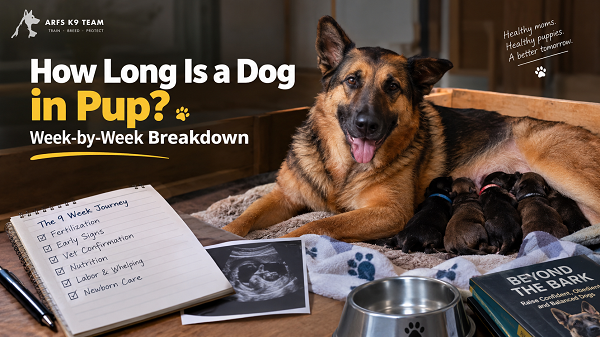
A dog is “in pup”, pregnant, for about 63 days, or roughly 9 weeks, counted from ovulation. Most dogs whelp somewhere between day 58 and day 68, depending on when she actually ovulated versus when she was mated. Small breeds tend to land toward the shorter end of that window, giant and working breeds sometimes run a day or two longer, and litter size can nudge the due date either way, bigger litters often arrive a touch early, smaller ones a touch late.
If you only remember one number from this article, remember 63. Everything else in this guide is about what happens during those 63 days, and how to tell the difference between “normal pregnant dog behavior” and “call the vet right now.”
Table of Contents
- Introduction
- How Long Is a Dog Pregnant? The Real Answer
- Ovulation Date vs. Mating Date: Why Your Due Date Math Might Be Off
- Week-by-Week Dog Pregnancy Breakdown
- Early Signs Your Dog Might Be Pregnant
- How Vets Confirm Pregnancy (And When to Book the Appointment)
- Does Gestation Length Change by Breed or Litter Size?
- Feeding a Pregnant Dog: Week-by-Week Nutrition
- Signs of Labor: The Final 24–48 Hours
- The 3 Stages of Whelping
- Building a Whelping Box: What You Actually Need
- Is It a Real Pregnancy or a False Pregnancy?
- Complications to Watch For (Dystocia)
- Caring for Newborn Puppies After Whelping
- Trainer’s Notes: What I’ve Learned Whelping Working-Line Litters
- FAQs
- Conclusion
Introduction
Ever counted on your fingers trying to figure out when your dog is actually due? You’re not alone. It’s one of the first questions almost every breeder, foster carer, and accidental-litter owner asks me: “Okay, she’s pregnant but how long is a dog in pup, exactly?”
Here’s the thing that trips people up: dog pregnancy isn’t measured the way most articles make it sound. It’s not “63 days after they mated”, it’s 63 days after she actually ovulated, and those two dates can be several days apart. Get that wrong, and you might be pacing the floor on day 60 wondering why nothing’s happening, when your dog still has a week to go. Or worse, you’re caught off guard because labor starts earlier than you expected.
I’ve whelped litters from working-line German Shepherds and Belgian Malinois, dogs bred for police work, protection, and detection, where getting the timeline right isn’t just nice to know, it’s the difference between a calm, monitored delivery and a 2 a.m. emergency vet run. So in this guide, I’m walking you through the whole thing: the real gestation math, a proper week-by-week breakdown of what’s happening inside your dog, the signs that labor is close, and the mistakes first-time breeders make that vets see over and over.
By the end, you’ll know exactly what to expect at every stage and exactly when “wait and watch” needs to become “call the vet now.”
How Long Is a Dog Pregnant? The Real Answer
The average canine gestation period is 63 days from ovulation, but the commonly cited range is 58 to 68 days measured from the last mating, because mating and ovulation rarely happen on the exact same day. Some sources stretch that window to 56–70 days when they’re accounting for dogs that were bred over several days during their fertile window.
A few numbers worth anchoring on:
- From ovulation: 63 days on average (usually 61–65 days)
- From the LH surge (the hormone spike that triggers ovulation, roughly 2 days before eggs are released): about 65–66 days
- From the first successful mating: 58–68 days, because sperm can survive in the reproductive tract for several days waiting for ovulation to happen
This is why two dogs bred on the exact same calendar day can whelp on completely different dates, it’s not about the mating date, it’s about when the eggs were actually released and fertilized.
Ovulation Date vs. Mating Date: Why Your Due Date Math Might Be Off
If you’re serious about pinning down a due date, which matters a lot for scheduling a planned C-section, arranging vet cover, or just not missing the birth, don’t rely on the mating date alone. Ask your vet about:
- Progesterone testing: Blood tests taken every 1–2 days during heat track rising progesterone levels and pinpoint ovulation almost exactly. This is the gold standard used by serious breeders and reproduction specialists.
- Vaginal cytology (smears): Cheaper than progesterone testing and useful for narrowing down the fertile window, though less precise for pinpointing ovulation day.
Without progesterone timing, most breeders count 63 days from the last breeding as a rough estimate and start watching closely from day 58 onward. With progesterone timing, you can predict the due date within a day or two, which is genuinely useful if you’re planning to be there for delivery (and you should be).
Week-by-Week Dog Pregnancy Breakdown
Here’s what’s happening inside your dog, week by week, from ovulation to whelping.
Week 1 (Days 1–7): Fertilization
Ovulation and fertilization happen during this window. There are no visible or behavioral signs yet, your dog looks and acts completely normal. Internally, fertilized eggs are beginning their journey toward the uterus.
Week 2 (Days 8–14): The Journey to the Uterus
The fertilized eggs travel into the uterine horns but haven’t implanted yet. Still no outward signs. This is genuinely the most uneventful stretch of the whole pregnancy, resist the urge to change her routine yet.
Week 3 (Days 15–21): Implantation
The embryos implant into the uterine wall around days 17–20. They’re smaller than a centimeter long at this point. Some dogs show the first subtle hints here, mild nausea, a touch of pickiness with food, maybe slightly lower energy. It’s easy to miss and easy to mistake for an off day.
Week 4 (Days 22–28): The First Confirmable Signs
This is usually the earliest window for a vet-confirmed pregnancy. Ultrasound can typically detect fetuses from around day 21–28, and this is also when a vet may be able to gently palpate small, walnut-sized swellings in the uterus, though palpation alone isn’t reliable for counting puppies or confirming a healthy pregnancy on its own. Embryos are developing spines and facial features and are growing to around 1–1.5 cm long. Nipples often start to enlarge and darken. A thin, clear vaginal discharge is normal at this stage.
This is also the point where I tell every client to book the vet visit if they haven’t already, week 4 is prime time for a confirmation ultrasound.
Week 5 (Days 29–35): Rapid Growth Begins
The term shifts from “embryos” to “fetuses” around now. Skeletons begin to calcify, organs continue forming, and growth speeds up noticeably. Your dog’s appetite typically starts increasing. Many vets recommend beginning to increase her food gradually from this point, roughly 10% more per week, building toward a higher-calorie, nutrient-dense diet (many breeders switch to a quality puppy food, which is calorie-dense enough to support the coming demand).
Week 6 (Days 36–42): Visible Weight Gain
The abdomen starts to noticeably round out. Fetal weight is increasing dramatically now, puppies can gain as much as 75% of their birth weight during this stretch of development. Your dog may eat smaller, more frequent meals as her stomach has less room. Skin over the abdomen may look slightly stretched, and you might feel gentle movement if you place a hand on her belly (avoid pressing).
Week 7 (Days 43–49): X-Ray Territory
Fetal skeletons become visible on X-ray from around day 43–45, though many vets prefer to wait until after day 50 for a clearer, safer count. An X-ray at this stage is the most reliable way to estimate litter size, useful for knowing whether you should expect two puppies or ten when labor starts, which genuinely changes how you monitor delivery. Nesting behavior can begin showing up here, though it usually intensifies closer to week 9.
Week 8 (Days 50–56): Final Prep Window
Puppies are essentially fully formed now, just packing on weight and getting lung development ready for life outside the womb. Your dog will likely slow down, want to rest more, and may start showing clear nesting behavior, digging at bedding, seeking out quiet corners, carrying soft toys around. This is the week to have the whelping box set up, clean, and in a quiet, low-traffic part of the house so she can get used to it before labor starts.
Week 9 (Days 57–65): Labor Approaches
This is it. Her belly is full, movement inside is often visible from the outside, and she may become restless, off her food, or unusually clingy (or the opposite, wanting to hide). Around 24 hours before labor, rectal temperature typically drops from the normal 101–102.5°F (38.3–39.2°C) range down to around 98–99°F (36.7–37.2°C). This temperature dip is one of the most reliable predictors of imminent labor, more on that below.
Early Signs Your Dog Might Be Pregnant
Before you get anywhere near a vet visit, here’s what owners commonly notice in the first three to four weeks:
- Mild lethargy or reduced interest in play
- A day or two of appetite changes, sometimes including “morning sickness” style nausea or vomiting
- Subtle personality shifts, more affectionate, or more withdrawn
- Nipple enlargement and darkening (usually the clearest early physical sign, typically visible by week 3–4)
- Slight clear vaginal discharge from week 4 onward
None of these are 100% reliable on their own, a dog can show some of these signs from a false pregnancy too (more on that later). The only way to actually confirm pregnancy is a vet exam.
How Vets Confirm Pregnancy (And When to Book the Appointment)
If you suspect your dog is pregnant, here’s the realistic timeline for getting it confirmed:
| Method | Earliest Reliable Window | What It Tells You |
|---|---|---|
| Relaxin blood test | Day 21–30 | Confirms pregnancy hormone (relaxin is only present in pregnant dogs) |
| Abdominal ultrasound | Day 21–28 | Confirms fetuses, checks heartbeats |
| Palpation | Day 24–35 | May detect uterine swellings (not always reliable) |
| X-ray | Day 43–45 (best after day 50) | Confirms and counts fetal skeletons, best for litter size |
My advice: don’t rush in at day 10 expecting answers. Book the vet visit for around the 3–4 week mark. That’s early enough to start adjusting her care but late enough that the test results are actually meaningful.
Does Gestation Length Change by Breed or Litter Size?
Here’s something a lot of dog pregnancy articles gloss over: gestation length is remarkably consistent across breeds, small, medium, large, or giant. A Chihuahua and a Great Dane are both pregnant for roughly the same number of days, give or take a couple. What does vary is litter size, and litter size has a small but real effect on timing.
- Smaller litters (1–3 puppies) tend to run a day or two longer, because there’s more room and less signal to trigger labor.
- Larger litters tend to arrive a day or two earlier, since a fuller uterus tends to trigger labor sooner.
For working and protection dog breeds specifically, the ones I spend most of my time around, here’s some real data worth knowing if you’re planning a litter:
- German Shepherds: A veterinary study of 158 breeding females and 123 successful matings found an average litter size of 5.8 puppies, with litters ranging from 1 to 11 puppies. Litter size also varied meaningfully by the dam’s age, peaking in dogs around 3–6 years old.
- A separate reproduction study on German Shepherds bred for working purposes (298 whelpings, over 2,000 puppies tracked) found average gestation of roughly 62 days from ovulation, and, importantly, that 18.5% of whelpings required a C-section, with 40% of dams needing some form of assistance during delivery. That’s a much higher intervention rate than most casual pregnancy guides mention, and it’s exactly why I tell working-dog owners never to plan an unsupervised whelp.
- Belgian Malinois: Litters are typically similar in size to German Shepherds, though exceptionally large litters (12–14 puppies) have been documented in individual cases, these are outliers, not the norm, and they come with meaningfully higher neonatal care demands (expect round-the-clock bottle-feeding support if you end up with a litter that size).
If you’re breeding a working line, for K9 units, protection work, or serious sport homes, this data matters. It’s not just about how many puppies you get; it’s about knowing your dog’s individual whelping risk going in, so you’re not caught flat-footed.
If you’re weighing which working breed suits your household or program in the first place, our full breakdown of the most reliable guard and protection dog breeds is a solid starting point before you even get to the breeding stage.
Feeding a Pregnant Dog: Week-by-Week Nutrition
Nutrition mistakes are one of the most common and most avoidable, issues I see with first-time breeders. Here’s a realistic breakdown:
- Weeks 1–4: No major diet change needed. Overfeeding this early does more harm than good and just leads to unnecessary weight gain.
- Week 5 onward: Start gradually increasing food, roughly 10% more per week, and consider transitioning to a calorie-dense puppy or performance food, it has the extra protein and fat pregnant and nursing dogs need.
- Weeks 6–9: Switch to smaller, more frequent meals (3–4 times a day) as the growing puppies leave less room in her stomach for large meals. By the final couple of weeks, many dogs are eating noticeably more than their pre-pregnancy maintenance amount.
- Throughout: Ask your vet about prenatal supplementation. This isn’t the time to guess, over-supplementing (especially calcium) before whelping can actually increase the risk of complications during labor, so get vet-specific guidance rather than following generic advice online.
Keep her moderately active with gentle walks throughout, a fit dog generally whelps more easily than an unfit one, but taper off strenuous exercise, jumping, and rough play from around week 4–5 onward, when the embryos are most vulnerable to physical trauma.
Signs of Labor: The Final 24–48 Hours
This is the part every owner is anxious about, so let’s be specific. In the last day or two before whelping, watch for:
- Temperature drop — the single most reliable predictor. Normal temperature runs 101–102.5°F (38.3–39.2°C). When it drops to 98–99°F (36.7–37.2°C), labor usually begins within 24 hours, often sooner. Take her temperature rectally twice a day during the final week so you have a baseline and can actually spot the dip.
- Nesting — digging at bedding, circling, seeking a quiet, enclosed space.
- Restlessness and panting — pacing, difficulty settling, repeatedly lying down and getting back up.
- Loss of appetite — many dogs skip their last meal or two before labor.
- Vomiting — occasional, usually mild.
- Excessive licking of the genital area as discharge and pressure increase.
- Visible contractions or straining — this signals labor has actively started (Stage 2).
Not every dog shows every sign, and not every sign shows up in the same order. But the temperature drop is the one worth building a habit around, it’s the earliest, most objective warning you’ll get.
The 3 Stages of Whelping
Stage 1: Early Labor (6–12 hours, sometimes up to 24)
The cervix dilates and contractions begin internally, you won’t necessarily see them yet. Your dog will be restless, panting, nesting, and possibly shivering. She may refuse food entirely. This stage ends when visible, active pushing begins.
Stage 2: Active Delivery (Variable, usually a few hours)
Strong, visible contractions. Puppies typically arrive every 30–60 minutes, though gaps of up to 2 hours between puppies can still be normal, especially midway through a large litter. Each puppy arrives inside a fluid-filled sac, which the mother normally breaks and cleans herself.
Call the vet immediately if:
- She’s had strong, constant contractions for more than 60 minutes with no puppy delivered
- More than 2–4 hours pass between puppies with no sign of progress
- She’s showing signs of distress, extreme lethargy, or collapse
- You see dark green or black discharge before the first puppy is born (this can indicate placental separation and needs urgent attention)
Stage 3: Delivering the Placenta
The placenta is usually expelled shortly after each puppy, sometimes she’ll deliver two placentas together after twins arrive close in succession. Try to keep a rough count; a retained placenta can cause infection. It’s normal (if not exactly pleasant) for a mother dog to eat some of the placenta, an instinctive behavior, but you don’t need to let her eat all of them.
Building a Whelping Box: What You Actually Need
Have this ready by week 7–8, not the night labor starts. A good whelping box needs:
- Size: Big enough for the mother to fully stretch out, with room to spare as puppies grow over the following weeks
- “Pig rails” — a raised ledge a few inches off the floor along the inside walls, so puppies can’t get accidentally crushed against the sides
- Low sides for entry, higher sides overall — low enough she can step in and out easily in late pregnancy, high enough to contain wandering puppies at 3–4 weeks
- Washable bedding — old towels or puppy pads work better than fabric that traps moisture
- A warm, draft-free, low-traffic location — introduce it 1–2 weeks before the due date so she’s comfortable there before labor starts, not scrambling to find her own spot
- A heat source nearby (not directly in the box) — newborn puppies can’t regulate their own body temperature for the first couple of weeks.
Is It a Real Pregnancy or a False Pregnancy?
This trips up a surprising number of owners, so it’s worth its own section. False pregnancy (pseudopregnancy) is extremely common in unspayed dogs, studies estimate that roughly 50–80% of intact females show at least some signs of it after a heat cycle, whether or not they were actually mated, and around two-thirds show recurring symptoms across multiple cycles.
A false pregnancy typically starts 4–9 weeks after her last heat and can include nesting, mammary swelling (sometimes even milk production), reduced appetite, and mothering behavior toward toys or objects, almost the entire symptom list of a real pregnancy, minus the puppies. It’s driven by the same hormonal shift (falling progesterone, rising prolactin) that happens in every intact female after every heat cycle, bred or not.
The only way to tell the difference for certain is a vet exam, a real pregnancy will show a heartbeat on ultrasound; a false one won’t. If your dog wasn’t actually bred but is showing pregnancy-like signs, don’t panic, it’s not dangerous, and it usually resolves within 2–4 weeks on its own. If it’s severe, recurring, or she’s lactating heavily, talk to your vet about management options.
Complications to Watch For (Dystocia)
Dystocia is the veterinary term for difficult labor, and it’s more common than most first-time breeders expect, remember that German Shepherd working-line study cited earlier, where 40% of dams needed some form of assistance and nearly 1 in 5 required a C-section. Risk factors include:
- Very large or very small litters
- Brachycephalic (flat-faced) breeds, where puppy head size relative to the birth canal is a known issue
- First-time mothers
- Older dams
- A single, oversized puppy in an otherwise small litter
Red flags that mean “vet now, not later”:
- Labor beginning before day 57 or continuing past day 70 with no delivery
- More than 60 minutes of hard, visible straining with no puppy
- Green or bloody discharge for more than a couple of hours with no puppy following
- The mother appears weak, disoriented, or her gums look pale
- A visible puppy stuck partway in the birth canal
If in doubt, call. A five-minute phone call to your vet is always cheaper and safer, than guessing.
Caring for Newborn Puppies After Whelping
Once the last puppy and placenta are delivered, the real work (and the fun part) begins. A few essentials for the first weeks:
- Warmth is everything. Newborns can’t regulate body temperature, keep the whelping area around 85–90°F (29–32°C) for the first week, gradually reducing as they grow.
- Weigh daily. Steady weight gain is the clearest sign a litter is thriving. If you want a simple way to track this, our puppy growth calculator guide walks through exactly how to estimate healthy growth trajectories.
- Watch the eyes. Puppies are born blind and deaf; both typically open somewhere between 10–14 days. If you notice anything unusual with timing, our guide on when puppies open their eyes covers what’s normal and what’s a warning sign.
- Vaccinations start earlier than most new owners expect. Once puppies are weaned, they’ll need a full core vaccine schedule, see our complete puppy vaccine and shot schedule for the exact timeline.
- Grooming and handling starts young. Gentle, positive handling from week 2–3 onward builds confidence, especially important if you’re raising future working or protection dogs. Our puppy grooming guide has a solid starting routine.
Trainer’s Notes: What I’ve Learned Whelping Working-Line Litters
I’ll be honest, the first litter I ever helped whelp, a working-line German Shepherd, threw me off completely. The temperature drop happened right on schedule, textbook perfect, and then labor stalled for nearly six hours before the first puppy arrived. Everything I’d read told me to worry. What actually helped was staying calm, keeping her comfortable, and having a vet on standby rather than in the room, most whelps genuinely go better with less human interference than people assume, but “less interference” only works if you know exactly what a red flag looks like the moment it happens.
That’s really the whole point of a guide like this one: not to make you anxious about every twitch and squat, but to give you a clear enough picture of normal that you’ll immediately recognize not normal when it happens. If you’re raising puppies with a working future ahead of them, protection, detection, sport, or service, the foundation for that temperament and trainability genuinely starts here, in the whelping box, weeks before formal training ever begins. If you want to go deeper into building that foundation from day one, our e-book Beyond the Bark covers the early developmental window that shapes a working dog’s confidence and drive long before their first obedience session.
FAQs
1. How long is a dog in pup on average?
About 63 days from ovulation, with a realistic range of 58–68 days from the date of mating. Small litters tend to run a day or two longer; large litters often arrive slightly early.
2. Can you tell how many puppies a dog is having before birth?
Yes, an X-ray taken after day 45 (ideally after day 50) gives the most accurate puppy count, since fetal skeletons are fully calcified and visible by then. Ultrasound earlier in pregnancy confirms puppies and heartbeats but is less reliable for an exact count.
3. What’s the first sign a dog is going into labor?
A drop in rectal temperature from the normal 101–102.5°F range down to around 98–99°F, usually 12–24 hours before labor starts, is the earliest and most reliable warning sign. Nesting and restlessness usually follow.
4. Do small dogs have shorter pregnancies than large dogs?
No, gestation length is roughly the same across breeds and sizes, around 63 days. What differs by breed is typical litter size and, in some large working breeds, the rate of complications during delivery.
5. How long can a dog safely stay in labor?
Active Stage 2 labor (pushing and delivering puppies) shouldn’t involve more than 60 minutes of hard straining without a puppy, or more than 2–4 hours between puppies. Beyond that, contact your vet immediately, it can indicate a stuck puppy or other complication requiring intervention.
Conclusion
So, how long is a dog in pup? Sixty-three days, give or take a week either side, but as you’ve seen, the real value isn’t in the number itself, it’s in knowing what’s supposed to happen during each of those nine weeks, and being able to spot the moment something isn’t.
A few things worth carrying forward from this guide:
- Count from ovulation, not mating, if you want an accurate due date, ask your vet about progesterone testing if precision matters
- Book a vet confirmation around week 3–4, not before
- Start increasing food gradually from week 5, not earlier
- Have the whelping box ready by week 7–8
- Track her temperature twice daily in the final week, the drop to 98–99°F is your best early warning
- Know your red flags for Stage 2 labor going wrong, and don’t hesitate to call the vet
Whether this is your first litter or your fifteenth, dog pregnancy rewards preparation more than intervention. Get the timeline right, watch for the signs that actually matter, and trust the process, most dogs, given the right support, whelp a healthy litter without you needing to do much more than watch, count, and be ready.

Her work centers on applied training across obedience, detection, protection, and operational readiness, with a strong focus on Military Working Dogs (MWDs) and security K9 programs. Rather than relying on theory alone, Rofiat emphasizes proven training methods built on repetition, consistency, and real-world conditioning principles that prepare both dogs and handlers for high-pressure tasks.
Through articles, training content, and documentaries, she shares experience-based insights from the field, highlighting how structured training, clear communication, and trust between handler and dog directly impact performance and reliability.
Drawing from years of frontline experience, she is also the author of “Beyond the Bark: Inside a Pro Handler’s Playbook for Raising the Ideal Dog,” a practical guide designed to help dog owners and handlers apply professional training principles in everyday situations.
She remains committed to responsible K9 development, continuous skill refinement, and practical education for handlers, trainers, and dog professionals.
- How Many Teeth Do Dogs Have? Puppy vs Adult Chart - September 22, 2026
- What Colors Do Dogs See? (Dog Vision Spectrum) - September 22, 2026
- Is Cinnamon Bad for Dogs? Safe Dosage by Weight - September 21, 2026