Best Snow Dog Jackets for Deep Winter Weather
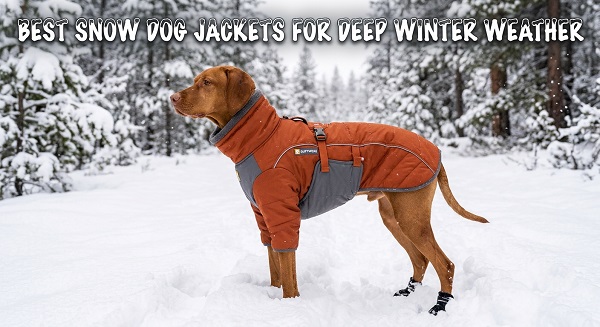
The best snow dog jackets combine three things: real insulation (look for 100 to 250 grams of fill, or PrimaLoft), a waterproof shell rated at least 10,000 mm, and a cut that covers your dog from neck to tail base without blocking the shoulders. For deep winter, top choices include the Non-stop Dogwear Glacier 3.0 (best overall), the Hurtta Extreme Warmer III Eco (extreme cold), the Ruffwear Powder Hound (dry powder snow), and the WeatherBeeta ComFiTec Premier Free Parka (best budget). Thick-coated northern breeds often need no jacket at all.
Table of Contents
- Do Dogs Really Need Snow Jackets?
- Why Trust This Guide
- What Makes a Jacket Ready for Deep Winter
- The Best Snow Dog Jackets for Deep Winter
- Which Jacket Fits Your Dog? A Quick Match Chart
- How to Measure and Fit a Dog Snow Jacket
- When to Put the Jacket On (and Take It Off)
- How to Train Your Dog to Wear a Jacket
- Beyond the Jacket: Paws, Wet Fur and Warning Signs
- Common Mistakes Owners Make
- Care and Storage
- FAQs
- Final Thoughts
Introduction: Why the Wrong Jacket Is Worse Than No Jacket
Picture this. It’s minus 10 outside, you pull a cute puffy coat over your Greyhound, and ten minutes into the walk he’s shivering anyway. The coat is soaked at the sleeves, the back ends halfway down his spine, and his belly is bare to the snow.
Sound familiar? You didn’t buy a bad dog. You bought the wrong snow jacket.
Most “best dog jacket” lists show you a row of products and a star rating. They rarely tell you why one coat works for a Malinois on a frozen training field and fails on a Chihuahua in a snowstorm. And almost none of them cover the handler’s side of things: when to take the jacket off, how to stop overheating, and how coats work with harnesses and working gear.
In this guide you’ll learn:
- Which dogs actually need a snow jacket (and which can overheat in one)
- The exact specs that matter: insulation grams, waterproof ratings, coverage and fit
- Our top picks for deep winter, with honest trade-offs
- How to measure your dog the right way, step by step
- Handler tips for working dogs, active dogs and puppies
Let’s get your dog warm, dry and moving freely.
Do Dogs Really Need Snow Jackets?
Short answer: some do, some don’t, and a few shouldn’t wear one for hard exercise.
So here’s the thing. A dog’s coat is built for its job. A Siberian Husky, Alaskan Malamute or Samoyed has a dense undercoat plus tough guard hairs that shed snow and block wind. Put an insulated jacket on one of these dogs while he runs, and you can push him into overheating.
On the other end, a Greyhound, Whippet, Doberman, Pug, Chihuahua or Staffordshire-type dog has a thin single coat and often little body fat. Those dogs lose heat fast, and standing still in the cold makes it worse.
Dogs That Usually Need a Jacket
- Short, single-coated breeds (Doberman, Greyhound, Whippet, Pointer, Vizsla, Boston Terrier, Pug)
- Small and toy breeds, because small bodies have more surface area compared with their weight and lose heat quickly
- Puppies and senior dogs, which regulate temperature less well
- Dogs with low body fat, health conditions, or a freshly clipped coat
- Dogs recovering from muscle injuries, since warm muscles are less likely to strain
Dogs That Often Don’t Need One
- Thick double-coated northern breeds (Husky, Malamute, Samoyed, Bernese Mountain Dog)
- Healthy, active dogs with full coats, unless the weather is wet, windy or extreme
How Cold Is Too Cold? A Practical Temperature Guide
There’s no single number, because size, coat, age and activity all change the answer. But vet and animal-health sources agree on some useful markers:
| Temperature | What it means for your dog |
|---|---|
| Around 45°F (7°C) | Cold-sensitive dogs start to feel uncomfortable |
| Below 40°F (4°C) | Thin-coated and small dogs usually benefit from a jacket |
| 32°F (0°C) and below | Small, thin-coated, very young, old or sick dogs shouldn’t stay out long |
| Around 20°F (-7°C) and below | Hypothermia and frostbite become real risks for most dogs |
A dog’s normal body temperature runs about 101°F to 102.5°F (38.3°C to 39.2°C). Wind and wet fur make everything colder than the thermometer says, so a calm 25°F day and a windy, wet 25°F day are two different animals.
Why Trust This Guide
Let’s be upfront about how we built this, because most gear articles skip that part.
ARFS K9 Team works with working dogs: security, detection and protection dogs, and the handlers who rely on them. We know how fast a dog’s fit, comfort and body temperature affect performance. We’re based in Lagos, Nigeria, so we don’t pretend to test jackets in a Canadian blizzard. Instead, we did this:
- Reviewed hands-on cold-weather testing from independent gear reviewers, including Treeline Review’s 2026 test of 15 dog coats in temperatures from about -2°F to 45°F, with water-bottle warmth tests and waterproof tests
- Compared manufacturer specs (insulation weight, water-column ratings, sizing charts) side by side
- Cross-checked temperature guidance from veterinary and animal-health sources
- Applied a working-dog handler’s lens: movement, harness compatibility, quick on/off and overheating
Prices below are approximate US figures from 2026 reviews and vary by size and retailer. Always confirm current specs and sizing before you buy.
What Makes a Jacket Ready for Deep Winter
Forget the colors and cute patterns for a minute. Six features decide whether a snow jacket works.
1. Insulation (Grams and Type)
Insulation weight tells you roughly how warm a coat is. In independent testing, jackets with around 100 grams of fill kept short-haired dogs comfortable in the 20°F to 40°F range, while 200 to 250 grams suited temperatures below 20°F. High-quality synthetic insulation such as PrimaLoft stays warm even when damp and packs down small.
Quick rule: 100g for cool, 200g+ for deep winter.
2. Waterproofing (Water Column Rating)
This is the number most owners never check. A water-column rating shows how much water pressure a fabric can take before it leaks. For snow, aim for 10,000 mm or higher. A coat with only a DWR (durable water repellent) coating sheds light snow, but that coating wears off over time.
Wet snow is the real test. Dry powder rolls off almost anything. Slushy, melting snow soaks into weak fabric and sleeves fast.
3. Coverage From Neck to Tail Base
A jacket that stops mid-back leaves the kidneys, hips and rear exposed. Look for full back coverage, a high neck or hood, and chest and belly protection. Snow hits the belly first in deep drifts, so belly coverage matters more than most buyers expect.
4. Freedom of Movement
This one matters for long-term joint health. Stiff panels that cut straight across the shoulders can change how your dog moves, and over time that can stress the body. Your dog should be able to stretch fully forward and back, trot, sit and lie down without the coat bunching or pulling.
5. Easy On, Easy Off
If you need to lift all four legs to put it on, you’ll dread using it. The best designs pull over the head and close with one or two straps. Quick removal also matters when your dog heats up.
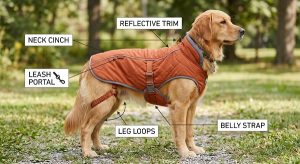
6. Safety Features
- Reflective trim for dark winter evenings
- Leash portal (a hole mid-back) so your dog can wear a harness under the jacket
- Leg loops that stop the coat riding up
- Neck and rear cinches to seal out snow and wind
The Best Snow Dog Jackets for Deep Winter
Here are our top picks, based on independent testing and spec comparisons. Each has a clear “best for” and an honest downside.
| Jacket | Best for | Water protection | Approx. price (US) |
|---|---|---|---|
| Non-stop Dogwear Glacier 3.0 | Best overall | 20,000 mm rating | $110–$120 |
| Hurtta Extreme Warmer III Eco | Extreme cold | 10,000 mm, taped seams | $105–$132 |
| Ruffwear Powder Hound | Dry powder snow | Water resistant (DWR) | about $100 |
| Ruffwear Vert Coverall | Full-body snow cover | 10,000 mm rating | about $140 |
| WeatherBeeta ComFiTec Premier Free Parka | Budget pick | Brand says waterproof, no formal rating | $65–$70 |
| Non-stop Dogwear Fjord Lined Raincoat | Wet snow, active dogs | 20,000 mm rating | $95–$99 |
| GF Pet Creekside Snowsuit | Small or thin dogs | Water resistant | $65–$85 |
Best Overall: Non-stop Dogwear Glacier 3.0
This Norwegian jacket earned the top spot in Treeline Review’s 2026 tests, and it’s easy to see why. It uses PrimaLoft insulation (133 g/m² in smaller sizes, 170 g/m² in larger ones), a 20,000 mm waterproof rating and a breathable shell. It pulls over the head and closes with one belly strap, with leg loops, a reinforced leash hole and reflective details.
The shoulders stay free, which is exactly what a hard-moving dog needs. It also comes in a huge size range, from toy breeds up to giant dogs.
Trade-off: It costs more than most. It can also run warm for very active dogs with decent coats.
Best for Extreme Cold: Hurtta Extreme Warmer III Eco
If your winter regularly drops below zero, this is the heavy hitter. It carries 120 to 140 grams of down-like fiber fill, a reflective foil liner, a protective hood and taped seams, and it’s rated for roughly -20°F to 20°F. In testing, it lost the least heat of any coat.
Trade-offs: It runs about one size big, so size down (if your dog measures 24 inches back length, try the 22-inch size). The metal belly buckle is stiffer to close than a plastic one. For thick-coated dogs or mild winters, it’s overkill.
Best for Deep Powder: Ruffwear Powder Hound
Made for play in dry snow, with 250 grams of fill and stretchy side and sleeve panels that let dogs run and leap. The full zip design traps lots of heat.
Trade-offs: Testers found the sleeves got wet in melting snow, and the back runs short on long-bodied dogs. You also have to guide both front paws through the sleeves, which is slow with a wiggly dog. Best for dry, powdery conditions.
Best Full-Body Snow Cover: Ruffwear Vert Coverall
This one works like a snowsuit, with four legs that stop snowballs forming on the belly and groin. It’s a smart pick for thin-coated dogs plowing through deep drifts.
Trade-offs: The chest zipper must be locked, or it creeps open and lets body heat out and snow in. Corgis and Dachshunds may not fit well.
Best Budget Pick: WeatherBeeta ComFiTec Premier Free Parka
From a horse-blanket brand, so it’s tough. It has 220 grams of fill, lots of reflective trim and Velcro straps that make it the quickest coat to put on. It often goes on sale near $55.
Trade-offs: A bit bulky for slim, light-boned dogs, and the shoulder panel can limit movement slightly. Waterproofing is claimed but not formally rated.
Best for Wet Snow and Active Dogs: Non-stop Dogwear Fjord Lined Raincoat
Most insulated coats aren’t truly waterproof, and most waterproof coats aren’t insulated. This one bridges the gap with a 20,000 mm shell, taped seams and a lighter PrimaLoft layer. It suits dogs that run, hike or ski with you, because it won’t cook them as quickly as a heavy parka.
Trade-off: For extreme cold or very short-coated dogs, it’s not warm enough on its own.
Best for Small or Thin Dogs: GF Pet Creekside Snowsuit
Removable pants add rear-leg warmth, which helps tiny dogs and seniors. It’s also priced reasonably.
Trade-offs: The outer fabric feels thinner than premium coats, and the front strap sits across the shoulders.
What About Cute Fashion Parkas?
In testing, some stylish puffers failed on fit: backs too short, chest holes too roomy. A coat that doesn’t fit loses its warmth. Pick fit and function first, then style.
Which Jacket Fits Your Dog? A Quick Match Chart
Use this to narrow your choice fast.
| Your dog | What to look for | Good starting point |
|---|---|---|
| Short-coated working dog (Malinois, Doberman, Boxer) | Neck-to-tail coverage, free shoulders, harness portal | Glacier 3.0 |
| Sighthound (Greyhound, Whippet) | Extra neck and belly warmth, high insulation | Hurtta Extreme Warmer III |
| Toy or small dog | Full coverage, pants, light weight | GF Pet Creekside |
| Double-coated active dog | Light layer only, breathable | Fjord Lined or fleece |
| Senior dog | Warm, easy on and off, no tight straps | Glacier 3.0 or WeatherBeeta |
| Dog that loves deep snow | Belly and leg coverage | Vert Coverall |
| Low-rider (Corgi, Dachshund) | Short back length, measured sizing | Check back length carefully |
How to Measure and Fit a Dog Snow Jacket
Wrong size is the number one reason jackets fail. Grab a soft tape measure (or a string and a ruler) and follow these steps.
- Measure back length. Go from the point between the shoulder blades to the base of the tail. This is the most important number, because it decides whether your dog’s whole back stays covered.
- Measure chest girth. Wrap the tape around the widest part of the ribcage, just behind the front legs.
- Measure the neck. Go around the thickest part of the neck. For blocky heads (Rottweilers, bully breeds, mastiffs), also measure around the widest part of the head so the coat goes on.
- Compare all three to the size chart. If your dog sits between sizes, check which measurement matters most for the coat’s design.
- Do the fit test. With the jacket on, slide two fingers under the chest strap. Watch your dog walk, trot, sit and lie down. No bunching, no rubbing at the armpits, no fabric dragging.
Brand sizing notes: Some brands size mostly by chest girth, which can leave long dogs with a short jacket. If your dog is long-bodied, favor brands that list back length. And remember, Hurtta runs large, so check before ordering.
When to Put the Jacket On (and Take It Off)
Here’s where handler experience matters, and where most blog posts go quiet.
A jacket is for standing still more than for running. A dog that’s working or playing hard produces plenty of heat. A dog waiting, walking slowly or recovering from exercise loses heat fast.
Think like a working-dog handler:
- Warm-up: In deep cold, a light jacket during the walk to the training field helps keep muscles warm and lowers injury risk.
- During hard work or play: For dogs with decent coats, take the jacket off or switch to a light layer. Panting, wide-open mouth and a hot body mean it’s time to remove it.
- During breaks and waiting: Put the jacket back on right away. This is the moment dogs chill, especially after getting wet.
- After exercise: Dry the dog, then re-jacket for the cool-down.
This is the same logic we apply with cooling gear in hot climates. If you want the flip side of this topic, read our guide to dog cooling vests and which ones actually work.
Also, think about gear compatibility. If your dog wears a working harness, buy a jacket with a leash portal, or choose one that fits over it without pulling. For a handler’s checklist on harness fit, see our tactical K9 harness guide.
How to Train Your Dog to Wear a Jacket
Some dogs freeze, back away or flop over the first time you put clothing on them. That’s normal. Go slowly, and reward everything.
Days 1 to 2: Let your dog sniff the jacket. Treat. Touch the jacket to the back. Treat.
Days 3 to 4: Slip it over the head and take it off right away. Treat every time.
Days 5 to 7: Fasten the straps for 10 to 20 seconds indoors, treating and praising. Increase the time slowly.
Week 2: Wear it for short walks, with a game or favorite activity while it’s on. Most dogs accept a coat within one to two weeks when you move at their pace. Shy dogs may need longer.
If your dog is head-shy, choose a jacket that doesn’t go over the head, or one with a zip or side opening.
Beyond the Jacket: Paws, Wet Fur and Warning Signs
A jacket protects the body. It doesn’t protect everything.
Protect the Paws
Paws take the beating in snow: ice balls, frozen ground, and salt on roads. If your dog lifts a paw, limps or stops walking, try boots. Trim hair between the paw pads to stop snow clumping, and wipe paws after every walk to remove salt and de-icer. For boots and other cold-weather essentials, see our list of tactical K9 gear for working dogs.
Watch for Warning Signs
Hypothermia and frostbite are real. Learn these signs:
- Early cold stress: shivering, tucked tail, hunched posture, lifting paws, refusing to walk, seeking warmth
- Hypothermia: intense shivering that may fade, lethargy, shallow breathing, muscle stiffness, weak pulse, loss of appetite
- Frostbite: pale, gray, blue or red skin on ears, tail, paws or other extremities; skin that stays cold, hard or shriveled; signs of pain
If you see these, bring your dog inside, wrap them in dry blankets and call your vet right away. Warm (not hot) water bottles wrapped in towels can be placed at the chest and armpits while you get help.
Feed for the Cold
Staying warm burns energy. Active dogs in deep winter often need a bit more food, and many dogs drink less in cold weather, so add a splash of warm water to meals. Check with your vet about portions.
Don’t Forget Puppies
Puppies get cold quickly, and winter potty breaks in the snow can turn into a battle. A well-fitted coat helps, and so does a firm routine. For a structured plan, our e-book Beyond the Bark and its puppy potty-training schedule can help you stay consistent even when it’s freezing outside.
Common Mistakes Owners Make
We see these over and over:
- Buying by size label alone. A “Large” from one brand isn’t a “Large” from another. Measure first.
- Ignoring back length. A coat that stops mid-back leaves your dog’s hindquarters cold.
- Dressing a Husky like a Chihuahua. Thick-coated dogs overheat easily.
- Confusing water resistant with waterproof. In wet snow, this difference decides whether your dog stays dry.
- Layering bulky coats. Stacking jackets can restrict movement and cause chafing. Use one well-chosen coat for active dogs.
- Leaving a wet jacket on. A soaked coat pulls heat from your dog. Swap or dry it.
- Skipping the fit test. A coat that looks fine standing still may rub or twist when the dog runs.
- Forgetting visibility. Winter dusk arrives early. Reflective trim is a safety feature, not decoration.
Care and Storage
A good jacket should last several winters, so look after it.
- Follow the label. Most can be machine washed cold on a gentle cycle and air dried. Wool-lined models need more care.
- Don’t use fabric softener on waterproof shells.
- Re-treat the DWR coating when water stops beading on the surface.
- Store folded in a dry place, not crushed under heavy items, and not damp.
Cost check: A $100 jacket used about 60 winter days a year for three years works out to around 55 cents per day. That’s cheap for a dog that actually enjoys being outside.
FAQs
1. At what temperature does a dog need a snow jacket?
Most cold-sensitive dogs benefit from a jacket below about 40°F (4°C), and small, thin-coated, young or senior dogs need one at or below freezing. Thick-coated northern breeds may only need a jacket in wet, windy or extreme conditions.
2. Do dogs really need jackets in the snow?
Not all of them. Short single-coated dogs, small breeds, puppies, seniors and dogs with health issues often do. Double-coated breeds like Huskies and Malamutes usually don’t, and can overheat if they wear insulated coats during exercise.
3. What should a good snow jacket for dogs have?
Look for insulation (100 to 250 grams or PrimaLoft), a waterproof rating of at least 10,000 mm, full neck-to-tail coverage, free shoulder movement, reflective trim and a leash portal if your dog wears a harness.
4. How should a dog jacket fit?
It should cover from the neck to the base of the tail, sit snug without squeezing, and let your dog walk, trot, sit and lie down freely. You should fit two fingers under the chest strap. Fabric shouldn’t bunch, drag or rub.
5. Can my dog wear a jacket and a harness at the same time?
Yes. Choose a jacket with a leash portal so the harness sits underneath, or pick a coat that fits over it without pulling. Check for rubbing at the armpits after a short test walk.
Final Thoughts: Keep Your Dog Warm, Dry and Moving
The best snow dog jackets aren’t the prettiest or the priciest. They’re the ones that fit your dog’s body, match your winter, and let your dog move naturally.
Here’s your quick action plan:
- Decide if your dog needs one. Thin coat, small body, puppy or senior? Likely yes. Thick double coat? Probably not.
- Match the jacket to your weather. Dry powder, wet slush and sub-zero cold call for different coats.
- Check three specs: insulation weight, a waterproof rating of 10,000 mm or more, and neck-to-tail coverage.
- Measure back length, chest and neck before you buy.
- Introduce the jacket slowly with treats, over one to two weeks.
- Take it off when your dog heats up, and put it back on during rest.
Do this, and winter becomes something you and your dog can enjoy together, not endure.
Want more practical K9 and working-dog advice every week? Subscribe to our weekly articles roundup newsletter and get our latest guides in your inbox.
Disclaimer: This article is for general information and isn’t veterinary advice. If your dog shows signs of hypothermia or frostbite, contact your vet immediately. Product details and prices change, so verify before you buy.

Her work centres on obedience, detection, protection and operational readiness. She favours proven methods built on repetition, consistency and real-world conditioning, so that both dogs and handlers are prepared for high-pressure tasks.
Rofiat represented the Nigerian Army Dog Centre at the Nigerian Army Day Celebration (NADCEL) 2026, where she led demonstrations in obedience, explosive detection, agility and tactical movement. Through articles, training content and documentaries, she shares field-based insight into how structured training, clear communication and trust between handler and dog affect performance and reliability.
She is the author of Beyond the Bark: Inside a Pro Handler's Playbook for Raising the Ideal Dog, a practical guide that helps dog owners and handlers apply professional training principles in everyday situations.
- Food Aggression Dog Training: Pro K9 Guide - November 21, 2026
- DIY Dog Scent Training: Easy 4-Week Home Guide - November 20, 2026
- Buckeye Puppies Review: 5 Red Flags to Check - November 19, 2026