Safe Warming Pad for Puppies: Essential Buyer’s Guide
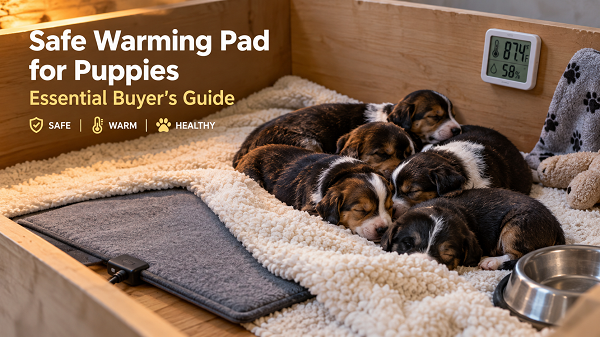
A safe warming pad for puppies has a built-in thermostat or a no-electricity design, a chew-resistant cord (or no cord at all), independent safety certification, and a surface that never gets hot enough to burn. Use it under soft bedding on only half of the box, so puppies can crawl off it. Newborns need an air temperature of about 85–90°F (29–32°C) in week one, then a slow step-down to normal room temperature by week five.
Our four top picks: the SnuggleSafe microwavable pad (no cord), the K&H Lectro-Kennel (big litters), the K&H Thermo-Pet Mat (small indoor spaces) and the K&H Self-Warming Pad (older puppies and backup warmth).
Table of Contents
- Why Puppies Can’t Keep Themselves Warm
- How Warm Should a Puppy’s Space Be? (Week-by-Week Chart)
- Types of Puppy Warming Pads Compared
- How to Choose a Safe Warming Pad: 8-Point Checklist
- Our Top Warming Pad Recommendations on Amazon
- How to Use a Warming Pad Safely: Step by Step
- Warning Signs: Too Cold or Too Hot
- 7 Mistakes That Make a Warming Pad Dangerous
- How We Pick Gear (Our Handler Experience)
- FAQs About Warming Pads for Puppies
- The Bottom Line
Introduction
Picture this: it’s 2 a.m., the whelping box feels cool, and a three-day-old pup is crying and crawling away from the pile. You know it needs heat. But which kind? A heat lamp? A hot water bottle? That old human heating pad in the cupboard? Pick wrong and you can burn a puppy or start a fire. Pick right and the whole litter sleeps, feeds and grows.
That’s why a safe warming pad for puppies is one of the smartest small purchases you can make before a litter arrives or a new puppy comes home. In this guide you’ll learn how warm puppies need to be week by week, how the main pad types compare, what to check before you buy, how to use a pad without burns, and which four products we recommend on Amazon.
We also cover things most guides skip: voltage for readers outside the US, the difference between pad heat and air temperature, and what to do if a puppy gets chilled.
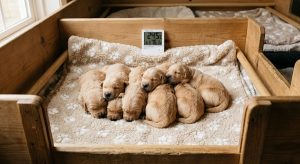
Heads-up: as an Amazon Associate, we may earn from qualifying purchases at no extra cost to you. This guide is general education, not veterinary advice. Always check temperatures and your setup with your vet.
Why Puppies Can’t Keep Themselves Warm
An adult dog runs at about 100–102.5°F (37.8–39.2°C). Newborn puppies don’t. VCA and Best Friends Animal Society both note that a normal rectal temperature for a puppy in week one is only about 95–99°F (35–37°C), and it takes about four weeks to reach the adult range.
Worse, newborns are poor at making heat. Veterinary teaching notes say the shivering reflex and the blood-vessel response that holds in heat aren’t fully developed until at least one week of age. A healthy newborn can only stay about 12°F warmer than the air around it. That’s why a nest has to be far warmer than your living room.
Here’s the part that surprises many owners. Once a puppy’s temperature drops below about 94°F (34.4°C), its gut slows down and it stops trying to nurse. No milk means no energy, and that makes the chill worse. It’s a downward spiral.
The stakes are real. Dr. Cecere, a theriogenology specialist at the Virginia-Maryland College of Veterinary Medicine, told Purina Pro Club that roughly 75 to 90 percent of puppy losses happen in the first three weeks. Breeders call the big three “heat, hunger and hydration.” Heat comes first for a reason.
In a normal litter, the mother is the heater. She and her pups pile together and share warmth. A pad steps in when mom has to leave the box, when the room is cold, when you’re raising an orphan, or when you’re bringing a small puppy home to a cool house.
How Warm Should a Puppy’s Space Be? (Week-by-Week Chart)
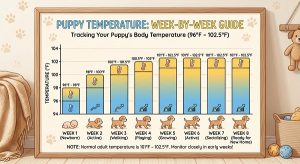
This is the number-one question buyers ask, and it decides how you use any pad. Sources differ by a few degrees. This chart blends guidance from VCA Hospitals, Purina Pro Club and Purdue’s canine welfare centre:
| Puppy age | Nest or box air temperature | In Celsius |
|---|---|---|
| Days 1–7 | 85–90°F | 29–32°C |
| Days 8–28 | About 80°F, falling gradually | About 27°C |
| End of week 4 | 72–75°F | 22–24°C |
| Week 5 and up | Normal room temperature (about 70–75°F) | 21–24°C |
Key point: these numbers are the air temperature at puppy level, not the surface temperature of the pad. Put a thermometer inside the box, next to the puppies, and read it often.
What temperature should a puppy heating pad be?
A puppy heating pad should feel comfortably warm, not hot, to your forearm. VCA suggests testing it on your forearm: it should feel about the same as your own skin. The pad’s job is to help hold the nest at 85–90°F in week one, so layer bedding over it and never put a newborn straight onto bare pad.
Humidity matters too. Purina Pro Club suggests keeping a whelping area around 55–60 percent humidity, which helps hydration.
Types of Puppy Warming Pads Compared
Not all pads are equal. Here’s how the main options stack up for puppies.
Electric Thermostat Pads
These plug in and use a built-in thermostat to switch on and off. K&H’s Lectro-Kennel, for example, uses a thermostat that warms the pad to roughly a dog’s body temperature and cycles off when it’s warm enough.
- Pros: steady heat all night, great for large litters, works for weeks.
- Cons: needs mains power, cords can be chewed, and some are made for one voltage only.
- Best for: whelping boxes, kennels, big breeds with large litters.
Microwavable Gel Discs
These hold heat after you warm them in the microwave. The SnuggleSafe disc, for instance, uses a non-toxic compound called Thermapol and stays warm for up to 10 hours, according to the maker. There’s no cord, so there’s nothing to chew or trip over.
- Pros: cordless, works in power cuts, perfect for transport to the vet.
- Cons: you must re-heat it, and it can get hotter than you’d expect right out of the microwave (more on that below).
- Best for: newborns that need backup heat, travel, small spaces.
Self-Warming Pads
These use reflective layers to bounce the puppy’s own body heat back. They need no power at all. Because newborns can’t make much heat themselves, a self-warming pad isn’t enough on its own for the first week or two. It shines for older puppies and as a crate or carrier liner.
- Pros: zero risk of burns or cords, washable, cheap to run.
- Cons: not strong enough alone for newborns.
- Best for: puppies from about four weeks, crates, and backup heat.
What to Skip: Heat Lamps, Hot Water Bottles and Human Heating Pads
Purdue’s canine welfare guide lists heat lamps as affordable but a possible fire hazard that can get too hot. Veterinary neonatal texts warn that hot water bottles and cloth-wrapped heat sources can overheat, dry out and even badly burn sick or orphaned newborns. Human heating pads are built for adults who can pull away. Newborn puppies can’t.
How to Choose a Safe Warming Pad: 8-Point Checklist
Use this list before you click “buy.” Most competing guides stop at three or four points. These eight cover what actually goes wrong.
- Independent safety certification. Look for a listing such as MET Labs, UL or ETL. K&H says its Lectro-Kennel is MET Labs certified to exceed US and Canadian electrical safety standards.
- Built-in thermostat or no electricity. Cheap pads with no thermostat keep heating. Choose a thermostat, or go cordless.
- Chew-resistant cord. Puppies chew everything. A steel-wrapped cord (the Lectro-Kennel has a 5.5-foot one) is a big plus. Also tuck the cord outside the box.
- Right size for the space. The pad should cover about half the floor, not all of it. Measure your whelping box first. Rigid pads don’t bend, so check the dimensions.
- Waterproof, wipe-clean surface. Puppies leak, spit up and pee. You need to wipe and dry the pad fast. Always let it dry fully before plugging it back in.
- Washable cover. A soft fleece cover helps heat pass through gently and keeps puppies comfortable.
- Voltage that matches your country. This is the one most guides miss. Many US-made pads, including the K&H Lectro-Kennel per retailer listings, are rated for 110/120V only. In the UK, EU, Nigeria and most of Africa and Asia, mains power is 220–240V. Plugging a 120V pad into 240V can destroy it and create a fire risk. If you live in a 240V country, pick a cordless pad like SnuggleSafe or use a properly rated transformer.
- Honest wattage and surface temperature. Low wattage (around 4–6W for small mats) means gentle heat. Larger pads (60–80W) suit bigger boxes. Read what the maker says about surface temperature.
Our Top Warming Pad Recommendations on Amazon
We compared safety features, certifications, real owner feedback and how each pad fits real puppy situations. These four cover almost every need. If you’re raising a litter, we’d buy two: one electric and one cordless backup. A power cut in the middle of the night is exactly when puppies get chilled.
1. SnuggleSafe Microwavable Heating Pad: Best Cordless Pick
Why we like it: No wires, no plugs, no chewed cords. Heat it in the microwave and it stays warm for up to 10 hours, according to the maker. The disc is about 8.7 inches (21–22 cm) wide, comes with a fleece cover, and has been trusted by breeders, rescues and vets for around 20 years.
Who should buy it: Breeders who want a backup for power cuts, foster carers, anyone driving a young puppy to the vet, and owners in 220–240V countries who can’t easily use a US plug-in pad.
Handler heads-up: This is the one many people use wrong. One retailer lists its stable temperature at about 120°F (49°C). That’s far hotter than the 85–90°F a newborn’s nest needs. So always keep the fleece cover on, add a thick towel or blanket over the disc, and do the forearm test. The maker also says it’s chew-resistant, not bite-proof, so supervise. Heat only one disc at a time, follow the heating times for your microwave’s wattage, and replace it if it stops holding heat (it tends to fade after about three years).
Check the SnuggleSafe Microwavable Heating Pad on Amazon →
2. K&H Lectro-Kennel Heated Pad: Best for Whelping Boxes and Large Litters
Why we like it: This is the workhorse many breeders know. It has a rigid, waterproof ABS shell, a 5.5-foot steel-wrapped cord and a removable fleece cover. The thermostat warms it to about body temperature (roughly 100–102°F per retailer listings), and K&H says it’s safety certified by MET Labs. It’s been on the market for decades, which matters when you’re trusting a product with newborns. It comes in small, medium and large, so you can match the pad to your box.
Who should buy it: Breeders of larger breeds (German Shepherds, Labradors, Golden Retrievers), anyone whelping in a garage, shed or cool room, and anyone who needs steady heat for weeks.
Handler heads-up: Be realistic. Because it’s thermostat-controlled, it takes one to two hours to warm up, and it feels cooler to the touch once it’s at temperature. Some owners think it’s “not working.” It is. Don’t cover it with a blanket, since K&H warns that traps heat and can cause a malfunction. Use the supplied cover instead. K&H also says not to use it where a pet can’t get off the pad, so cover only half the box. It’s 120V only, so US and Canada buyers are fine, while readers in 240V countries need another option. It’s also a premium-priced pad.
Check the K&H Lectro-Kennel Large (80W) on Amazon →
Or check the K&H Lectro-Kennel Medium (22.5 x 16.5 in) on Amazon →
3. K&H Thermo-Pet Mat (6W): Best Low-Power Indoor Pad for Small Breeds
Why we like it: At just 6 watts, this soft, indoor heated mat gives gentle warmth. It’s waterproof, machine washable and safety listed. For toy and small breed pups, a crate, or a quiet corner, it’s a smart size at about 12.5 x 25 inches.
Who should buy it: New owners of small-breed puppies, people recovering a puppy after a vet visit, and anyone who wants a quiet, low-energy pad in a crate or bed.
Handler heads-up: This is a smaller, lower-power pad, so it suits small breeds and older puppies better than a big litter in a cold room. For newborns, use it only as part of a warm, monitored set-up with a thermometer. Like the Lectro-Kennel, check the voltage before buying if you live outside the US.
Check the K&H Thermo-Pet Mat on Amazon →
4. K&H Self-Warming Pad: Best No-Power Backup for Older Puppies
Why we like it: No cord, no electricity and no burn risk. The reflective layers send your puppy’s own body heat back to them. It’s machine washable, reversible and sized (21 x 17 inches) to fit a carrier, crate or bed. We love it as a power-cut fallback for puppies past the newborn stage.
Who should buy it: Owners of puppies about four weeks and older, anyone who wants a safe-by-design pad, and people building a crate set-up (our crate training guide shows how to make a crate feel like a safe den).
Handler heads-up: It relies on the puppy’s own heat, so it won’t save a newborn alone. Pair it with a proper heat source for the first weeks.
Check the K&H Self-Warming Pad on Amazon →
Quick Comparison Table
| Pad | Type | Power | Best for | Good for newborns? |
|---|---|---|---|---|
| SnuggleSafe Microwavable | Gel disc | None (microwave) | Backup, travel, 240V countries | Yes, under thick bedding |
| K&H Lectro-Kennel | Electric, thermostat | 60–80W (120V) | Whelping boxes, big litters | Yes, on half the box |
| K&H Thermo-Pet Mat | Electric, thermostat | 6W (check voltage) | Small breeds, crates | Only as part of a monitored set-up |
| K&H Self-Warming Pad | Reflective | None | Older puppies, crates, backup | No, not alone |
Why Buying the Right Pad Now Is Worth It
Think about the cost of the alternative. One chilled puppy means emergency vet visits, hand-feeding and sleepless nights, and in a litter that’s the risk Dr. Cecere’s numbers describe. A proper pad costs a fraction of that. A certified, thermostat-controlled pad plus a cordless backup is the cheapest insurance in the whelping room.
How to Use a Warming Pad Safely: Step by Step
Even the best pad can hurt a puppy if you use it badly. Follow these steps.
- Cover only half the box. Place the pad under one half of the floor. This gives puppies a warm zone and a cooler zone. Veterinary neonatal guidance says the best set-ups give puppies a range of temperatures so they can pick their own comfort spot.
- Layer it. Use the fleece cover, then a towel or vet bedding on top. Never put a newborn straight onto a bare pad.
- Do the forearm test. Lay your forearm on the bedding. It should feel about as warm as your skin. If it feels hot to you, it’s too hot for a newborn.
- Place a thermometer at puppy level. Check that the air in the box matches the chart (85–90°F in week one).
- Watch the puppy pile. Puppies that are huddled tightly are probably cold. Puppies spread to the edges of the box are probably too warm. A relaxed, loosely grouped litter means you’ve got it right.
- Check often in week one. Look in whenever you feed or check on them. Newborns can’t crawl away from heat the way older puppies can, so you are their safety switch.
- Taper the heat on schedule. Drop the temperature gradually using the chart above. By week five most puppies cope with normal room temperature.
- Keep it clean and dry. Wipe the pad, let it dry fully, and wash covers regularly. Our National Puppy Day puppy checklist has a full list of other puppy supplies worth having ready.
Microwave pad tips: Heat one disc at a time, follow the label times for your microwave’s wattage, and leave it in for an extra minute after the timer ends, as the maker advises. Always check it with your forearm before putting it in the box.
Warning Signs: Too Cold or Too Hot
Signs a Puppy Is Too Cold
- Cold to the touch, especially the paws and ears
- Weak, limp or crying constantly
- Won’t nurse
- Pushed into the middle of the pile, or away from littermates
What to do: Call your vet right away. Warm the puppy slowly with gentle, indirect heat, such as skin contact and a warmed (not hot) cover. A chilled puppy can’t digest milk, so warming comes before feeding. Don’t use a hairdryer or place the puppy on a hot surface.
Signs a Puppy Is Too Hot
- Panting, restless or crying
- Puppies scattered to the far edges of the box
- Red, warm skin or blistering where it touched the pad
- Dehydration, weakness or vomiting in serious cases
What to do: Move the puppy to a cooler area at once, switch off or lower the heat, and call your vet if you see redness, blisters or lethargy. Heat stress can get serious fast. If you want to understand how overheating works in older dogs, our guide to dog cooling vests explains how heat affects dogs and how handlers manage it.
7 Mistakes That Make a Warming Pad Dangerous
These are the errors we see again and again with new breeders and puppy owners:
- Using a human heating pad. No thermostat suited to a puppy, no chew protection and no auto-off that fits a puppy’s needs.
- Covering the whole box. If puppies can’t escape the heat, they can overheat or burn.
- Putting a blanket over a thermostat pad. K&H warns this traps heat and can cause a malfunction.
- Ignoring the voltage. Using a 120V pad on a 240V supply is a fire risk.
- Trusting the pad instead of a thermometer. The pad’s surface temperature isn’t the air temperature puppies live in.
- Leaving a chewed cord in place. Check cords daily. Replace any damaged pad at once.
- Skipping a backup. One pad plus one power cut can be a disaster. Keep a cordless option on hand.
How We Pick Gear (Our Handler Experience)
At ARFS K9 Team, we work with working-line dogs, and puppy care starts long before training. Early warmth is part of raising a confident, healthy dog. That’s why we judge gear the way a handler does: safety first, comfort second, price third.
Here’s how we choose products for this guide:
- Safety evidence first: independent certification, thermostat or cordless design, chew protection.
- Veterinary sources: we cross-check temperature advice against VCA Hospitals, Merck Veterinary Manual material, Purdue’s canine welfare centre and Purina Pro Club.
- Real owner feedback: we read what breeders and owners report, including the complaints, and we pass those on honestly.
- Real puppy situations: whelping boxes, crates, vet trips and power cuts.
If you’re building a full puppy set-up, our 10 best tactical K9 gear guide and puppy checklist pair well with the pads above.
FAQs About Warming Pads for Puppies
1. Is a heating pad safe for puppies?
Yes, if it’s made for pets, has a thermostat or no electricity, and you use it correctly. Cover only half the box, add bedding on top, and monitor with a thermometer. Newborns can’t move away from heat well, so never leave a pad unsupervised in the first week without checking it often.
2. Can I use a human heating pad for a puppy?
We don’t recommend it. Human pads lack puppy-safe thermostats and chew protection, and they can get too hot for thin newborn skin. Choose a pad made for pets.
3. How long can a puppy stay on a heating pad?
A puppy can stay near a heat source as long as it needs, as long as it has room to move off it and the nest stays at the right temperature. That’s why you cover only half the box. Check regularly and taper the heat as the puppy grows.
4. When can I stop using a warming pad?
Most puppies can handle normal room temperature (about 70–75°F) by week five. Taper the nest temperature down gradually from week two, following the chart above. Small breeds and weaker puppies may need heat a little longer. Ask your vet.
5. Which is safer: a microwavable pad or an electric pad?
Both can be safe. Microwavable pads have no cord to chew and work in power cuts, but they can start out very hot and need reheating. Electric pads give steady heat all night but need a safe cord and the right voltage. Many breeders use one of each.
The Bottom Line
A safe warming pad for puppies doesn’t have to be complicated. Pick a pad with independent safety certification and a thermostat (or go cordless). Match the voltage to your country. Keep the nest at 85–90°F in week one and taper down to room temperature by week five. Cover only half the box, layer bedding on top, and trust your thermometer and your forearm.
Here’s your action plan:
- Choose one main pad and one cordless backup from our picks above.
- Set up the box with a thermometer before the puppies arrive.
- Test the temperature with your forearm every time you check.
- Follow the weekly temperature chart and call your vet at any sign of chilling or overheating.
Once your puppy is warm and settled, the next big step is house training. Our e-book, Beyond the Bark, walks you through a structured plan to get your puppy potty trained fast.
Want more guides like this? Subscribe to our weekly roundup at https://arfsk9team.com.ng/newsletter/ and get new K9 training, puppy care and gear articles in your inbox every week.

Her work centres on obedience, detection, protection and operational readiness. She favours proven methods built on repetition, consistency and real-world conditioning, so that both dogs and handlers are prepared for high-pressure tasks.
Rofiat represented the Nigerian Army Dog Centre at the Nigerian Army Day Celebration (NADCEL) 2026, where she led demonstrations in obedience, explosive detection, agility and tactical movement. Through articles, training content and documentaries, she shares field-based insight into how structured training, clear communication and trust between handler and dog affect performance and reliability.
She is the author of Beyond the Bark: Inside a Pro Handler's Playbook for Raising the Ideal Dog, a practical guide that helps dog owners and handlers apply professional training principles in everyday situations.
- Food Aggression Dog Training: Pro K9 Guide - November 21, 2026
- DIY Dog Scent Training: Easy 4-Week Home Guide - November 20, 2026
- Buckeye Puppies Review: 5 Red Flags to Check - November 19, 2026