Boston Terrier Dog Breed: Temperament & Care
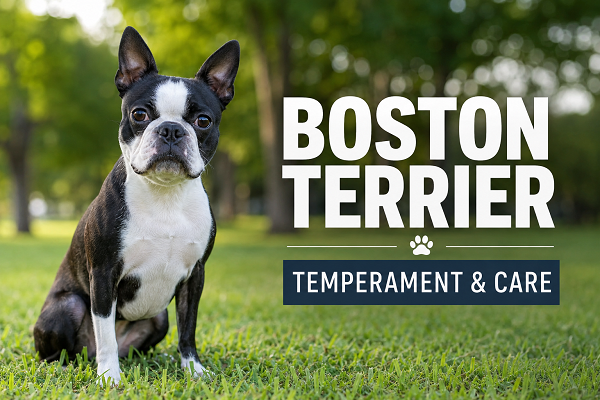
Boston Terriers are friendly, alert, and people-oriented dogs with moderate exercise needs, a short low-shedding coat, and a life expectancy of 11 to 13 years. They’re easy to live with for most households, but their flat face means you need to manage heat, exercise intensity, and breathing carefully, and their price typically runs from $900 to $2,500 from a reputable breeder.
Table of Contents
- Boston Terrier at a Glance
- Where the “American Gentleman” Came From
- Boston Terrier Temperament: What to Really Expect
- Living With a Boston Terrier: Daily Care
- Health: The Honest Conversation About Brachycephaly
- Training a Boston Terrier: Smart, Sensitive, Occasionally Stubborn
- How Much a Boston Terrier Really Costs
- Is a Boston Terrier Right for You?
- FAQs
- Final Thoughts
Boston Terrier at a Glance
Before we go deep, here’s the snapshot:
- Height: 9–15 inches
- Weight: 12–25 lbs (three official weight classes: under 15 lbs, 15–20 lbs, and 20–25 lbs)
- Coat: Short, smooth, low-shedding, black, seal, or brindle with white “tuxedo” markings
- Life expectancy: 11–13 years
- Energy level: Moderate
- Grooming needs: Low
- Trainability: High, with an independent streak
- Good with kids and other pets: Generally yes, with supervision
- AKC popularity: #23 out of 202 ranked breeds in 2025, a spot it’s held steady since 2023
That last point matters more than it looks. A breed that holds a stable ranking year after year, instead of spiking and crashing like a trend breed, usually means owners who get one tend to stick with the breed for life. That’s been my experience with Boston people too, they rarely switch to something else.
Where the “American Gentleman” Came From
The Boston Terrier is genuinely rare in the dog world: it’s one of the only breeds developed entirely in the United States, and the only one with “American” essentially built into its nickname. The breed traces back to a dog named Judge, imported to Boston in 1870 and bred from English Bulldog and white English Terrier stock. Early Bostons, nicknamed “roundheads”, were actually much bigger than today’s dogs, sometimes tipping the scales near 44 pounds, before breeders gradually refined the size down.
The American Kennel Club recognized the breed in 1893, making it one of the earliest AKC-registered breeds and the first American breed to gain that recognition. Massachusetts eventually named it the state dog, which feels appropriate for a breed that’s basically wearing a permanent tuxedo.
Knowing this history actually helps explain the temperament. This wasn’t a breed built for herding, hunting, or guarding, it was refined specifically for companionship almost from the start. That’s baked into how Bostons behave today.
Boston Terrier Temperament: What to Really Expect
Here’s the thing about Boston Terrier temperament, most descriptions online use the same three words (friendly, playful, intelligent) and then move on. That’s accurate, but it’s not the full story, and it doesn’t tell you what actually living with one feels like.
They Bond Hard, and They Bond Fast
Bostons aren’t the type of dog that’s content being “around” you. They want to be part of whatever you’re doing. Owners consistently describe them following from room to room, making frequent eye contact, and generally treating solo time as a personal insult. If you work from home, expect a dog parked at your feet. If you don’t, a Boston can develop separation anxiety more easily than more independent breeds, so building confidence around alone time early matters.
The Comedian Streak Is Real
Ask five different Boston Terrier owners what surprised them most, and at least three will mention how funny their dog turned out to be. They lean into physical comedy, the head tilts, the “talking” grumbles, the dramatic flop onto the floor mid-play. This isn’t just owner bias; trainers who work with the breed regularly note the same thing. It’s part of what makes them such popular family dogs despite being a relatively niche breed compared to giants like the Labrador or French Bulldog.
Good With Kids, But Supervision Still Matters
Well-socialized Bostons are typically gentle, patient, and appropriately playful with children. That said, “well-socialized” is doing a lot of work in that sentence. The critical window for shaping this is roughly 3 to 14 weeks of age, gentle, positive exposure to kids, new sounds, surfaces, and other dogs during this window has an outsized effect on how confident and stable the adult dog becomes. Skip this window, or handle it poorly, and you can end up with a Boston that’s anxious around unfamiliar people instead of the social butterfly the breed is known for.
Stubborn, Not Difficult
Boston Terriers are genuinely intelligent, they pick up commands quickly but they also have a well-earned reputation for selective listening. They might know “sit” and “stay” perfectly well and still choose not to comply if there’s nothing in it for them. This isn’t defiance for its own sake; it’s a dog that responds to motivation more than repetition. Positive reinforcement training works far better with this breed than anything correction-heavy.
Alert, Not Aggressive
Bostons will bark to let you know someone’s at the door, but they’re not naturally suspicious of strangers the way a working or protection breed is. If you’re specifically looking for a dog with real guarding instincts, a Boston isn’t it and if that’s more your priority, it’s worth reading through ARFS K9 Team’s guide to the best family watchdog breeds, which breaks down which breeds actually combine alertness with a stable family temperament.
Living With a Boston Terrier: Daily Care
Exercise Needs
Don’t let the small size fool you into skipping exercise entirely, Bostons have real energy, just not endless amounts of it. Two 20-to-30-minute walks a day, plus some indoor play, is usually enough to keep an adult Boston satisfied. Puppies need more frequent, shorter bursts of activity rather than one long outing, since their joints and airways are still developing.
The one non-negotiable rule: never push a Boston hard in heat or humidity. Their flattened muzzle makes it harder for them to cool down through panting, and heatstroke can develop faster in this breed than in a mesocephalic (normal-snouted) dog of the same size. Early morning or evening walks in hot climates, and always carrying water, isn’t optional, it’s basic breed management.
Grooming
This is genuinely one of the easier parts of Boston Terrier ownership. Their short coat needs brushing just once or twice a week to control shedding, and full baths every few weeks are plenty. Where owners tend to fall behind is the breed-specific stuff:
- Facial wrinkles and tear stains: Wipe the skin folds around the eyes regularly to prevent bacterial buildup.
- Nails: Trim every 3–4 weeks, overgrown nails change how the dog stands and walks.
- Teeth: Brush 2–3 times a week; small breeds are prone to dental crowding.
- Ears: Check weekly, especially after baths, to avoid moisture buildup.
If you want a more detailed, step-by-step breakdown of building a grooming routine a puppy actually tolerates, this puppy grooming guide walks through the exact order that keeps grooming sessions calm instead of a wrestling match. And if low-maintenance coat care is actually your top priority in choosing a breed, it’s worth comparing Bostons against other low-shedding, easy-care breeds before you commit.
Feeding
An adult Boston Terrier typically eats around 1 to 1¾ cups of quality dry food a day, split into two meals. Because they’re prone to weight gain once past puppyhood and extra weight makes breathing problems worse in a brachycephalic breed, measuring food rather than free-feeding is worth the extra thirty seconds. Puppies need three smaller meals a day through roughly six months. If you’re weighing feeding schedules against another popular small companion breed, this puppy feeding schedule guide is a useful side-by-side reference for portion timing during the growth stage.
Climate Sensitivity
Bostons struggle in both extreme heat and extreme cold. Their short coat offers little insulation, so a sweater or coat for winter walks isn’t just cute, it’s practical in cold climates. In summer, indoor air conditioning matters more for this breed than for a thick-coated dog that can regulate its own temperature more easily.
Health: The Honest Conversation About Brachycephaly
I’d rather be straightforward here than sell you a rosy picture, because this is the section that actually changes buying decisions.
Boston Terriers are a brachycephalic (flat-faced) breed, which puts them at risk for Brachycephalic Obstructive Airway Syndrome (BOAS), the same condition affecting French Bulldogs, Pugs, and English Bulldogs. Here’s the genuinely useful part most articles skip: Boston Terriers are affected less severely than those other three breeds, but they’re not exempt.
A 2024 University of Cambridge study, funded by The Kennel Club Charitable Trust, assessed over 100 Boston Terriers using respiratory function grading and found that 37.5% scored Grade 0 (no clinically significant breathing issues), compared to only 10% of French Bulldogs and 15.2% of Bulldogs tested under the same criteria. That’s a real, measurable difference. But it also means roughly six in ten Bostons show some degree of respiratory compromise, and the researchers specifically flagged nostril stenosis, facial shortening, and abnormal eye scleral show as red flags that increase BOAS risk within the breed.
What this means practically:
- Ask breeders about respiratory testing. Reputable Boston breeders increasingly screen breeding stock for airway function, not just coat color and conformation looks.
- Watch for warning signs: loud snoring that gets worse, exercise intolerance, gagging while eating, or bluish gums during exertion all warrant a vet visit.
- Avoid over-exercising in heat, as covered above, this is where BOAS symptoms show up fastest.
- Know that surgery is an option in moderate-to-severe cases. Airway correction surgery (widening the nostrils, shortening an elongated soft palate) has a generally favorable outcome across brachycephalic breeds when needed.
Beyond BOAS, other health issues to budget for and watch include:
- Patellar luxation (kneecap dislocation), common in small breeds
- Cataracts and other eye conditions, partly linked to their prominent, exposed eyes
- Allergies and skin fold dermatitis
- Heat intolerance, discussed above
- Deafness, slightly elevated in piebald-patterned dogs due to the genetics behind their white markings
None of this should scare you off the breed outright, plenty of Bostons live full, active 13-year lives with zero major issues. But going in informed, and choosing a breeder who health-tests, makes a measurable difference in the dog you end up with.
Training a Boston Terrier: Smart, Sensitive, Occasionally Stubborn
Training a Boston Terrier is less about repetition and more about relationship. These dogs respond to warmth, consistency, and clear motivation far better than they respond to firm correction, a heavy-handed approach tends to just make them shut down or get evasive.
A few things that actually work with this breed:
- Start socialization immediately. That 3-to-14-week window mentioned earlier isn’t a suggestion, it’s the single highest-leverage period you’ll get with this dog. Puppy classes, controlled introductions to other dogs, and calm exposure to new environments during this stage pay off for the dog’s entire life.
- Keep training sessions short. Five to ten focused minutes, two or three times a day, beats one long session that a Boston loses interest in halfway through.
- Use food and praise, not force. Positive reinforcement plays directly to their eagerness to please without triggering the stubborn streak.
- Crate train early, both for housebreaking and for giving your Boston a place that feels safe when you’re not home. If you’re setting this up for the first time, this step-by-step crate training guide covers the timeline and common mistakes that slow the process down.
- Manage their vocal streak. Bostons aren’t constant barkers, but they will “talk” and alert-bark. Teach a reliable “quiet” cue early rather than letting it become a default habit.
If you want a more structured, trainer-built framework for building obedience and communication with any companion dog, not just working breeds, it’s worth checking out ARFS K9 Team’s training e-book, which walks through the same foundational principles professional handlers use, adapted for everyday dog owners.
How Much a Boston Terrier Really Costs
Numbers vary by source and region, but here’s a realistic range pulled together from current 2026 pricing data:
| Expense | Typical Range |
|---|---|
| Puppy from a reputable breeder | $900 – $2,500 (average around $1,300) |
| Adoption from rescue/shelter | $100 – $300 |
| Initial setup (crate, bed, bowls, leash) | $200 – $500 |
| Monthly ongoing costs (food, routine care) | $120 – $300 |
| Professional grooming visit | Around $45 |
| Lifetime cost estimate (11–13 years) | Roughly $15,000 – $21,000 |
A word of caution: puppies priced well below $900, especially with no health testing paperwork, are more likely to come from breeders skipping the airway and eye screening that actually matters for this breed. The cheapest Boston up front is often not the cheapest Boston over a 13-year lifespan, once you factor in avoidable vet bills.
Is a Boston Terrier Right for You?
Boston Terriers tend to do best with:
- Apartment or city dwellers who want a dog that doesn’t need acres of yard space
- First-time owners who want an intelligent, trainable breed without an intense working drive
- Families with kids, given proper socialization and supervised interaction
- Owners who can commit to climate management, meaning access to air conditioning in hot months and warm layers in cold ones
- People who want a dog that’s genuinely engaged with them, not independently entertained
They’re a tougher fit for:
- Owners who are away from home for very long stretches regularly, given their attachment tendencies
- Households in extreme hot or cold climates without good indoor climate control
- Anyone specifically wanting a dog with strong natural guarding instincts
FAQs
Are Boston Terriers good family dogs?
Yes. Boston Terriers are affectionate, playful, and generally patient with children when properly socialized early. They’re consistently ranked among the more kid-friendly small breeds by trainers and behaviorists, though supervision with very young children is still recommended, as it is with any breed.
Do Boston Terriers bark a lot?
Not excessively. They’ll alert-bark at visitors or unfamiliar sounds, and they’re known for “talking”, grumbling, groaning, and other vocal quirks but they’re not considered a chronically barky breed compared to terriers bred specifically for vermin control.
How much exercise does a Boston Terrier need?
About 30 to 60 minutes of activity a day, split across a couple of walks and some indoor play. Because of their flat face, intensity matters more than duration, short, moderate sessions beat long, hard ones, especially in warm weather.
Are Boston Terriers hypoallergenic?
No breed is truly 100% hypoallergenic, but Bostons shed minimally due to their short single coat, which makes them a more manageable option for mild allergy sufferers compared to heavy-shedding breeds. Anyone with a serious allergy should spend time with the breed before committing.
What health problems are Boston Terriers prone to?
The biggest concern is Brachycephalic Obstructive Airway Syndrome (BOAS), though research shows Bostons are affected less severely than French Bulldogs or English Bulldogs. Other common issues include patellar luxation, eye conditions like cataracts, and heat sensitivity. Choosing a breeder who screens for respiratory function significantly reduces these risks.
Final Thoughts
A well-cared-for Boston Terrier is genuinely one of the most rewarding companion breeds out there, funny, affectionate, adaptable, and small enough to travel with but sturdy enough to keep up with an active household. The trade-off is that “easy breed” doesn’t mean “zero-maintenance breed.” Their flat face means you’re managing heat and exertion for the dog’s entire life, not just during puppyhood, and their attachment style means alone-time training matters more than it would with a more independent breed.
If you’re set on getting one, here’s the short version of doing it right: find a breeder who health-tests for airway function, start socialization in that critical early window, train with positive reinforcement instead of correction, and budget realistically for both the sticker price and the ongoing care. Do that, and you’ll likely end up with what most Boston owners will tell you they got, a small dog with an oversized personality that’s worth every bit of the extra attention.
From the Author
This guide was put together by the team at ARFS K9 Team, Lagos-based professional dog trainers with hands-on experience across companion, security, and working breeds. While our daily work leans heavily toward K9 and protection dog training, breed-specific temperament and care guides like this one are built using current veterinary research, AKC breed data, and field experience handling a wide range of breeds, because good dog ownership principles (socialization windows, positive reinforcement, health-first breeding) apply whether you’re raising a Boston Terrier or a Belgian Malinois.
Have questions about training your Boston Terrier or any other companion breed? Reach out to our team, we’re happy to help.

Her work centres on obedience, detection, protection and operational readiness. She favours proven methods built on repetition, consistency and real-world conditioning, so that both dogs and handlers are prepared for high-pressure tasks.
Rofiat represented the Nigerian Army Dog Centre at the Nigerian Army Day Celebration (NADCEL) 2026, where she led demonstrations in obedience, explosive detection, agility and tactical movement. Through articles, training content and documentaries, she shares field-based insight into how structured training, clear communication and trust between handler and dog affect performance and reliability.
She is the author of Beyond the Bark: Inside a Pro Handler's Playbook for Raising the Ideal Dog, a practical guide that helps dog owners and handlers apply professional training principles in everyday situations.
- Is K9 Advantix Safe for Dogs? A Handler’s Honest Review - October 2, 2026
- Australian Cattle Dog vs Blue Heeler: Any Difference? - October 1, 2026
- Bousnic Dog Training Collar Review: Is It Safe? - September 30, 2026