German Shepherd Security Dog: 7 Tactical Facts
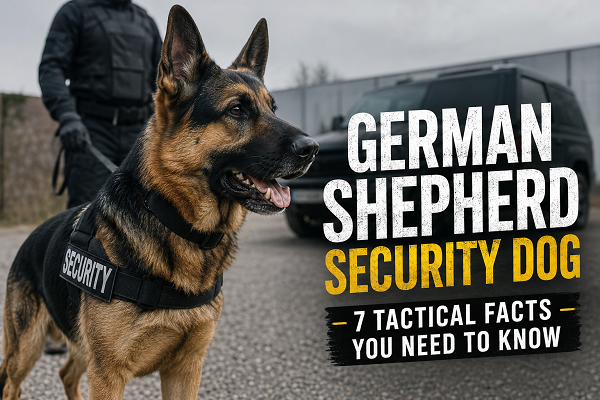
A German Shepherd makes an effective security dog because of its roughly 238 PSI bite force, high trainability, dual-purpose working drive, and a 125+ year breeding history built specifically around protection and police work, but a well-bred, properly trained GSD security dog typically takes 12–18 months and costs $15,000–$65,000+ to reach true operational reliability.
Table of Contents
- Introduction
- Fact 1: The Bite Force Is Real, But Not What the Internet Claims
- Fact 2: The Breed Was Built for This Job From Day One
- Fact 3: A “Trained” Security Dog Isn’t One Course, It’s a Stack
- Fact 4: Training a Security-Ready GSD Takes Longer Than People Expect
- Fact 5: Working-Line and Show-Line German Shepherds Are Barely the Same Dog
- Fact 6: They’re Still the Backbone of K9 Units Worldwide
- Fact 7: Health Realities That Affect a Working Career
- Choosing a German Shepherd for Security Work
- Trainer’s Notes: What I’ve Learned Handling This Breed
- FAQs
- Conclusion
Introduction
If you’ve ever stood next to a German Shepherd mid-bite-work drill, you already know the sound changes something in you. The dog isn’t just running at the decoy, it’s reading distance, timing, and intent, and then committing its whole body to the job. That’s not instinct alone. That’s roughly a century and a quarter of deliberate breeding, plus months of structured training, plus a handler who knows exactly what they’re asking the dog to do.
I’ve worked around German Shepherds long enough to know the myths that circulate about them, locking jaws, “trained killers,” dogs that flip a switch from cuddly to lethal on command. None of that is accurate, and honestly, believing it can get a family or a security team into trouble. What’s actually true about the German Shepherd security dog is more interesting, more specific, and a lot more useful if you’re trying to decide whether one belongs on your property, your patrol vehicle, or your protection detail.
This article breaks down seven tactical, research-backed facts about German Shepherd security dogs, real numbers, real timelines, real costs, so you know exactly what you’re evaluating, whether you’re a first-time owner considering a personal protection dog or a security manager scoping a K9 program.
Fact 1: The Bite Force Is Real, But Not What the Internet Claims
Search “German Shepherd bite force” and you’ll get numbers ranging anywhere from 238 PSI to over 700 PSI, depending on which site you land on. The inconsistency isn’t a conspiracy, it’s a genuine lack of standardized testing methodology across studies, since dogs rarely bite at full effort under lab conditions the way they would in a real apprehension.
The most consistently cited, defensible figure across veterinary and canine research sources puts the German Shepherd’s bite force at approximately 238 PSI (pounds per square inch), roughly two to three times stronger than an average adult human bite. That’s enough to fracture bone and cause serious soft-tissue damage, which is exactly why bite-and-hold protection work is treated as a controlled, heavily supervised discipline rather than something you DIY in a backyard.
Here’s the part most articles skip: raw bite force isn’t actually what makes a German Shepherd good at protection work. What makes the breed effective is controllability, the ability to bite hard on command and release cleanly on command, every single time, under stress. A dog that bites and won’t release is a liability, not an asset. Police and military programs select for that “out” (release) behavior as rigorously as they select for drive, because an uncontrolled bite creates legal exposure fast.
If you’re building bite work into a security dog’s training, the equipment matters as much as the dog’s drive. I’ve seen more good dogs develop bad habits from the wrong sleeve progression than from any temperament flaw, worth reading through 5 Bite Sleeve Training Mistakes to Avoid before you start any bite work with a young dog.
Fact 2: The Breed Was Built for This Job From Day One
The German Shepherd Dog wasn’t shaped by accident. In 1899, a retired German cavalry officer named Max von Stephanitz stood at a dog show in Karlsruhe, Germany, and bought a herding dog named Hektor Linksrhein on the spot. He renamed the dog Horand von Grafrath and made him the first officially registered German Shepherd, the foundation sire of the entire breed as we know it today.
Von Stephanitz wasn’t chasing a show-ring look. He wanted a dog defined by working ability first, appearance second, a philosophy captured in his famous line that “utility is the true criterion of beauty.” Within a decade, the breed was already being used by German police, and by World War I, German Shepherds were serving as messenger dogs, sentries, and Red Cross casualty-locating dogs on the front lines.
That’s the piece a lot of security dog buyers miss: this isn’t a companion breed that got repurposed for protection. It’s a purpose-built working dog that later became popular as a pet, which is a big part of why so many pet-line German Shepherds today still carry drives and instincts their owners weren’t expecting.
Fact 3: A “Trained” Security Dog Isn’t One Course, It’s a Stack
When people say a German Shepherd is “trained for security,” they’re usually talking about one of several very different skill sets, and conflating them causes real confusion (and real disappointment when the dog doesn’t do what the buyer expected).
Here’s how the layers actually break down:
- Foundation obedience — sit, down, stay, recall, heel, impulse control around distractions. Every working dog needs this before anything else.
- Personal protection (guard/watch behavior) — alerting to a threat, positioning between the threat and the handler or family, controlled bark-and-hold.
- Bite work / apprehension — trained bite-and-release on command, used in police patrol work and advanced personal protection.
- Detection — narcotics, explosives, or human remains detection, which is a completely separate scent-discrimination skill set from protection work.
- Tracking/trailing — following a scent trail to locate a missing person or fleeing suspect.
A dog trained purely in obedience and watchdog behavior is not the same animal as a dog trained for IGP-level bite work (IGP, formerly known as Schutzhund until the name change in 2012, is the internationally recognized three-phase sport testing tracking, obedience, and protection). Many family security dogs never need, and shouldn’t have, full bite training. A confident, obedient, alert German Shepherd with strong watchdog instincts is often exactly what a household needs, without the liability of an apprehension-trained dog.
If you’re weighing whether your household actually needs a bite-trained dog versus a well-socialized watchdog, it’s worth comparing temperaments across Best Family Watchdog Breeds: Top 7 Safe Picks before committing to full protection training.
Fact 4: Training a Security-Ready GSD Takes Longer Than People Expect
People searching for a “security dog” often picture a quick, intensive course, a few weeks, done. Real timelines look different.
For police/professional patrol dogs:
- Basic patrol certification (obedience + apprehension, no detection): roughly 480 hours over about 3 months of dedicated training, though many agencies stretch this across the dog’s first year of service.
- Handler courses run from 6–8 weeks for a dog paired with a new handler, per multiple U.S. law enforcement K9 training programs.
- Ongoing maintenance training is mandatory for certified dogs, with a recommended minimum of 16 hours per month to keep a patrol team street-ready.
- Full-service dogs (patrol + detection) often take 9–12 months from acquisition to street deployment.
For private personal protection dogs:
- A fully finished personal protection German Shepherd, one that’s obedience-solid, socially neutral in public, and reliable under real threat conditions, typically represents 12–18 months of layered training when done properly, starting from early puppyhood socialization through advanced protection phases.
- Rushing this timeline is the single biggest mistake I see. A dog pushed into bite work before its nerve strength and obedience foundation are solid tends to become either overly suspicious of strangers or unreliable under pressure, neither of which you want in a dog meant to protect people.
Cost realities:
- A well-bred German Shepherd puppy from health-tested working lines: $2,000–$5,000.
- A started or partially trained protection prospect: $8,000–$15,000.
- A fully trained, certified personal protection dog from a reputable program: $25,000–$65,000+, depending on the level of training, the dog’s pedigree, and whether detection work is included.
- Police agencies typically pay $7,000–$12,000 for an untrained or greenbroke patrol dog candidate, before factoring in the handler’s training time, which is usually absorbed as departmental labor cost rather than a separate line item.
Numbers vary significantly by trainer, country, and program reputation, always ask for documented certification standards (like AKC’s Temperament Test, USPCA, or IGP/IPO titling) rather than taking “protection trained” at face value.
Fact 5: Working-Line and Show-Line German Shepherds Are Barely the Same Dog
This is the fact that trips up the most first-time buyers. Not every German Shepherd is built the same, even within the same breed standard.
Working-line German Shepherds (often West German working line, DDR/East German line, or Czech line) are bred primarily for drive, nerve strength, and physical soundness, the traits that matter for police, military, and serious protection work. They tend to have straighter backs, higher energy, and a more intense working drive than their show-ring cousins.
Show-line German Shepherds (particularly West German show lines) are bred toward the modern show standard, which includes the sloped topline you’ll see in conformation rings. Health advocates have raised long-standing concerns that overly extreme angulation in some show lines contributes to orthopedic strain, though reputable breeders on both sides of the working/show divide now prioritize health testing.
If your goal is a genuine security or protection dog, working-line breeding is almost always the right starting point, not because show lines can’t have good temperaments, but because working lines are selected generation after generation specifically for the nerve stability, drive, and biddability that protection training depends on. Ask any breeder directly which line their dogs come from, and ask to see the parents’ working titles (like IGP1–3, or a Schutzhund pedigree), not just show championships.
Fact 6: They’re Still the Backbone of K9 Units Worldwide
Despite the rising popularity of the Belgian Malinois in elite military and federal units over the past two decades, the German Shepherd remains one of the most widely deployed working dogs globally.
- German Shepherds are estimated to make up over 8,000 of the working dogs in U.S. law enforcement alone, according to K9 training industry figures.
- In 2025 AKC registration data, the German Shepherd Dog held the No. 4 spot among all recognized breeds in the United States, a ranking it’s held consistently since 2023, out of 202 total ranked breeds.
- Many European police and military units, along with agencies across the UK, Germany, and Scandinavia, still favor the GSD for its dual-purpose versatility: a single dog can be trained for patrol, tracking, and detection, whereas some breeds specialize more narrowly.
- The breed’s role expanded dramatically after certain high-profile eras of demand for explosive and narcotics detection work, cementing its reputation as a genuine multi-tool working dog rather than a single-discipline specialist.
The Malinois has gained ground for its lighter build and even higher drive in elite tactical roles, but for general-purpose K9 work, patrol, community policing, family protection, the German Shepherd’s larger size, more deliberate temperament, and calmer “off switch” at home still make it the more practical choice for most departments and most families. If you’re weighing the two breeds specifically, it’s worth reading Belgian Malinois Police Dogs: Why K9 Units Use Them to see where each breed actually excels.
Fact 7: Health Realities That Affect a Working Career
A tactical fact sheet isn’t complete without the numbers that actually shorten a working dog’s career. This is the part sales pages tend to leave out.
- Hip dysplasia: Based on Orthopedic Foundation for Animals (OFA) data covering 138,902 hip evaluations through December 2022, roughly 20.6% of German Shepherds were found dysplastic, meaning about 1 in 5 dogs screened had some degree of hip joint abnormality. This is a critical reason working-line breeders push hip and elbow certification before breeding.
- Elbow dysplasia: OFA data also shows around 18.7% of evaluated German Shepherds affected, from a smaller sample of roughly 60,888 evaluations.
- Degenerative myelopathy (DM): A progressive spinal cord disease more common in this breed than most others, affecting an estimated 14.2% of GSDs evaluated in OFA’s genetic database, a DNA test exists and responsible breeders screen for the marker.
- Working lifespan: Even a structurally sound German Shepherd typically has an active working career of 6–9 years before retirement from high-intensity patrol or protection duty, even though the breed’s general life expectancy runs 10–14 years.
- Retirement transition: Most retired police and military GSDs go home with their handlers rather than being rehomed to strangers, a transition that comes with its own adjustment period, which I’ve covered in more depth in What Happens to Military and Police Dogs After Retirement?
None of this means you should avoid the breed, it means you should demand OFA or PennHIP hip certification, elbow certification, and DM genetic testing on both parents before you commit to a puppy meant for serious working life. A dog with sound structure and confirmed genetics is far more likely to give you a full, productive working career instead of an early medical retirement.
Choosing a German Shepherd for Security Work
If you’re at the decision stage, here’s the practical checklist I walk clients through:
- Define the actual job first. Family deterrent and alert dog? Personal protection dog that travels with you? Property/perimeter guard dog? Each calls for a different training path and a different temperament profile.
- Source from working lines with health-tested parents. Ask for OFA/PennHIP hip and elbow scores, DM test results, and working titles (IGP, Schutzhund, or equivalent) on both sire and dam.
- Budget realistically. Factor in the puppy or started-dog cost, plus 12–18 months of structured training if you’re going the personal protection route, plus ongoing veterinary care for a breed prone to orthopedic issues.
- Never skip the puppy-selection stage. Temperament testing at 7–8 weeks (drive, nerve strength, recovery from startle, sociability) tells you far more about a dog’s protection potential than pedigree paperwork alone, I go into this in 6 Mistakes to Avoid When Choosing a Puppy.
- Use a certified trainer for any bite work. This isn’t a YouTube-tutorial discipline. A poorly executed protection program creates a dog that’s either unreliable or genuinely dangerous, and the liability lands on the owner.
- Plan for the dog’s whole life, not just its working years. A GSD you bring home at 8 weeks will (ideally) still be with you at 12+ years old, long after any working career winds down.
Trainer’s Notes: What I’ve Learned Handling This Breed
I’ve spent years around working German Shepherds, through obedience foundations, agility demonstrations, and protection-phase training and if there’s one thing that surprises new handlers every time, it’s how much of “security dog” behavior comes down to the handler’s consistency, not the dog’s raw genetics. A genetically stacked working-line GSD with an inconsistent handler will underperform a moderately driven dog with a disciplined, patient trainer, every time.
The dogs that make the best security partners aren’t the ones biting hardest in training, they’re the ones that read a room accurately, stay calm until calm isn’t the answer anymore, and release cleanly the moment the threat is neutralized. That balance takes real time to build, and it’s worth being skeptical of any program promising a “fully trained protection dog” in a matter of weeks. If you want a more structured breakdown of what real training progressions look like, Beyond the Bark walks through the training philosophy I use with working dogs from puppyhood through advanced obedience.
FAQs
Is a German Shepherd naturally a good security dog, or does it need special training?
German Shepherds have strong natural instincts for alertness, territorial awareness, and protectiveness, but genuine security or protection capability requires structured training. An untrained German Shepherd may bark and posture at a threat but won’t reliably know how to respond in a real confrontation.
How much does a fully trained German Shepherd protection dog cost?
A fully trained, certified personal protection German Shepherd typically costs between $25,000 and $65,000 or more, depending on the trainer’s reputation, the dog’s pedigree, and whether detection or advanced obedience skills are included. Partially trained “started” dogs run $8,000–$15,000.
What is the bite force of a German Shepherd compared to other guard dog breeds?
The most commonly cited German Shepherd bite force is around 238 PSI, which is strong but not the highest among working breeds, Cane Corsos and Mastiffs, for example, are often cited at 500+ PSI. What sets the German Shepherd apart isn’t maximum bite force but its trainability and reliable bite-and-release control.
How long does it take to train a German Shepherd for security or protection work?
A properly trained personal protection German Shepherd typically takes 12–18 months from early puppy socialization through advanced protection-phase training. Police and military patrol dogs often reach basic certification in about 3 months of dedicated training (roughly 480 hours) but continue developing skills throughout their first year of active duty.
Are German Shepherds prone to health problems that affect their working career?
Yes. OFA data shows approximately 20.6% of German Shepherds evaluated have hip dysplasia and about 18.7% show elbow dysplasia, both of which can shorten or end a working career. Reputable breeders screen breeding stock with OFA or PennHIP hip/elbow certification and DNA testing for degenerative myelopathy to reduce these risks in working lines.
Conclusion
The German Shepherd earned its reputation as a security dog the hard way, through 125-plus years of deliberate breeding, real deployment in police and military units worldwide, and a working drive that’s baked into the breed rather than bolted on. But “German Shepherd” alone isn’t a guarantee of protection ability. The dog’s line, its health testing, the quality of its training program, and the consistency of its handler all matter just as much as the breed name on the papers.
If you’re bringing a German Shepherd security dog into your life, whether as a family protector, a personal protection partner, or a working K9, start with health-tested working-line genetics, budget for a realistic 12–18 month training timeline if bite work is involved, and work with a certified trainer rather than rushing the process. Do that, and you get what the breed has delivered for well over a century: a dog that’s not just intimidating on paper, but genuinely dependable when it matters.

Her work centres on obedience, detection, protection and operational readiness. She favours proven methods built on repetition, consistency and real-world conditioning, so that both dogs and handlers are prepared for high-pressure tasks.
Rofiat represented the Nigerian Army Dog Centre at the Nigerian Army Day Celebration (NADCEL) 2026, where she led demonstrations in obedience, explosive detection, agility and tactical movement. Through articles, training content and documentaries, she shares field-based insight into how structured training, clear communication and trust between handler and dog affect performance and reliability.
She is the author of Beyond the Bark: Inside a Pro Handler's Playbook for Raising the Ideal Dog, a practical guide that helps dog owners and handlers apply professional training principles in everyday situations.
- Local Dog Breeds: Temperament, Health & Training Guide - October 6, 2026
- How Long Do Military Working Dogs Serve? Full Guide - October 5, 2026
- National Puppy Day 2026: Date, Best Deals & Freebies - October 4, 2026